

The Isuzu D-Max has never struggled with the hard-working parts of being a pickup. It can carry more than a tonne, tow 3.5 tonnes and tackle serious off-road work, while its five-year or 125,000-mile warranty suggests Isuzu is confident it’ll keep doing so for a long time.
Its problem has always been refinement. The outgoing 1.9-litre diesel did the job, but sounded like a spin dryer filled with spanners while doing it. Alongside the smoother Ford Ranger and Toyota Hilux, the D-Max felt agricultural even by working-pickup standards.
Isuzu has addressed that with a new 2.2-litre diesel engine and, on automatic models, a new eight-speed gearbox. Power remains unchanged at 164hp, while torque rises modestly from 360Nm to 400Nm, so this isn’t an attempt to turn the D-Max into a performance truck. Instead, the focus is on improving refinement, efficiency and everyday usability without weakening its working credentials.
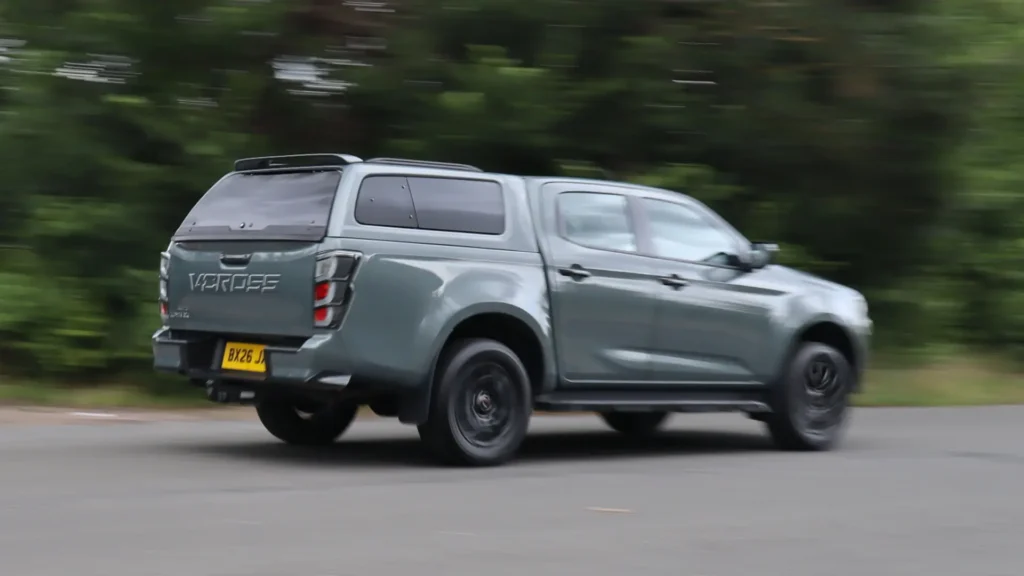
There are other changes, although you may struggle to spot them. The grille, front lights and rear lights have all been revised, while the range-topping V-Cross gets new alloy wheels, wider side steps and an Urban Moss paint option.
Underneath, though, this remains the familiar D-Max. Has the new engine done enough to remove one of its biggest weaknesses, or does Isuzu’s pickup still feel a generation behind its rivals?
The new 2.2-litre engine transforms the D-Max’s refinement without changing its hard-working character. Performance remains modest and the automatic gearbox can stumble at very low speeds, but this quieter, smoother pickup is considerably easier to live with than before.
+ Much quieter and smoother 2.2-litre engine
+ One-tonne payload and 3.5-tonne towing remain
+ Strong off-road ability
+ Generous warranty
– Performance feels little different from the old model
– Occasional low-speed gearbox shunts
– Five-seat versions attract punitive company-car tax
Isuzu D-Max 2.2 interior
The D-Max’s cabin has changed far less than its engine. It remains a solid, functional working environment, with plenty of hard plastics and no real attempt to match the more car-like atmosphere of a Ford Ranger or Volkswagen Amarok.
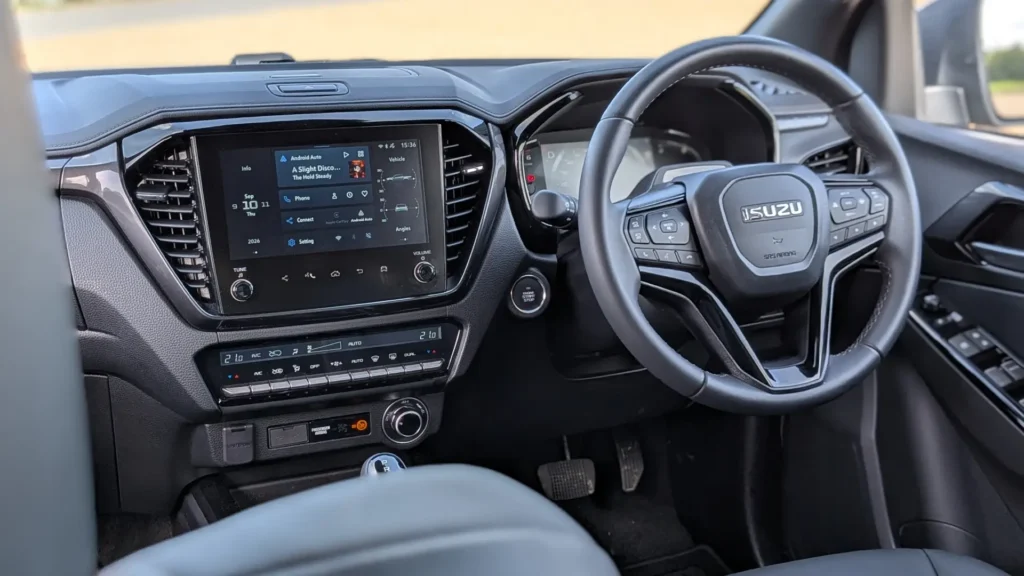
That isn’t necessarily a criticism. Everything feels built to tolerate muddy boots, damp clothing and the general abuse of working life, while the dashboard layout is straightforward. Isuzu has also resisted the temptation to move every function onto the touchscreen, leaving physical buttons and rotary controls for frequently used features.
The driving position is upright and comfortable, with good visibility over the square bonnet and plenty of adjustment. DL40 and V-Cross models get an eight-way electrically adjustable driver’s seat, powered lumbar support and heated front seats, leather upholstery and dual-zone climate control.
The wider side steps fitted to the latest V-Cross are a small but worthwhile improvement. They’re easier to find with your foot and make climbing into the high-set cabin less awkward, particularly if you’re repeatedly getting in and out during the working day.
Technology is adequate rather than cutting-edge. The V-Cross has a 9.0-inch touchscreen with wireless Apple CarPlay and Android Auto, supported by a 7.0-inch digital driver display. The infotainment system is simple enough to operate and smartphones connect quickly, but the graphics and interface feel dated against its rivals.
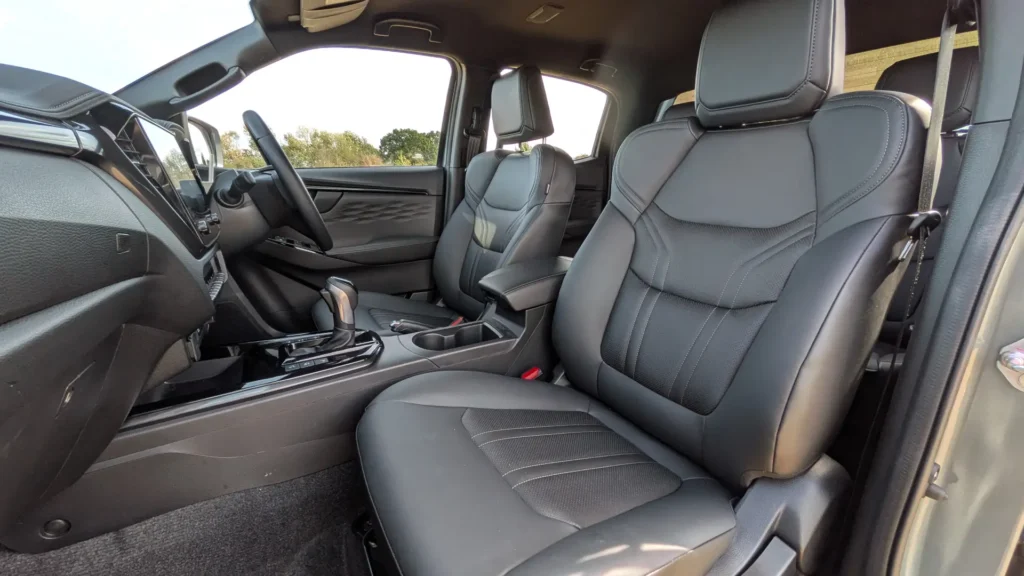
Storage is reasonable, with door bins, cupholders, a centre-console compartment and useful trays around the dashboard. There’s nothing especially clever, though, and the Ranger makes better use of the available cabin space.
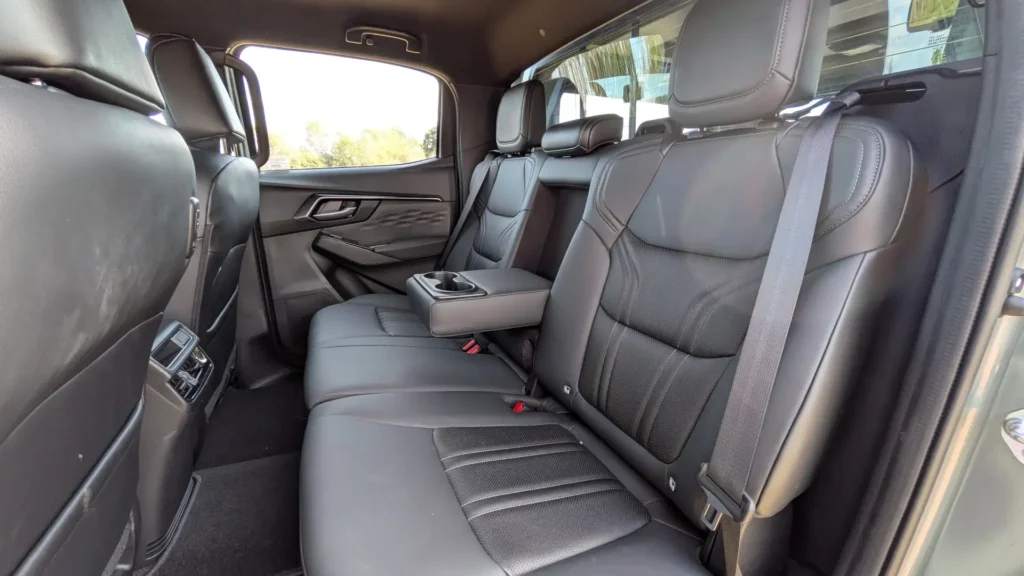
The double-cab retains a conventional rear bench with space for three passengers. The 60/40-split seatback includes a folding centre armrest and cupholders, while rear ventilation ducts and a USB-C connection make life more comfortable for those in the back.
The new 360-degree camera fitted to DL40 and V-Cross versions is particularly useful. The D-Max isn’t unusually large by modern pickup standards, but the additional view makes positioning it in tight yards, parking spaces and narrow access points considerably easier.
But, ultimately, not much has changed. The cabin remains durable, comfortable and easy to use rather than stylish or sophisticated, the equipment list is generous, but the fundamental interior is showing its age.
Isuzu D-Max 2.2 driving
The headline change is the replacement of Isuzu’s long-serving 1.9-litre diesel engine with a new 2.2-litre four-cylinder unit. It produces the same 164hp as before, while maximum torque increases from 360Nm to 400Nm.
Those numbers suggest only a slight improvement, and that’s exactly how it feels. Performance in everyday driving is little different from the old D-Max, with enough low-speed strength for normal use but no real sense of urgency. Officially, 0–62mph takes 12.0 seconds, although outright acceleration is unlikely to be high on the priority list for most buyers.
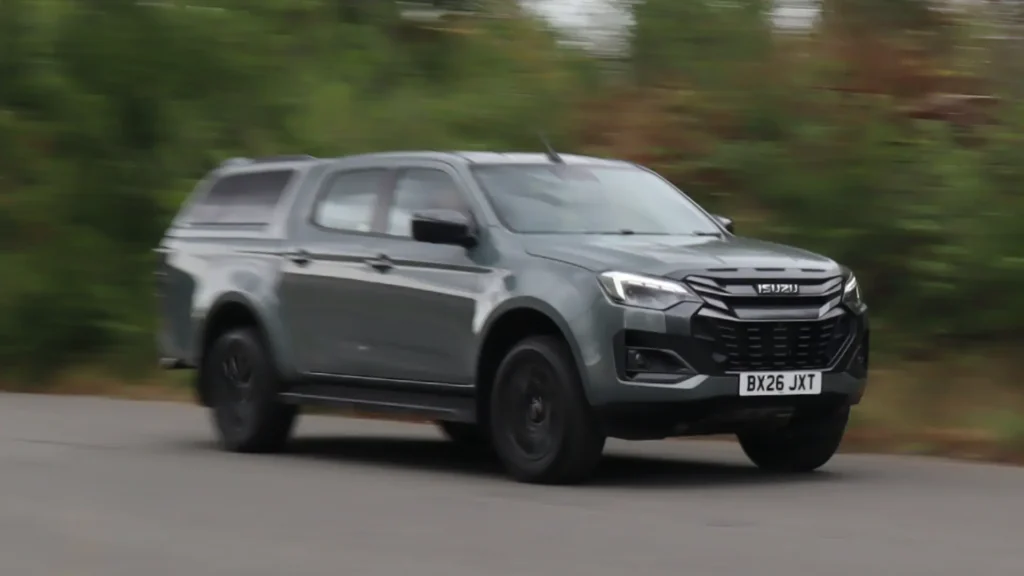
The difference is refinement. The old 1.9-litre engine made more than enough noise to wake the neighbours each morning, particularly when cold or being worked hard. Its replacement has a much quieter, lower-pitched rumble that fades more easily into the background.
It’s still a little gruff under heavier acceleration, and nobody will mistake it for a refined passenger-car diesel, but the intrusive metallic rattle has gone. That alone makes the new D-Max considerably easier to live with, particularly for drivers spending long days behind the wheel.
Automatic models also move from a six-speed gearbox to a new eight-speed transmission. For most of the time, it works well, changing gear smoothly and consistently without drawing attention to itself. The additional ratios help keep the engine settled and make relaxed progress easy.
There is an occasional weakness at very low speeds. When crawling through traffic at little over walking pace, we experienced brief shunts through the driveline. It didn’t happen constantly, but it was noticeable when it did and made smooth progress in slow-moving traffic more difficult than it should be.
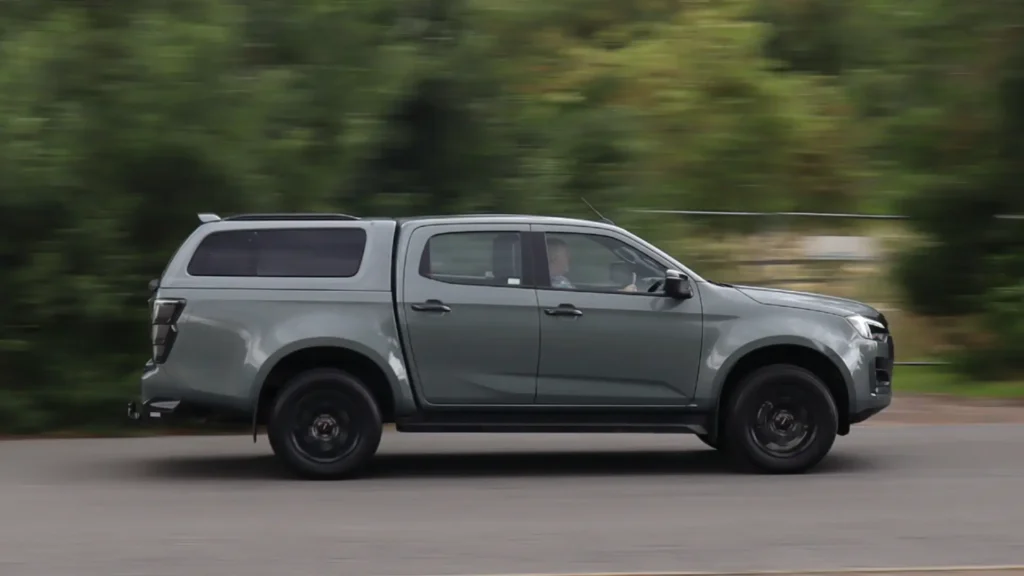
Beyond that, the D-Max drives pretty much as it did before. The steering is light and accurate enough, making the pickup easy to place despite its size. It’s not especially communicative, but that matters less in a working vehicle than predictable responses and manageable low-speed effort.
Ride quality is typical of a ladder-frame pickup. With nothing in the load bed, the stiff rear suspension feels firm over sharper bumps, but the D-Max remains reasonably composed. It settles down well at motorway speeds, where the quieter engine makes a more noticeable difference to long-distance comfort.
It still doesn’t ride with the polish of a Ford Ranger or Volkswagen Amarok, but neither is it tiring or difficult to manage. Adding weight to the load bed further calms the rear suspension.
New Dunlop low-rolling-resistance tyres are fitted across most of the range, with Isuzu claiming improvements in both fuel efficiency and wet-surface grip.
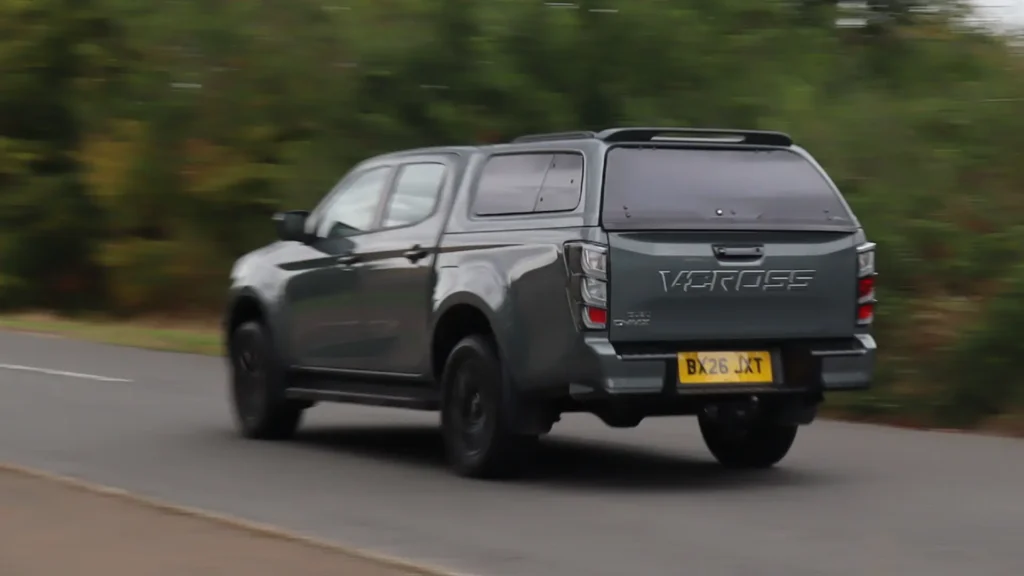
Away from the road, the D-Max remains highly capable. Selectable four-wheel drive, a rear differential lock and Rough Terrain Mode give it the hardware needed for muddy sites, farm tracks and difficult access routes. With 800mm of wading depth and 240mm of ground clearance on DL20, DL40 and V-Cross models, it can tackle conditions that would stop most vans.
The new engine hasn’t fundamentally changed how the D-Max performs. Instead, it’s removed much of the noise and harshness that made the pickup feel dated. That’s not exactly revolutionary, but it does address the truck’s most obvious weakness.
Isuzu D-Max payload and towing
The D-Max retains the working capability that’s always been central to its appeal. Even with a bigger engine, every version can carry more than a tonne — our V-Cross automatic has a quoted payload of 1,055kg, before the addition of the ARB canopy and plush carpeting
Payload varies slightly across the range. The lighter Utility single cab can carry up to 1,180kg, while double-cab models drop as low as 1,055kg. For most users, the differences are small enough that cab layout and equipment are likely to matter more.
The load bed is usefully sized and includes internal tie-down points, while a damped tailgate makes it easier to open without it crashing down under its own weight.
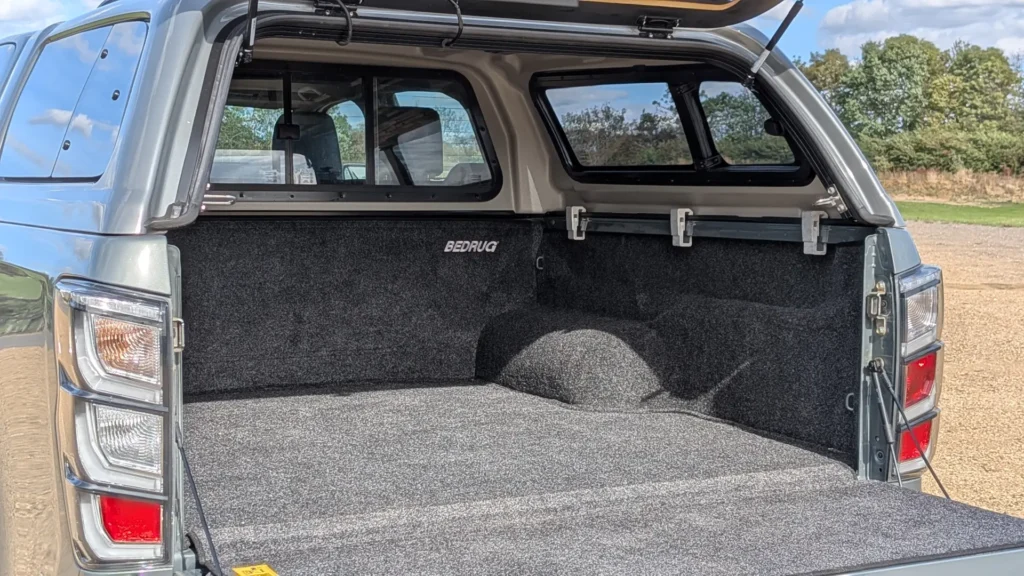
Maximum braked towing capacity is 3,500kg across the range, with a gross train weight of 6,000kg and a maximum nose weight of 245kg. That makes the D-Max suitable for hauling plant, livestock trailers and other heavy equipment, and remains one of its strongest advantages.
The double-cab body adds seating for five, giving operators the flexibility to carry a crew or use the D-Max as family transport outside working hours. The compromise is a shorter load bed than the single- and extended-cab models, although that will be familiar to anybody already running a double-cab pickup.
Buyers who don’t need the rear seats can choose between the single cab and the D-Max Commercial, which replaces them with a secure internal load area. For everybody else, the regular double-cab combines a genuine one-tonne payload, full towing ability and space for five people without any mechanical compromise.
Isuzu D-Max 2.2 Diesel running costs
Prices for the new 2.2-litre D-Max start at £33,495 plus VAT. At the other end of the range, the V-Cross automatic costs £42,995, while metallic paint adds another £600.

That makes the D-Max competitive, not cheap. The V-Cross undercuts equivalent versions of the Ford Ranger and Volkswagen Amarok, but £43k is still a considerable amount for a pickup whose fundamental design and cabin have changed little. That’s even more noticeable against the more modern Ford Ranger Wildtrak, which comes with a smoother, more powerful petrol plug-in hybrid engine for £46,200.
Eligible businesses can reclaim the VAT because every version retains a payload above one tonne. Road tax also remains at the flat commercial vehicle rate, despite the changes that have made five-seat double-cab pickups considerably less attractive as company vehicles — these are now treated as cars for benefit-in-kind purposes, with company car drivers facing a substantial annual bill. The same car treatment applies to capital allowances, weakening the financial case for businesses purchasing a five-seat model.
Isuzu offers the 2.2-litre engine in the two-seat D-Max Commercial, which replaces the rear seats with a secure internal load area and retains van tax treatment. It sacrifices the double-cab’s passenger-carrying flexibility, but will make far more financial sense for company drivers who don’t need five seats.

Official combined fuel economy for the V-Cross automatic is 32.4mpg — we actually did marginally better than that over a week of mixed roads, with the onboard computer reporting 32.6mpg. That’s respectable rather than exceptional, although the eight-speed gearbox and new low-rolling-resistance Dunlop tyres should help the D-Max make the most of its fuel. As always, real consumption will depend heavily on load, towing and driving conditions.
Warranty cover remains strong. Every model is protected for five years or 125,000 miles, and Isuzu includes five years of UK and European roadside assistance.
Isuzu D-Max 2.2 V-Cross: The Professional Pickup verdict
The new 2.2-litre engine doesn’t transform the D-Max’s performance, handling or working ability, but then it doesn’t need to. The existing pickup was already capable of carrying more than a tonne, towing 3.5 tonnes and tackling difficult terrain without complaint.
The cabin remains functional rather than sophisticated, the unladen ride is still firm, and a Ford Ranger or Volkswagen Amarok feels more modern.
What it does transform is refinement. Replacing the old engine’s metallic clatter with a quieter, lower-pitched rumble makes the D-Max considerably less tiring and removes one of the strongest reasons to choose a rival.
The changes may look modest on paper, but the improved refinement makes the 2.2-litre D-Max substantially easier to recommend than the model it replaces.
Model tested: Isuzu D-Max 2.2 V-Cross Double Cab Automatic
Price: £42,995 CVOTR
Professional Pickup rating: ★★★☆☆

- Isuzu D-Max 2.2 review: Making less noise about its capabilities - 19 September 2026
- MG badge finds another home on U9 electric pickup - 18 September 2026
- Mitsubishi L200 picks a fight with new Street Fighter movie - 17 September 2026