
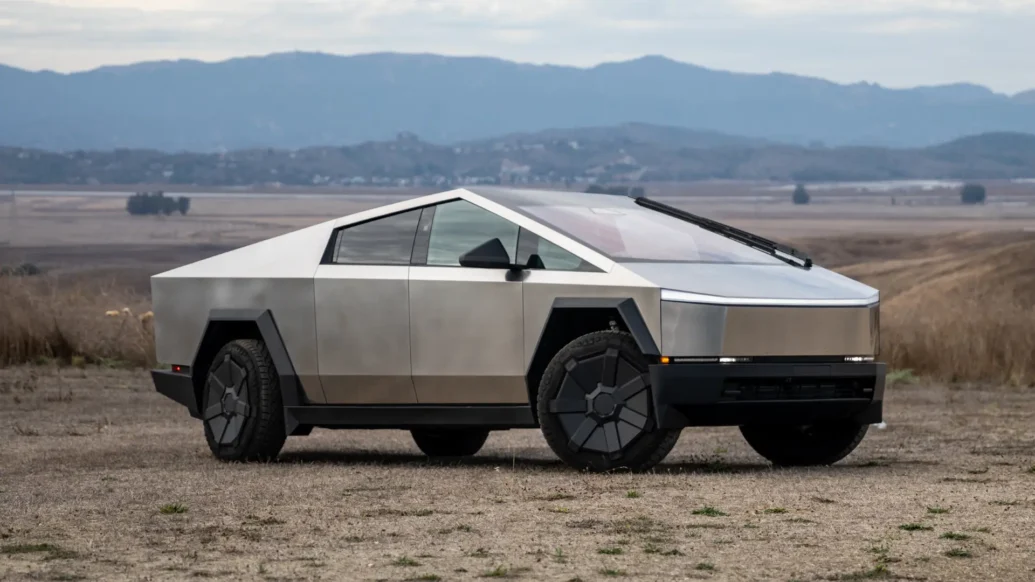
Tesla has cancelled plans to sell the Cybertruck in Australia and New Zealand, effectively extinguishing hopes of a right-hand-drive version reaching the UK.
Almost seven years after Tesla started taking deposits for its electric pickup, and three years after the first US deliveries, customers in the Antipodes are being told their reservations have been cancelled and their money returned.
For British buyers still holding out for a Cybertruck, Australia offered a substantial potential market for a right-hand-drive version. With that programme abandoned, the prospect of Tesla building one for the UK looks remote.
Seven years of waiting ends with a refund
Tesla told reservation holders: “After careful consideration, plans to produce Cybertruck for Australia and New Zealand have been discontinued.”
Customers will receive a full refund of their refundable A$150 (approximately £82) deposit, with some buyers having put their money down after the Cybertruck’s unveiling in November 2019.
While taking a reservation isn’t the same as guaranteeing a delivery date, accepting money creates an expectation that there’s a credible prospect of supplying the vehicle. Nearly seven years is a remarkably long time to leave that question unanswered.
Tesla is offering affected customers a free year of Full Self-Driving (Supervised), provided they order a new Model 3 or Model Y. The consolation for waiting years for a pickup seems to be a sales incentive to purchase a saloon or SUV instead.
The right-hand-drive business case disappears
A right-hand-drive version would only have solved part of the problem of getting the Cybertruck to the UK. The pickup’s angular stainless-steel body also presented substantial obstacles to meeting British and European safety requirements, particularly around external projections and pedestrian protection.
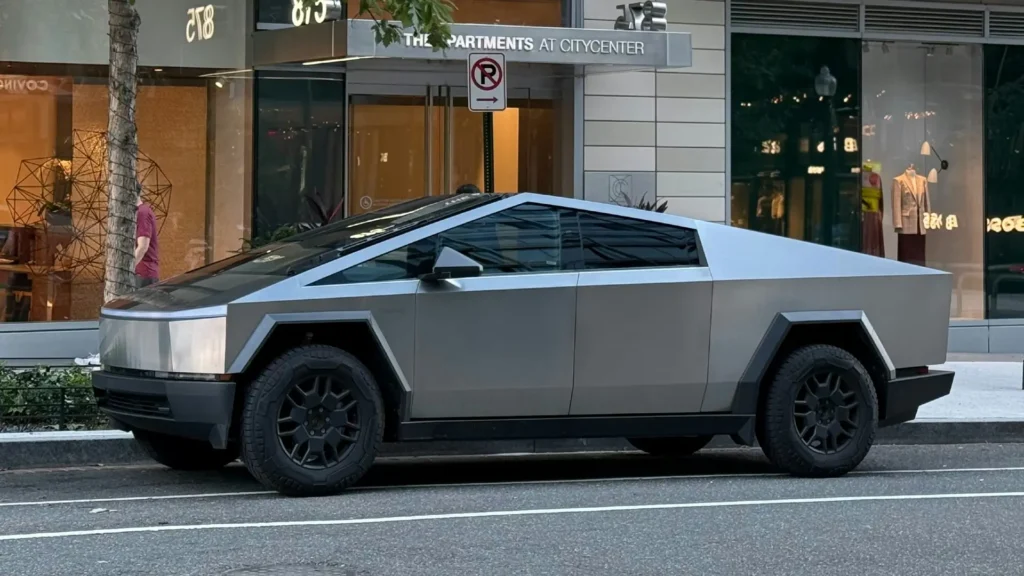
Tesla knew this, and its engineering chief, Lars Moravy, acknowledged in 2023 the difficulty of reconciling the truck’s sharp-edged steel panels with European rules. An official UK launch was always going to require significant engineering changes rather than simply moving the steering wheel.
That makes the lingering Cybertruck page on Tesla’s UK website look rather optimistic. Tesla was happy to market the idea of a Cybertruck here, while the practical business of producing a compliant vehicle remained unresolved.
Tesla hasn’t issued a separate UK cancellation announcement. Its decision nevertheless removes an obvious commercial reason to invest in moving the steering wheel.
A webpage has proved considerably easier to deliver than a British-market truck.
Plenty of publicity, but no pickup
Australian buyers had reasons to believe the project was still alive. Tesla brought a Cybertruck to Australia and New Zealand for public displays in 2024, keeping interest in the vehicle alive long after it closed new reservations.
What Tesla has not provided is a public explanation for abandoning those customers beyond the cancellation email.
The Cybertruck has hardly justified the hype in its home market, either. US sales fell from 38,965 in 2024 to just 20,237 in 2025, a collapse of 48%. The decline has continued, with only 11,586 sold in the first nine months of 2026, down another 28% year on year. For a vehicle Musk once envisaged producing at a rate of 250,000 a year, the gap between ambition and reality is substantial.
For someone whose product announcements rarely suffer from a shortage of confidence, this is a rather unspectacular outcome.
Until Tesla offers something more substantial than a webpage, there is little reason to leave a Cybertruck-shaped space on your driveway.

- Tesla pulls the plug on UK right hand drive Cybertruck hopes - 24 October 2026
- BYD Shark first drive review: A different kind of working pickup - 22 October 2026
-
 Is your electric pickup ready for remote work? A guide to mobile charging - 21 October 2026