
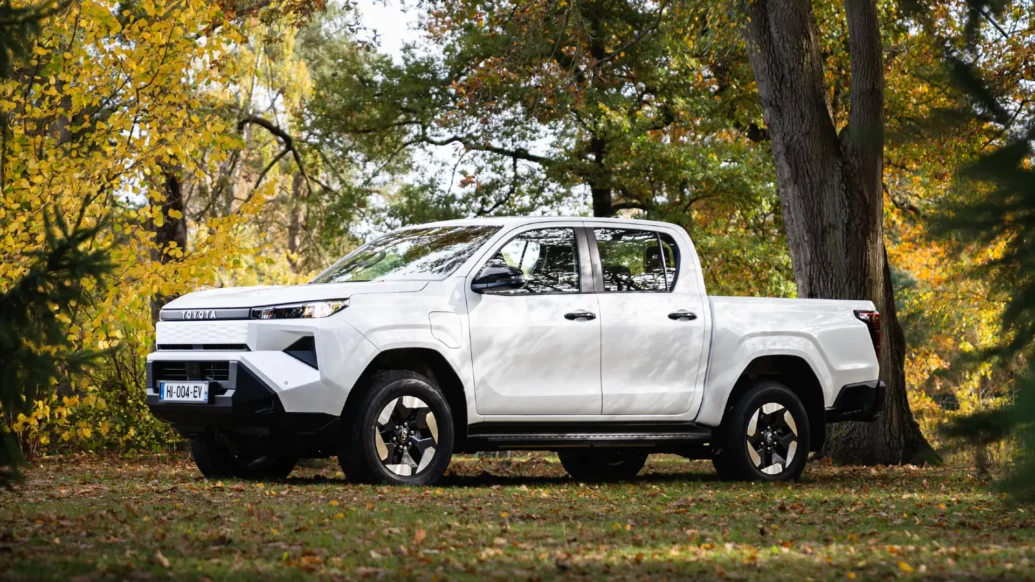
The ninth-generation Toyota Hilux will be priced from £34,670, plus VAT and OTR costs, when the pickup arrives in the UK in July.
The new Hilux will be available to order from 1 June, with customer deliveries beginning later in the month for the electric version and in July for the diesel 48V model. That means the electric Hilux will actually reach customers first, which is not quite the order most of us would have expected a few years ago.
Prices, grants and the VAT question
The range starts with the Hilux Diesel 48V Active, priced from £34,670 before VAT and other costs. Prices then rise to £39,420 for the Icon, £41,587 for the Invincible and £44,045 for the range-topping Invincible X.
Toyota appears to have been rather canny with the pricing of the electric Hilux. The Hilux BEV Icon is priced at £57,845 including VAT, before the £5,000 plug-in van grant is applied. With the grant, that should fall to £52,845.
That puts it below the Isuzu D-Max eDL40 Double Cab, which is priced at £60,995 excluding VAT. The Isuzu also qualifies for the plug-in van grant, bringing the effective price closer to the Hilux.
The difference is in tax treatment. The Isuzu’s one-tonne payload should make it much easier for VAT-registered operators to treat it as a commercial vehicle and reclaim the VAT. The Hilux BEV, with an expected payload of under a tonne, is unlikely to qualify automatically in the same way.
Toyota’s pricing looks clever. It doesn’t remove the VAT issue entirely, but it narrows the gap enough that the electric Hilux may look good value for private buyers and non-VAT-registered businesses, and competitive for fleets where outright capability matters less than cost and daily usability.

Equipment and trim levels
The new Hilux also gains updated styling, new technologies, improved safety systems and a more digital cabin experience.
The entry-level Active model gets Toyota Safety Sense driver assistance technology, a digital multi-information display, rear deck step and, for the first time on Hilux, electric power steering.
Icon adds 17-inch alloy wheels, heated front seats, a 12.3-inch Toyota Smart Connect multimedia system, Apple CarPlay and Android Auto smartphone integration, and a wireless phone charger.
Invincible models add part-leather upholstery, power adjustment for the driver’s seat, a 12-inch digital driver display and an auto-dimming rear-view mirror. Invincible X then adds more styling-focused upgrades, including 18-inch alloy wheels, a high-over bar, a drop-in load liner, extra bodywork badging, JBL premium audio, heated rear seats, and a Multi-Terrain Monitor for off-road driving.
The electric Hilux range is simpler. Icon models get alloy wheels, side steps, Multi-Terrain Select and Downhill Assist Control, while the Invincible adds leather upholstery, wireless charging and LED headlights.
Diesel or electric?
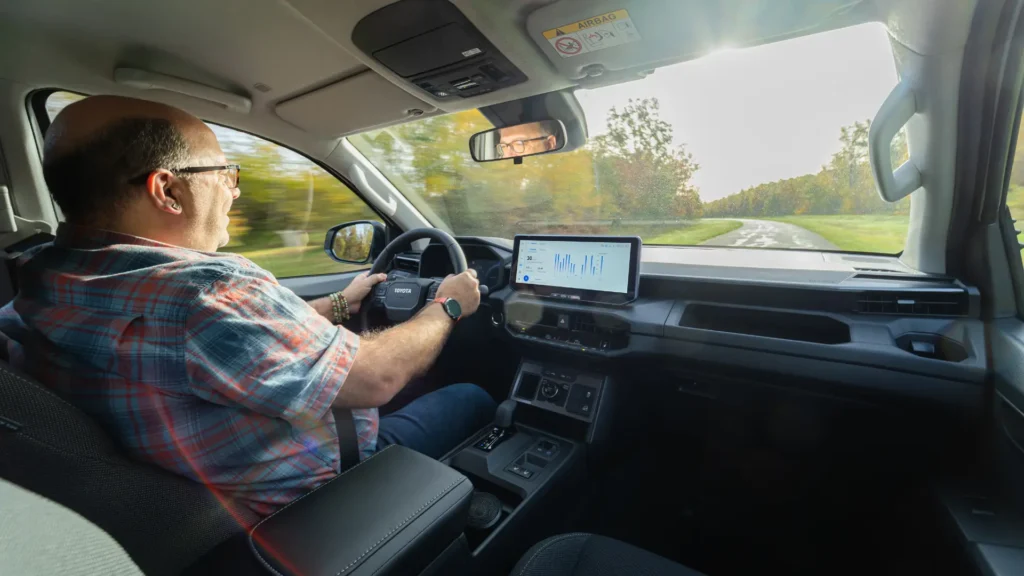
Toyota says more details, including crucial figures for payload, towing, range and charging performance for the electric model, will be released shortly. However, based on our early drive of the electric Hilux, we expect to see a range of 150-170 miles from the 59.2kWh battery, with a payload limit of around 715kg and towing restricted to 1.6 tonnes.
Toyota has been justifiably cautious with full electrification, talking about a “multipath” approach that includes different powertrain options for different use cases. With the new Hilux, that means offering both diesel 48V and battery electric versions.
Diesel versions of the new Hilux use Toyota’s 48V mild-hybrid system. While full technical details are still to be announced, don’t expect any significant change from the existing 2.8-litre engine, which means 204hp and 500Nm of torque.
For most UK pickup users, diesel will remain the more logical choice, especially for towing, long-distance work and rural use. But for fleets with predictable daily mileage and depot charging, as well as urban or regional routes, an electric Hilux could become a serious option.
Double cab only
The new model brings an end to single- or extended-cab models, with the Hilux available only in four-door double-cab versions. That means five seats as standard, although a two-seat commercial conversion will be offered later in 2026.
That reflects where the UK pickup market has gone, with double-cab models dominating sales, but it does remove another practical option for buyers who still want a more traditional working truck.

- Isuzu D-Max DL40 Commercial brings high-spec Extended Cab back for business users - 26 September 2026
- Foton Tunland pickup heading to the UK - 22 September 2026
- Horses meet horsepower as Mitsubishi L200 returns to Blenheim - 22 September 2026