
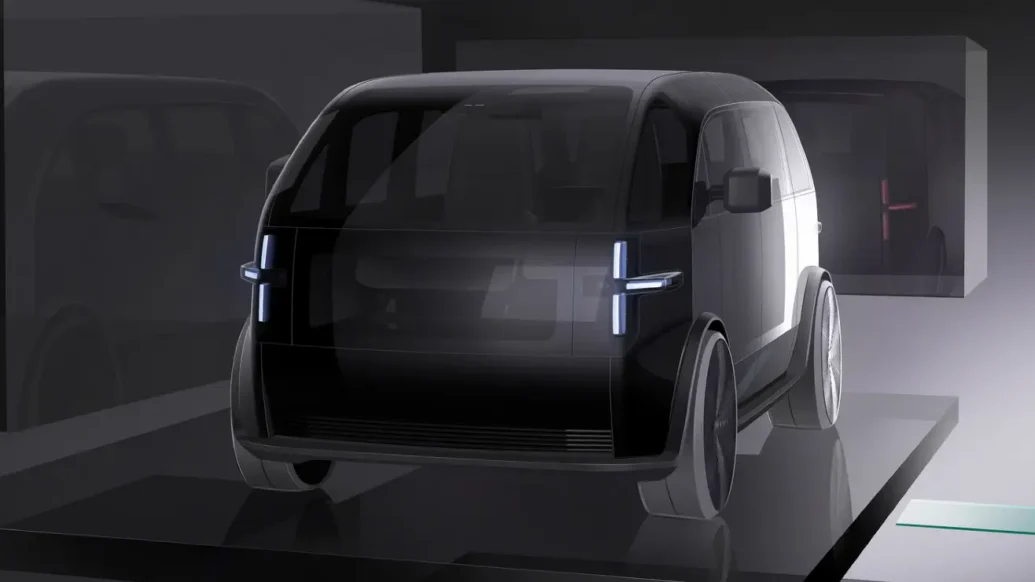
Hyundai Motor Group is partnering with Los Angeles-based EV company Canoo to develop a new electric platform based on Canoo’s proprietary “skateboard” design. The collaboration will support Hyundai and Kia’s future electric light commercial vehicle models, offering a cost-effective and scalable solution.
Canoo’s skateboard platform integrates key vehicle components, such as batteries and the electric drivetrain, into a compact, self-contained unit. This design reduces weight, complexity, and manufacturing costs while maximising interior cab and cargo space. Hyundai Motor Group plans to leverage this adaptable architecture to simplify its EV production processes, enabling faster responses to market demands and potentially reducing costs for end users.

The partnership sits within Hyundai’s broader investment strategy, which includes $87 billion (£67bn) in planned spending over the next five years on future technologies. This includes $52 billion (£40bn) from Hyundai and $25 billion (£19.3bn) from Kia, with the goal of making eco-friendly vehicles 25% of total sales by 2025.
Both brands have outlined ambitions to develop Purpose Built Vehicles (PBVs) for shared and logistics services, with Kia unveiling plans at its recent CEO Investor Day and Hyundai presenting a PBV concept at CES 2020.
Albert Biermann, Head of Research & Development at Hyundai Motor Group, praised Canoo’s engineering efficiency and innovation: “We were highly impressed by the speed and efficiency in which Canoo developed their innovative EV architecture, making them the perfect engineering partner for us as we transition to become a frontrunner in the future mobility industry,” commented Biermann.
“We have been working diligently to develop a bold new electric vehicle and partnering with a global leader like Hyundai is a validating moment for our young company,” said Ulrich Kranz, Canoo’s CEO. “It is a real honour for us to help Hyundai explore EV architecture concepts for their future models.”
Canoo, founded in December 2017, achieved Beta testing of its first EV within 19 months and plans to launch its subscription-only vehicle in 2021.

- Isuzu D-Max DL40 Commercial brings high-spec Extended Cab back for business users - 26 September 2026
- Foton Tunland pickup heading to the UK - 22 September 2026
- Horses meet horsepower as Mitsubishi L200 returns to Blenheim - 22 September 2026