
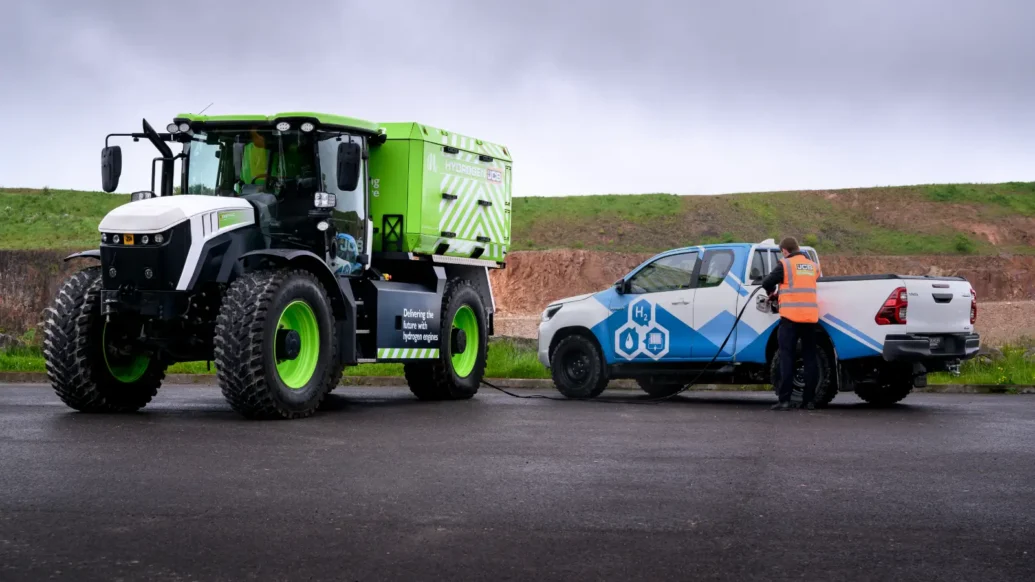
Toyota has entered the final demonstration phase of a groundbreaking project to develop a hydrogen fuel cell version of its Hilux pickup truck, marking a significant step in its journey towards carbon neutrality.
This prototype project, which began with the unveiling of the first vehicle in September 2023, is being developed in collaboration with several partners and is supported by UK government funding.
The project highlights Toyota’s “multi-path strategy” to achieve carbon neutrality by exploring multiple powertrain solutions, including hybrid electric, plug-in hybrid, battery electric, fuel cell electric, and e-fuels. The focus on hydrogen is an extension of Toyota’s long-standing investment in the technology, which dates back to the early 1990s.

A total of 10 fuel-cell Hilux prototypes have now been produced at Toyota’s manufacturing facility in Derby. Five of these vehicles are undergoing field tests to evaluate their safety, performance, and durability, while the remaining five are being showcased to customers and media at various events, including the upcoming Paris 2024 Olympic and Paralympic Games. These demonstrations are intended to promote hydrogen fuel cell technology and help prepare the groundwork for a wider hydrogen-based transport sector.
Toyota says that the knowledge gained from the Hilux project will feed into the next generation of fuel cell technology, which is expected to offer longer lifecycles, increased driving range, and reduced costs. By 2030, Toyota anticipates that Europe will become one of the largest markets for hydrogen fuel cells, driven by demand in both transportation and power generation sectors.
To further support this transition, Toyota announced the creation of the Hydrogen Factory Europe in December 2023. This initiative is designed to coordinate the development, production, and commercialisation of hydrogen technology across the continent. The fuel cell Hilux prototype is a key component in this larger effort to roll out hydrogen ecosystems and infrastructure in Europe.
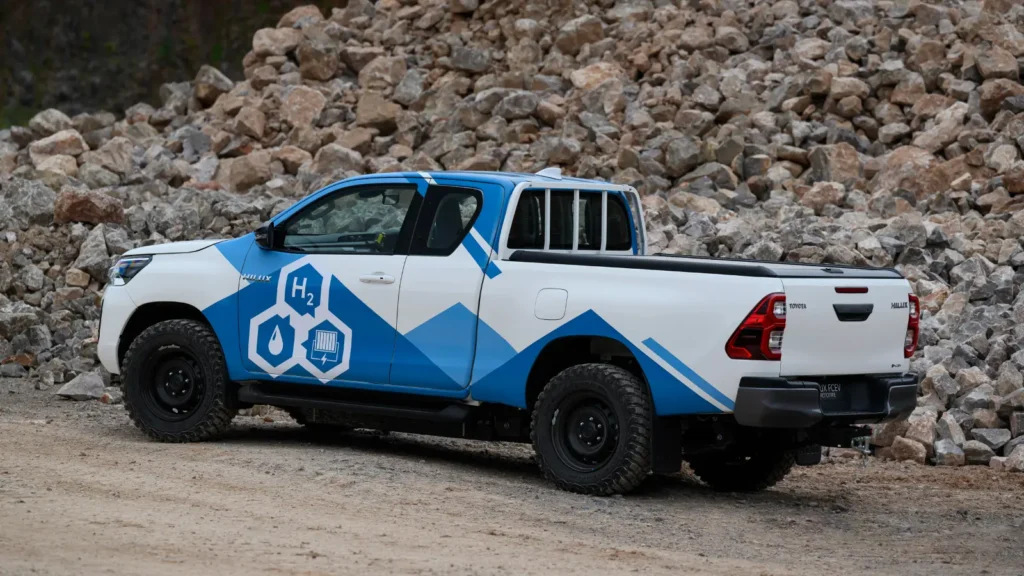
The Hydrogen Hilux
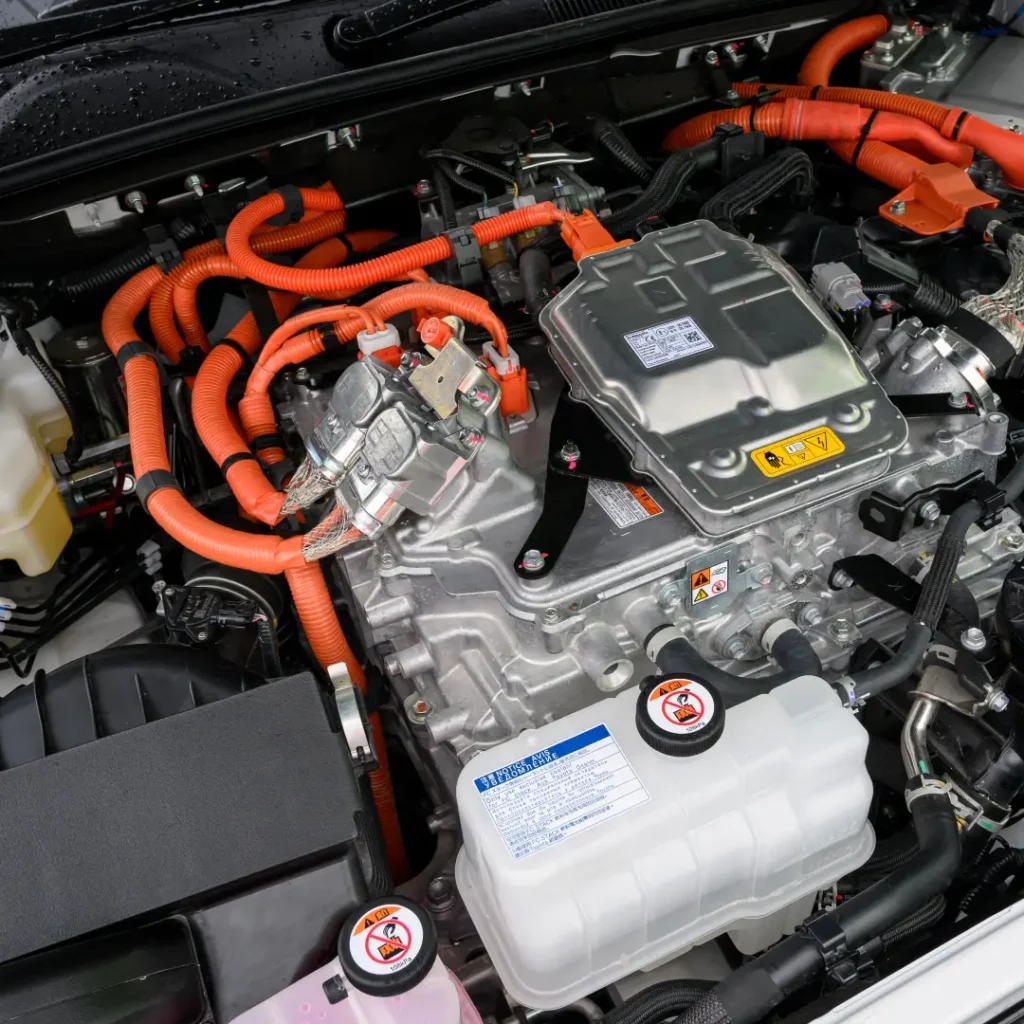
The hydrogen fuel cell Hilux is based on the tried-and-tested Toyota Hilux platform, which has long been recognised for its durability and reliability in extreme conditions. The new hydrogen model retains the same rugged exterior dimensions as the conventional Hilux but incorporates advanced fuel cell technology sourced from the Toyota Mirai, the world’s first mass-produced hydrogen fuel cell sedan.
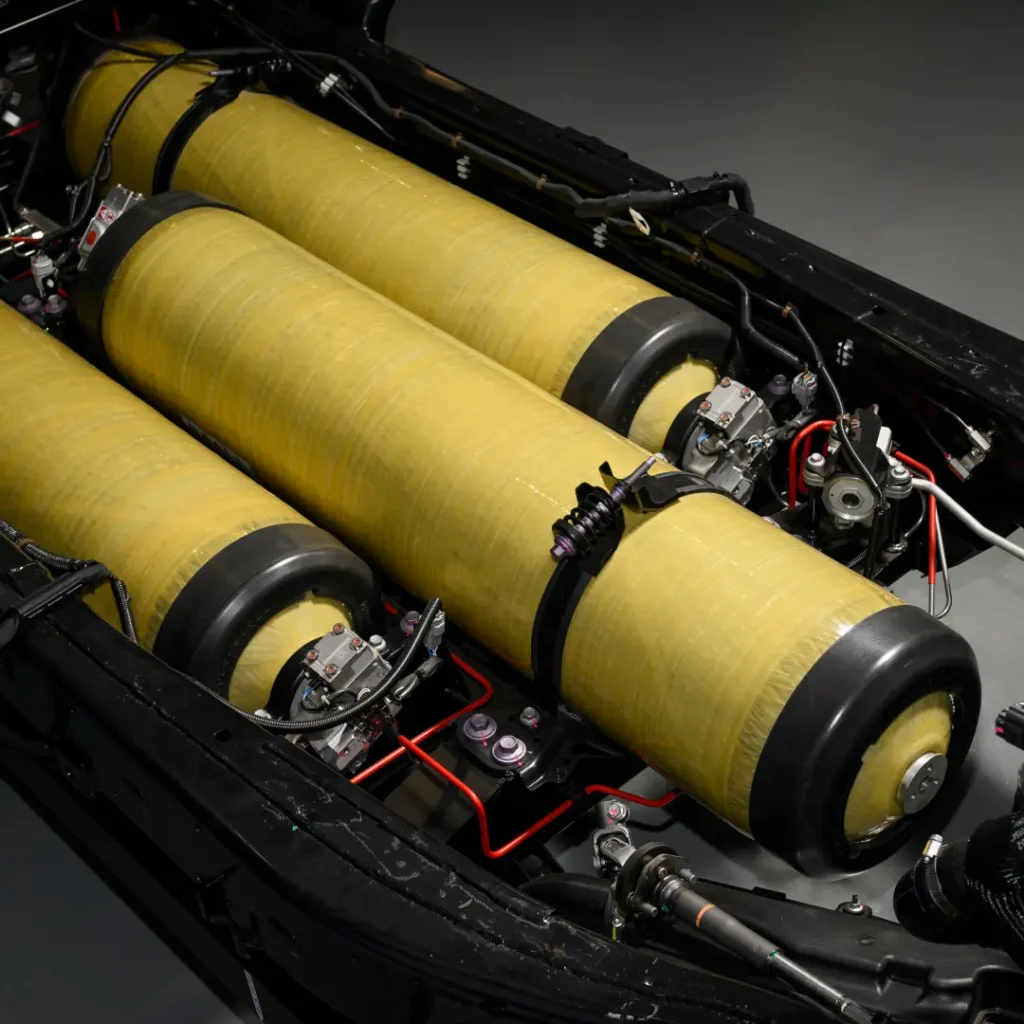
With an expected driving range of up to 370 miles, the hydrogen Hilux surpasses many battery-electric vehicles — and all electric pickups — in terms of range. Hydrogen’s lightweight properties also enable the vehicle to achieve higher payload and towing capacities than some zero-emission alternatives. The fuel cell Hilux is equipped with three high-pressure hydrogen tanks, offering a total system capacity of 7.8kg of hydrogen, and a rear-mounted electric motor that delivers 182hp and 300Nm of torque.
Like all hydrogen fuel cell vehicles, the Hilux produces zero emissions during operation, emitting only water vapour from its tailpipe. The vehicle is powered by a lithium-ion hybrid battery that stores electricity generated by the onboard fuel cell stack, which consists of 330 cells and is mounted over the front axle.
Collaborative Development
The development of the hydrogen Hilux has been a joint effort between Toyota Motor Manufacturing UK (TMUK) and Toyota Motor Europe (TME), with additional support from industry partners such as Ricardo, ETL, D2H Advanced Technologies, and Thatcham Research. The project began with a feasibility study in 2022, followed by an intensive design and development phase in 2023. Construction of the prototypes was completed at TMUK’s facility, with 10 units produced between June and July 2023.
Toyota’s efforts to promote hydrogen go beyond the Hilux project. The company is involved in over 20 hydrogen-related partnerships across Europe, including trials with hydrogen-powered trucks, fuel cell buses, and even marine applications. Toyota’s modular fuel cells, which can be adapted for various uses, have been integrated into a variety of products, from buses to boats to generators.
Looking Ahead
As Toyota looks to the future, it is developing its third-generation fuel cell technology, which is expected to debut in 2026–27 — just in time for the arrival of the next-generation Hilux. This new technology aims to deliver higher power density, an extended driving range, and significantly reduced costs.

- Pickup registrations fall for 10th month as tax changes hit market - 10 August 2026
- Toyota adds commercial two-seat Hilux conversion - 10 August 2026
- Chery invests $75m in KGM as Korean manufacturer expands Chinese technology partnerships - 3 August 2026