
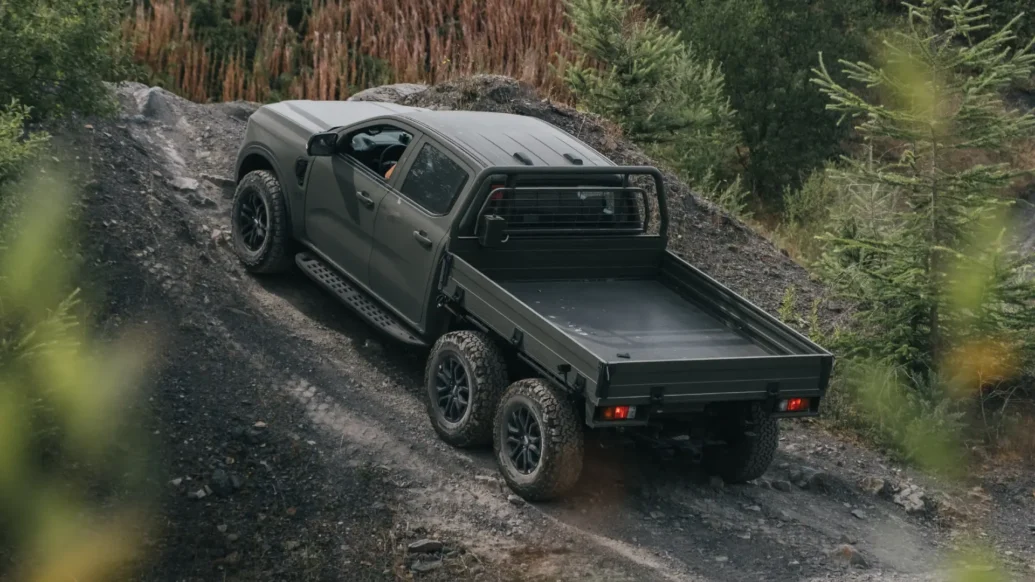
Ford has joined the competition to supply the UK Ministry of Defence’s next generation of light military vehicles, proposing a vehicle family based on the Ranger and Ranger Super Duty.
The manufacturer has partnered with General Dynamics Land Systems UK and British engineering specialist Ricardo to bid for the MoD’s Light Mobility Vehicle programme.
The programme is expected to replace ageing military vehicles including Land Rover and Pinzgauer models. Reports suggest the complete contract could be worth around £2 billion over its lifetime, although Ford and its partners haven’t revealed the likely number of vehicles involved.
Crucially, the announcement represents a bid rather than a contract award. Ford’s Ranger-based proposal will face competition from other manufacturers and defence specialists before the MoD selects its preferred vehicle.
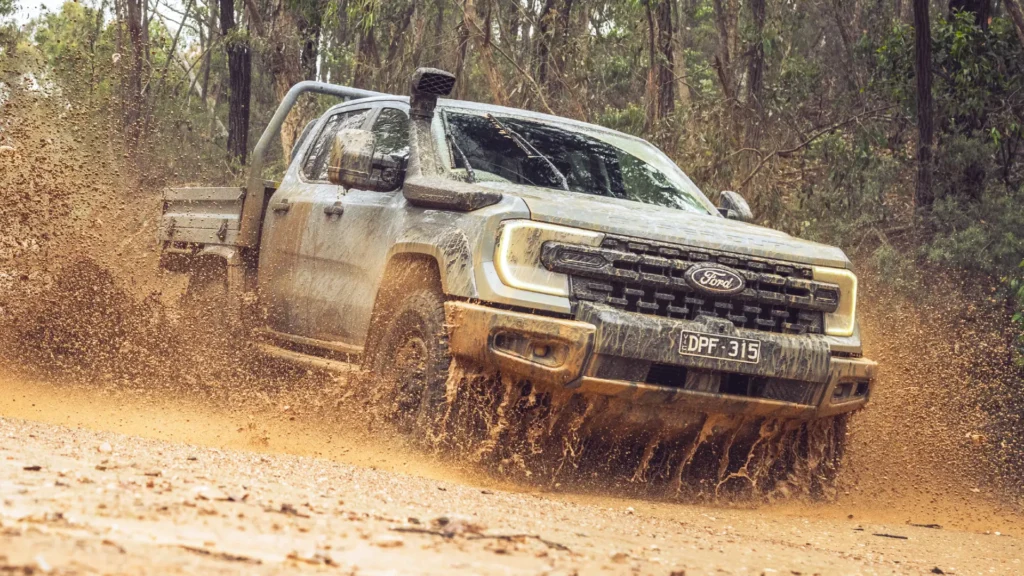
Ford confirms Ranger’s military ambitions
The announcement confirms what had already become an increasingly open secret.
Professional Pickup revealed in May that Ranger Super Duty vehicles were being evaluated by military operators, despite Ford maintaining at the time that there were no plans to introduce the heavy-duty model in Britain.
Days later, Ford confirmed that Ranger Super Duty would come to the UK, identifying defence, emergency services, forestry and mining among its potential markets.
The latest announcement goes considerably further by naming the MoD programme, confirming Ford’s partners and establishing the Ranger as the basis of a formal military proposal.
General Dynamics and Ricardo previously displayed militarised 4×4 and six-wheel Ranger demonstrators at the DSEI defence exhibition. Ford has now formally joined the partnership, bringing its manufacturing scale, commercial vehicle engineering and support network to the bid.
General Dynamics would contribute its defence integration and programme experience, while Ricardo would handle specialist engineering and adaptation work.
Ranger and Ranger Super Duty proposed
Using an existing commercial pickup should allow the consortium to offer several configurations without developing an entirely new platform.
The standard Ranger provides a widely available base vehicle with an established parts and servicing network. Ranger Super Duty adds a reinforced chassis, locking front and rear differentials, heavy-duty running gear and greater payload and towing capacities for more demanding roles.
Ford quotes a payload of up to 1,982kg, a 4,500kg towing capacity and an 8,000kg gross train mass for the Super Duty. Its 3.0-litre V6 diesel engine produces 209PS and 600Nm and is manufactured at Ford’s Dagenham plant.
The platform has also been developed with specialist conversions in mind. Pre-wired auxiliary controls and provision for additional cameras, sensors and electrical equipment should make it easier to install military communications and other mission systems.
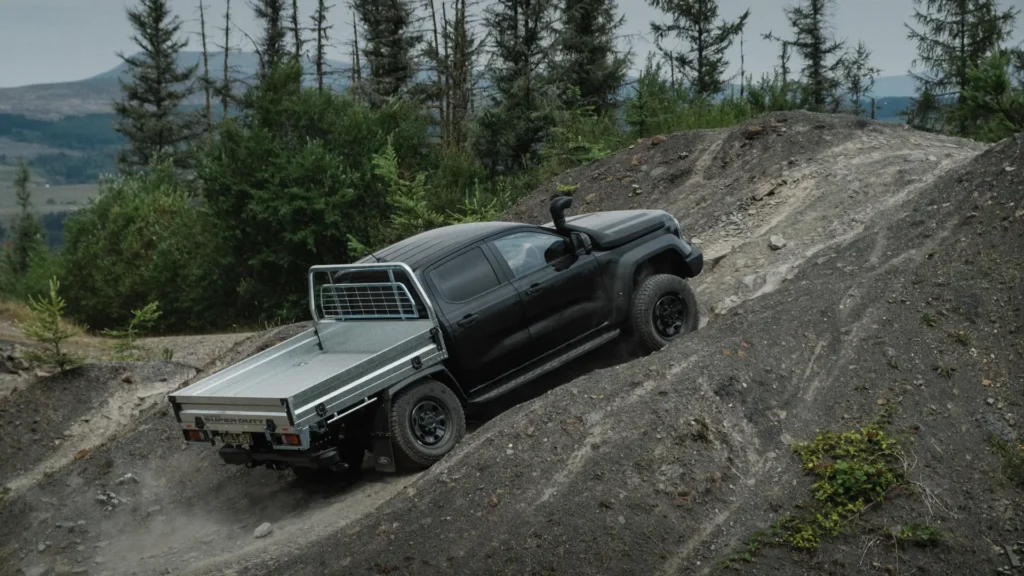
Ford also says the central touchscreen can be adapted to display third-party software, potentially reducing the need to install separate displays and wiring inside the cabin.
Ford Ranger faces Ineos Grenadier rival
Ford’s consortium is not alone in pursuing the Light Mobility Vehicle programme.
Ineos has formed Team Grenadier with SMT Defence and NMS UK, proposing a family of military vehicles based on the Grenadier 4×4 and the chassis underpinning the Quartermaster pickup.
Ineos says nine modular applications are being developed around the platform, including its Grenadier Multi-Role Light Vehicle.
The competition therefore presents the MoD with two different commercial-platform approaches. Ford is emphasising the Ranger’s global production scale, extensive parts supply and established dealer support, while Team Grenadier is promoting British ownership, UK-based conversion work and the Grenadier’s more traditional permanent four-wheel-drive hardware.
Neither consortium has secured the contract, and further contenders are also expected to compete for the programme.

Commercial scale forms core of Ford bid
Ford’s pitch rests heavily on the availability and support advantages of adapting a mass-produced commercial vehicle.
Alongside global Ranger production, the company points to its UK facilities at Dagenham, Dunton, Daventry and Halewood, plus its existing dealer, mobile servicing and parts distribution operations.
That could give the MoD a more conventional supply and maintenance structure than it would receive with a low-volume bespoke military vehicle. However, the eventual Ranger-based machines would still require substantial modification to meet the protection, communications and operational requirements of different military roles.
Ford is also looking beyond the UK contract. Company president Jim Baumbick told the Financial Times that the manufacturer sees an opportunity to supply related Ranger-based vehicles to NATO countries, potentially creating a common and more easily supported platform across several armed forces.
No procurement decision, delivery timetable or final specification has been announced.
