
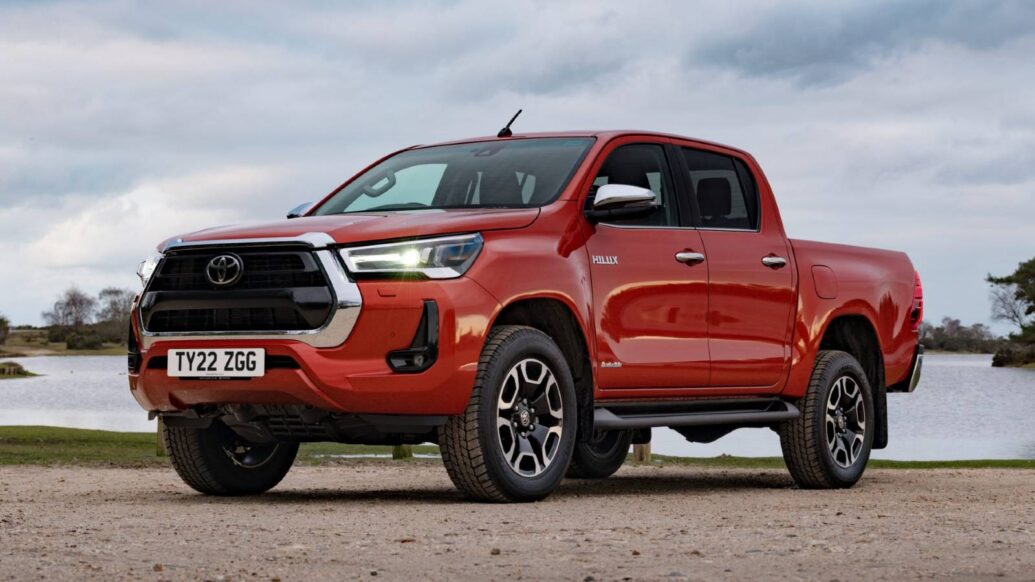
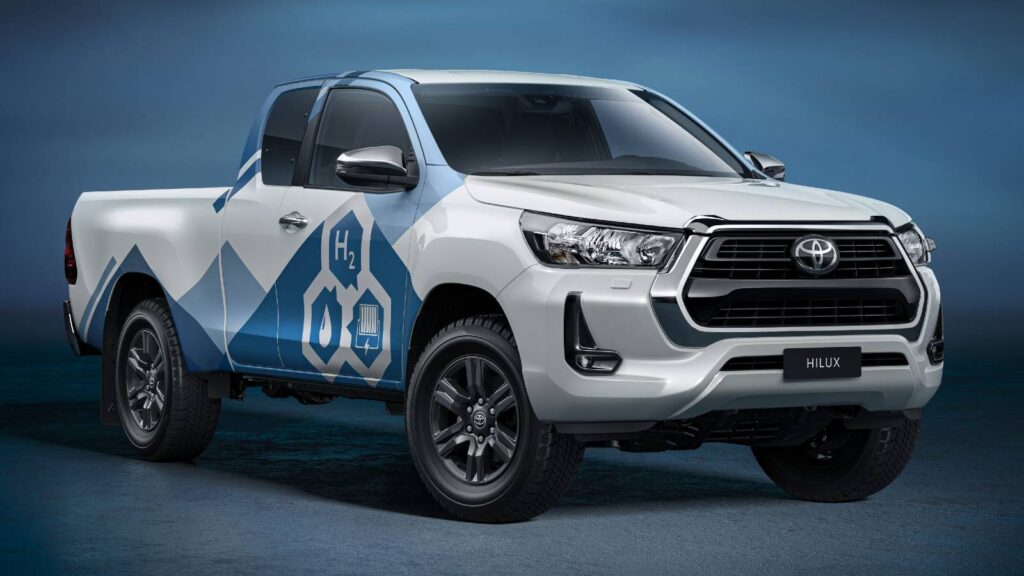
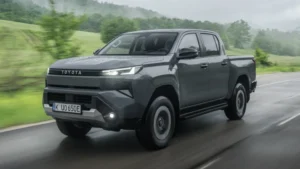
While the Hilux is due to get a mild-hybrid upgrade to its 2.8-litre diesel engine, there’s every chance that Toyota will skip full electrification for its popular pickup and introduce a hydrogen-powered fuel cell version with the next-generation model due in 2026.
Toyota has spent a lot of time and money developing fuel cell electric vehicle (FCEV) powerplants, notably in the Mirai saloon car . The passenger vehicle has now been canned, but the technology powering it is likely to end up under the bonnet of Toyota’s light commercial vehicle, which, in the UK, means the Hilux pickup.
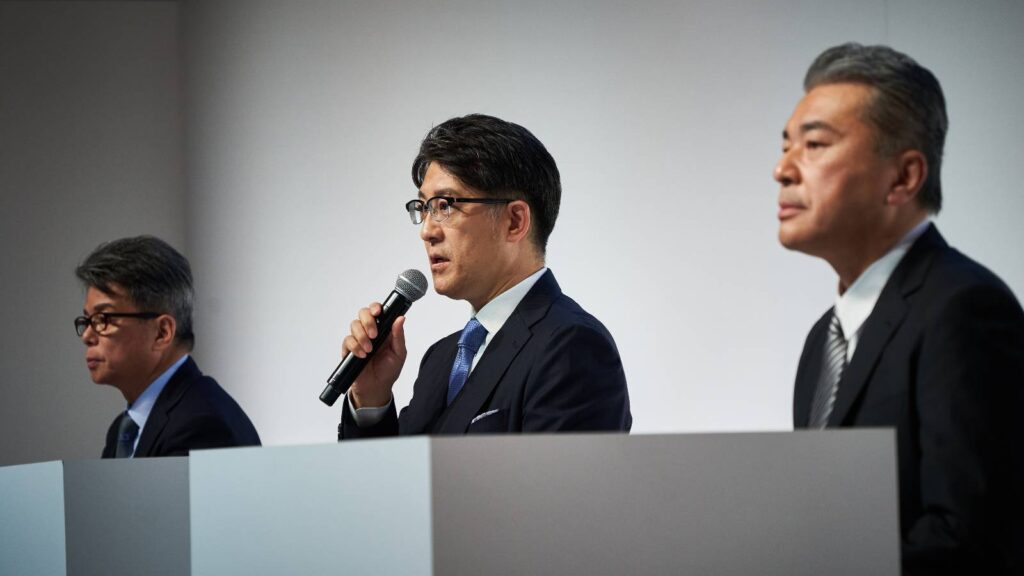
Speaking at a press conference announcing a new management policy and direction, Toyota’s new president and CEO, Koji Sato, said the firm intended to “thoroughly implement electrification, which we can do immediately.”
Hiroki Nakajima, Executive Vice President and Chief Technology Officer, added more detail: “For FCEVs, we will pursue mass production centred on commercial vehicles.
“One feature of FCEVs is that the energy source, hydrogen, is lightweight, so even when travelling longer distances, the vehicle is not as heavy as a battery EV and less space is required. Refuelling is also much quicker. Taking advantage of these strengths, we will work with business operators to promote FCEVs by starting with commercial vehicles such as medium- to heavy-duty trucks.
“Additionally, we have started basic research on hydrogen engines for heavy-duty commercial vehicles.”
Toyota is working with the Dutch VDL Groep and French start-up Hyliko, entering the heavy-duty hydrogen truck market using Toyota’s fuel cell technology. The first vehicle is expected to be built this summer, using fuel-cell technology developed from the Mirai luxury saloon car. The same technology also powers a modified Hino Profia truck, with a large-capacity high-pressure hydrogen tank giving the HGV a 370-mile cruising range.
A consortium to develop a prototype hydrogen FCEV version of the Hilux pickup is being led by Toyota at the company’s UK plant in Burnaston, Derbyshire, backed by government funding through the Advanced Propulsion Centre, an organisation supporting the development of cleaner technologies and new mobility concepts.
Toyota isn’t abandoning battery-powered models, with Nakajima-san telling the assembled guests that the next generation of EVs from the Japanese manufacturer will “double driving range by using batteries with far greater efficiency, while also offering designs and driving performance to set hearts racing.”
Increasing the electric range of plug-in hybrid models to more than 125 miles is also in the plan, with Toyota wanting to “reposition PHEVs as ‘the practical BEV’.”
Stellantis, which partners with Toyota for its light commercial vans — the Proace City, Proace and forthcoming unnamed large van — has developed its own FCEV drivetrain, with limited sales of the Peugeot e-Expert Hydrogen already started in France and Germany.
In the pickup market, few have announced plans for a hydrogen-powered model. Maxus is the first to produce a pure-electric model with its T90EV, while Ford and Volkswagen will introduce plug-in hybrid models by 2025. KG Mobility — the new name for SsangYong — is expected to introduce an electric Musso pickup by 2024, while Korean rival Kia is also working on an electric pickup truck and vans for the European market.
- Pickup registrations fall for 10th month as tax changes hit market
- Toyota adds commercial two-seat Hilux conversion
- Chery invests $75m in KGM as Korean manufacturer expands Chinese technology partnerships

- CTEK CS One Gen 2 review: Smart charging to keep your pickup’s battery in top condition

- Ford built a 420hp V8 Ranger and then kept it to itself

- Pickup registrations fall for 10th month as tax changes hit market - 10 August 2026
- Toyota adds commercial two-seat Hilux conversion - 10 August 2026
- Chery invests $75m in KGM as Korean manufacturer expands Chinese technology partnerships - 3 August 2026