

After experiencing the worst year since records began, van and commercial vehicle production in the UK has bounced back with 2021 ending on a high, up 11.3% on the previous year.
Figures released by the Society of Motor Manufacturers and Traders (SMMT) show that UK factories produced 73,600 of the latest vans , trucks, taxis, buses and coaches throughout the year, despite the obvious challenges.
With high demand for new LCVs, production was constrained by two major issues; the continuing global semiconductor shortage, which has been compounded by the ongoing coronavirus pandemic.
Last year’s growth was led by a steep rise in sales of vehicles for home delivery – a business sector that has boomed since the enforced lockdowns caused by COVID-19.
Just over half the UK’s production – 51.2% – was exported to foreign lands, with 93.2% of that heading to EU markets. Overall, this was a small reduction in production, dropping just 0.6%. Vehicles earmarked for the UK made up the remaining 48.8%, with overall production for our home territory rising by an impressive 27.3%.

Despite the growth, the rate of production still lags behind previous levels, with a drop of 14.4% over the five-year pre-pandemic average. That average of 85,956 vehicles is 12,356 ahead of 2021’s results.
Mike Hawes, SMMT chief executive, said: “After the worst year in a lifetime, the growth in production for commercial vehicles during 2021 is extremely welcome. Despite a plethora of challenges, manufacturers have remained operational throughout the year.
“The sector isn’t out of the woods yet, however, and challenges remain heading into 2022. Support will be necessary to ensure the supply chain can overcome ongoing semiconductor-related shortages as well as measures to ensure energy costs do not rise to an extent that it significantly undermines competitiveness.”
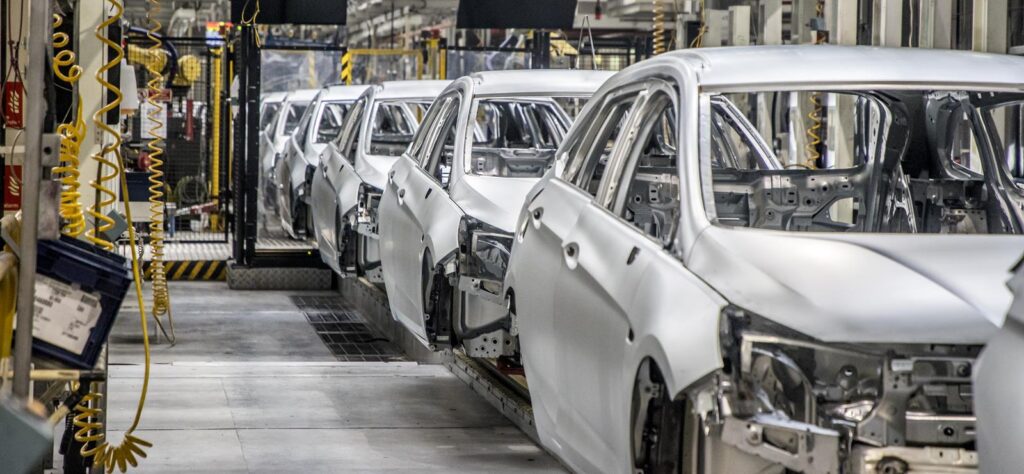
While factories producing LCVs recovered, those producing engines for UK and export markets didn’t do quite so well. Production fell by more than 10% in 2021, despite the economic recovery, although domestic supply remained resilient, recording just a 3.6% drop. Production of engines for export, however, fell back by 15.4%.
The news isn’t any better for car manufacturers. The semiconductor shortage has hit hard there, while the closure of the Honda factory has dented figures considerably, with the UK’s output dropping by 6.7%. That relatively small drop masks a staggering 34% loss against pre-pandemic totals.

 Before the Adventure Starts: How to Research the History of a Used 4×4
- Inspiring Vet Care orders KGM Musso EV fleet for veterinary work

- KGM joins two-seat pickup rush with Musso Commercial
 Toyota Tacoma Roof Rack Guide: Building a Practical Setup with Hooke Road for Tacoma Upgrades
- Foton confirms Tunland mild-hybrid pickup for UK launch


- Inspiring Vet Care orders KGM Musso EV fleet for veterinary work - 5 November 2026
- KGM joins two-seat pickup rush with Musso Commercial - 4 November 2026
- Foton confirms Tunland mild-hybrid pickup for UK launch - 29 October 2026