
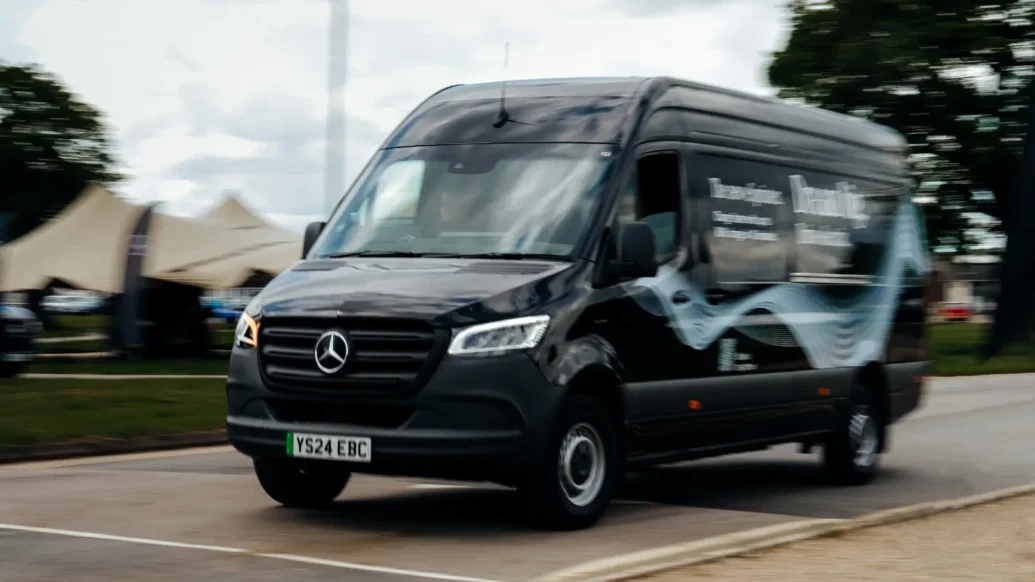
Mercedes was one of the first to produce a large electric van in-house, but with an official range of under 90 miles between charges, understandably many operators dismissed the vehicle as being impractical. As a result, sales were, to say the least, mediocre. That’s all changed with the latest eSprinter, which now has an official WLTP range of up to 273 miles. Headline-grabbing stuff, that’s for sure, but will our review find the devil behind the details?

The original eSprinter was only available in a single body derivative, but now it’s possible to order the van in either L2 or the most popular L3 length. There’s a choice of two battery packs rated at 81kWh or 113kWh, and the electric motor can be specified in 136hp or 204hp guises, which sound much better than the previous 114hp unit.
Those battery packs can be fully charged from an 11kW AC wallbox in either 8 or 11 hours, depending on which size you’ve opted for, and if you can find a public chargepoint that reliably pumps out 115kW, you’ll see a 10% to 80% top-up achieved in either 32 or 42 minutes.

Cab and Interior
The cab is a big strength of the eSprinter. It’s spacious in every way, and in this latest incarnation, the dash is dominated by a 10.25-inch high-resolution touchscreen with the now well-established MBUX system. It provides access to all the usual audio, media, and system controls, together with Apple CarPlay and Android Auto smartphone integration and a very clear output from the satellite navigation system (when specified).
Thankfully, the heating and ventilation controls remain as the mechanical variety — a godsend to anyone who has tried to make adjustments on a competitor’s touchscreen. There’s a WiFi hotspot facility, and the built-in modem allows for remote connectivity and telematic services.

There’s a big pat on the back due to Mercedes-Benz’s standardisation of so much safety and driver-aid tech on the new eSprinter. Active brake assist, blind spot assist, crosswind assist, active lane keeping assist, attention assist, sideguard assist… the assists just keep on coming. And these are standard on every van.
Two trim levels are offered, Pro and Select, although there’s so little upspec in the Select model, I reckon Mercedes should have stuck to a single trim. The Pro model gets air conditioning, a heated driver’s seat, heated and electrically adjustable door mirrors, a reverse camera, cruise control and a tachograph, but I’d argue that the customer would be better off with the Select model and then picking and choosing from the comprehensive options list to make the van their own.

Performance and Drive
The van didn’t put a foot wrong during our time driving it around the Cotswolds. It’s almost silent, which you’d expect from an electric van. However, this can often make other unwanted sounds, such as road and wind noise, more noticeable. Not so here; you could almost hear a pin drop, even at speed. There were no little squeaks or rattles either, giving the impression that the build quality is up to the level you might expect from a premium manufacturer.
Although acceleration is rapid, there’s a 56mph speed limiter in place to curb your enthusiasm and maximise that all-important range, but it’s frustrating in practice when a 60mph or 70mph cruise, where legal, makes all the difference.

The Catch
It’s all good so far, but there’s a catch, and it’s all down to physics and legislation. That 113kWh battery offering all that range is heavy, and any weight reduces the available payload. That’s why the majority of the eSprinter range is offered at a GVM (Gross Vehicle Mass) of 4,250kgs, taking advantage of the government’s dispensation allowing drivers usually restricted to a van plated at 3,500kg to drive a heavier electric van on their existing licence.
Currently, a few hours of training are mandated, although it has been announced that this requirement is soon to be scrapped . But even at 4,250kg, the eSprinter only has a maximum payload of 920–1,148kg, and if you’re insistent on a 3,500kg version, you’ll have to be content with just 414kg to 570kg. That’s impractical to pretty much everyone, except those carrying foam fillings for sofas.

So, you’ll opt for the 4,250kg eSprinter, hoping for a legally seamless upgrade from a 3,500kg van. Unfortunately, it’s not quite that simple. The van will be treated as a goods vehicle for testing purposes, meaning it’ll have to go for an MOT test on its first birthday rather than its third. Operation will also be covered by driver’s hour regulations (hence the standard fit tachograph), and there are potential restrictions in the radius the van can operate from base. Oh, and that speed limiter? It also prevents you from legally using the outside lane of the motorway.
Mercedes-Benz eSprinter: Verdict
While the eSprinter is possibly restricted by its weight and some awkward legislation, it’s an excellent van. Mercedes has learnt from its previous attempt at marketing a large electric Sprinter and come up with a capable, safe, and competent vehicle (albeit with a modest payload) that, provided the government sorts out the 4,250kg legislative wrinkles, should work for the vast majority of operations. Ford E-Transit, watch your back…

- First Drive: Mercedes-Benz eSprinter Electric Van Review - 5 June 2024