
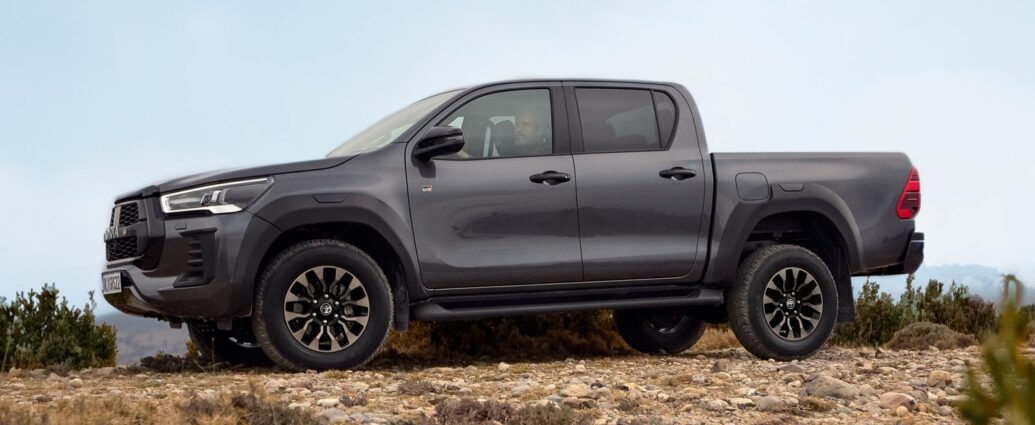
The toughest, body-on-frame models from Toyota – the Hilux pickup and Land Cruiser SUV – are to be made compatible with HVO100 diesel, a non-fossil fuel made from 100% renewable sources such as waste cooking oil.
Both the Land Cruiser and Toyota Hilux will join the Proace family of light commercial vehicles in being compatible with HVO100 diesel.
What Is HVO100 Fuel?
Hydrotreated vegetable oil (HVO) is a diesel alternative made from vegetable oil (including palm or rapeseed) or waste-based feedstock such as used cooking oil. Hydrogen is used in a chemical process to remove oxygen from the fatty acids that make up the fuel’s base, with the outcome being a sustainable fuel which has a similar chemical composition to fossil diesel.
It’s so close that, in most circumstances, it can be used as a direct replacement to diesel fuel, and can be freely mixed and blended with other fossil-based diesel.
The process means that greenhouse gas emissions can be reduced by up to 90% over the fuel’s life cycle compared to regular diesel.

HVO100 Diesel Availability
HVO100 fuel pumps are becoming increasingly common at filling stations across Europe, with around 1,000 already in use across Belgium, Denmark, Finland, Estonia, Latvia, Lithuania, Netherlands, Norway and Sweden.
In the UK, there are no public filling stations offering HVO100, but supplies are available for off-road or captive fleet purposes.
Toyota’s Technical Changes
The most significant change from current Toyota vehicles is an adjustment of the fuel injection system to increase fuel volume, required as HVO100 is less dense than standard diesel. The change does not affect the vehicle’s ability to run on standard diesel, so either fuel can be used day-to-day.
As a result of using HVO100 and the adjustment to the injection system, there is a modest increase in maximum engine power.
Pricing and Availability
There won’t be any price changes caused by this change although, with vehicles expected to be built to the new specification from the first quarter of 2023, expect the usual price increases before then.
- Pickup registrations fall for 10th month as tax changes hit market

- Toyota adds commercial two-seat Hilux conversion

- Chery invests $75m in KGM as Korean manufacturer expands Chinese technology partnerships

- CTEK CS One Gen 2 review: Smart charging to keep your pickup’s battery in top condition

- Ford built a 420hp V8 Ranger and then kept it to itself

- Pickup registrations fall for 10th month as tax changes hit market - 10 August 2026
- Toyota adds commercial two-seat Hilux conversion - 10 August 2026
- Chery invests $75m in KGM as Korean manufacturer expands Chinese technology partnerships - 3 August 2026