
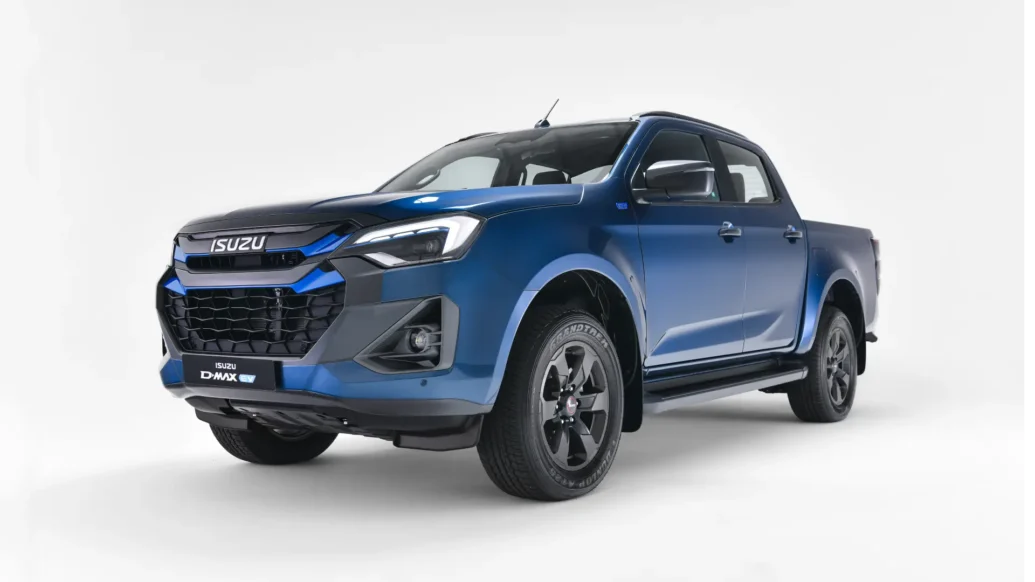
That familiar diesel clatter is gone. In its place, an almost unnerving EV silence as the tough Isuzu D-Max pickup turns electric. And we’ve driven it.
When Isuzu confirmed that an all-electric D-Max was coming, the response from UK pickup fans was mixed. On one hand, it’s a brand trusted for rugged dependability and hard graft; on the other, electric power still feels like a risk in a sector that values range and resilience above all else.
We’ve now had a very brief opportunity to get behind the wheel of a pre-production D-Max EV prototype, and it was just enough time to get an early sense of what’s changing and, perhaps more importantly, what’s staying the same.
This D-Max EV review wasn’t an official media drive and wasn’t sanctioned or authorised by Isuzu. Our time was very limited, but we were on public roads, with a short loop of dual carriageway, a country lane, and a dash of urban driving. There was no off-road section, no payload in the back, no towing — and absolutely no pictures. The EV’s custodians were very firm about that, which explains the studio shots we’re using. This wasn’t a representative test, then, but it offered a useful glimpse of where Isuzu’s engineers are heading.
An Isuzu D-Max through and through, just electric
This isn’t some radical rethink of the D-Max recipe. Park the Isuzu D-Max EV next to the diesel model, and the differences are subtle. The bodywork is largely unchanged, the wheels look the same, and even the cabin layout is instantly familiar.
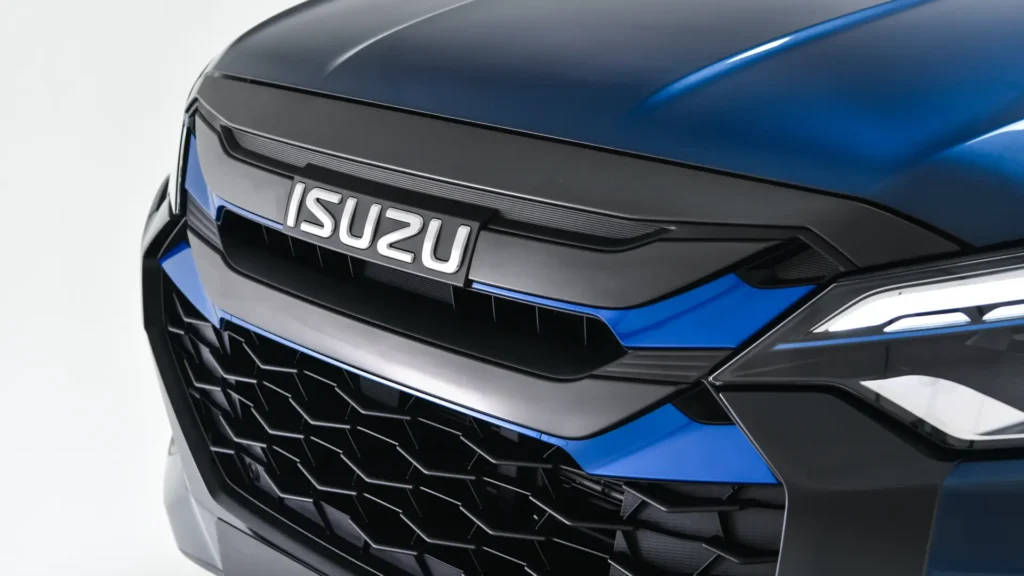
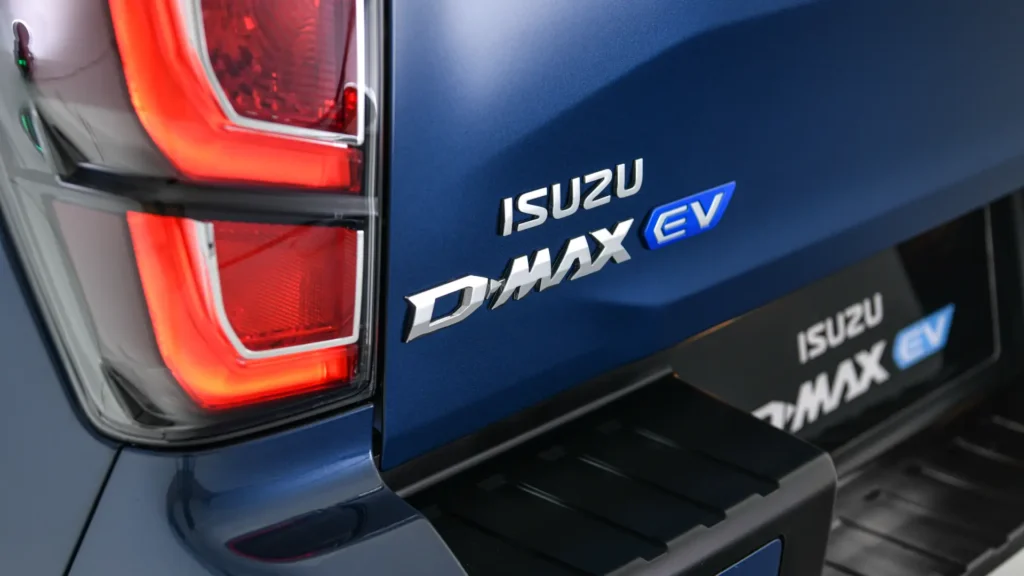
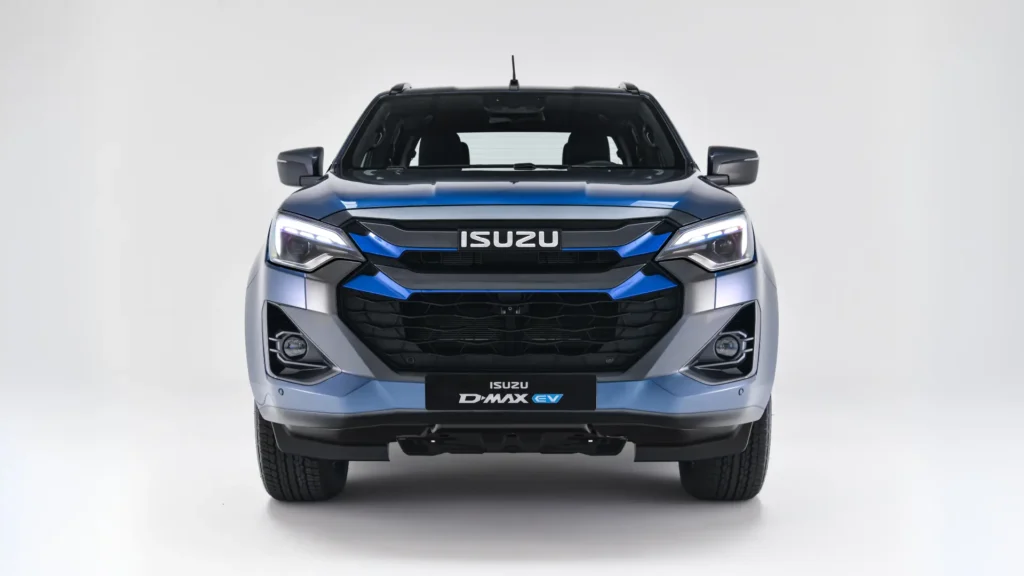
Only the blue accents on the grille and badging, the discreet EV logos on the front wings, and a D-Max EV badge on the tailgate betray what’s hiding underneath. That’s intentional: Isuzu isn’t chasing lifestyle buyers with futuristic design cues, but rather aiming for continuity. It’s got the same straightforward D-Max strengths operators already trust, just quieter and cleaner.
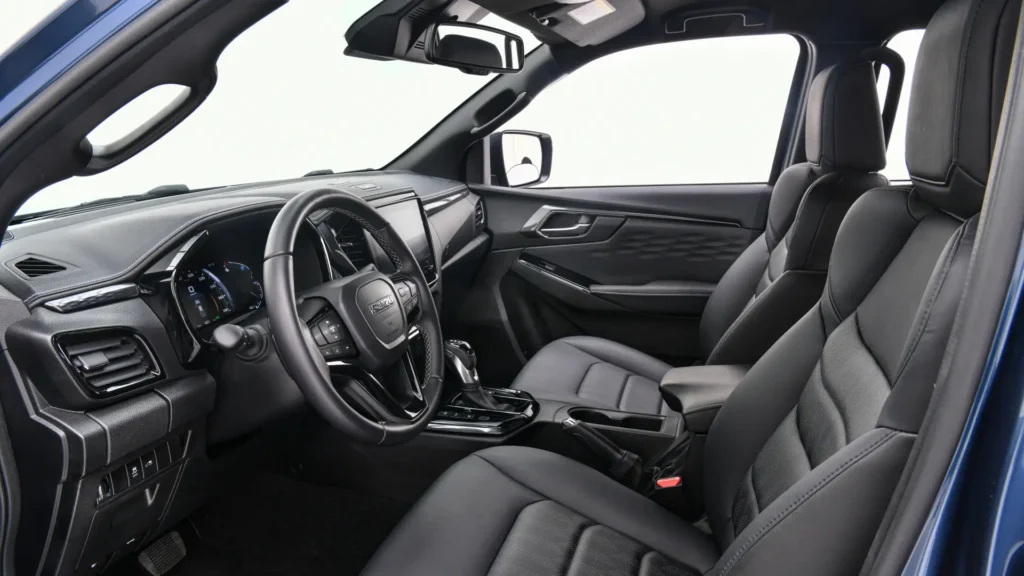
Slip inside and the sense of familiarity continues. This early prototype carried the same dash, seats and switchgear as the diesel model. It even had a manual handbrake — not something you see often on a new EV.
There are only two real giveaways that you’re in something different. The rev counter has been replaced with a power gauge, showing how much energy you’re using or recovering, and a pair of paddle shifters sits behind the steering wheel to adjust regenerative braking strength. Otherwise, it’s pure D-Max: solid, unpretentious and built to work.
And quiet. Really quiet. Anyone who’s driven a D-Max before will find that silence almost eerie. Once underway, the usual diesel soundtrack is replaced by near-total calm of just wind noise and the occasional whirr from the motors.
Electric power, familiar controls
Isuzu has already published headline figures for the D-Max EV: a total output of 140kW (190hp) and 325Nm of torque from two motors — one producing 43kW (58hp) at the front and another delivering 97kW (132hp) at the rear. On paper, that’s enough for 0–62mph in 10.1 seconds, though it feels brisker in practice thanks to instant torque delivery. Throttle response is immediate but well-mannered, making it easy to drive smoothly.
The sense of control is impressive, especially when using the paddles to manage regenerative braking. It’s a natural fit for urban and low-speed driving, letting you slow smoothly without touching the pedal. There’s no learning curve or quirky behaviour; it just works.
Top speed is limited, though we never managed to exceed 60mph during our short time behind the wheel, thanks to heavy traffic. The prototype felt composed and well-calibrated at those speeds, though it’s far too soon to comment on ride comfort or steering precision.
Off-roading potential looks promising
Our route didn’t allow for any off-road exploration, so we’ll have to wait to see how the EV copes with the kind of terrain where D-Max buyers earn their living.
Isuzu’s published numbers suggest the potential is there. The D-Max EV offers a 30.5° approach angle, 24.2° departure angle, 210mm of ground clearance, and a 600mm wading depth — all figures that are slightly lower than the diesel-powered model , but capable enough.
With twin motors able to distribute torque to each axle individually, Isuzu says there’s less need for locking differentials. It’ll be fascinating to see how that theory plays out in practice once proper off-road testing begins.

Isuzu D-Max EV range and practicality
The area that’s likely to spark debate is range. Isuzu quotes a WLTP figure of 163 miles from the 66.9kWh battery, which is on the low side for any electric vehicle, let alone a commercial one. Once you add a 1,000kg payload or hitch up to the 3.5-tonne towing limit, that figure will inevitably drop further, and could easily dip towards 100 miles in winter.
That said, it’s a deliberate compromise. The D-Max EV isn’t designed for long motorway hauls. Instead, it’s aimed squarely at operators with limited mileage but lots of engine-idling time — forestry teams, quarry operators, or those working in emissions-sensitive areas, including the middle of big cities.
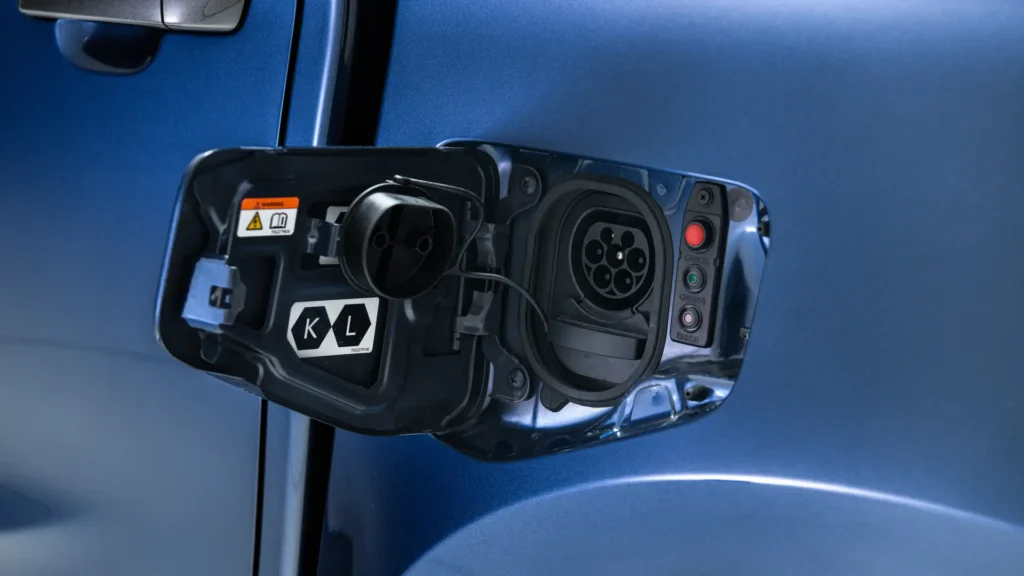
Charging is limited to a maximum rate of 50kW, which is enough to top the battery from 10–80% in one hour.
Premium price
The D-Max EV will arrive in the UK in early 2026 with prices starting from £59,995 plus VAT. That positions it well above the diesel range — an equivalent DL40 costs £39,400.
At nearly £20,000 more than a diesel equivalent, it’s not going to be a mass-market hit, but Isuzu’s customers tend to be pragmatic rather than trend-driven. For fleets needing to decarbonise or operators who value zero tailpipe emissions for site access, the D-Max EV could make a strong case.
Early impressions
It’s too early to make definitive judgments, but what’s clear from this brief encounter is that Isuzu hasn’t lost sight of what makes the D-Max tick. The fundamentals — simplicity, toughness, and reliability — all seem intact.
The switch to electric power has been made with restraint and purpose. It feels authentic, not gimmicky. There’s no unnecessary digital overhaul, just a proven truck adapted for a changing world.
Whether the UK market is ready for a £60k electric pickup with a 163-mile range is another question entirely. It’s credible but compromised. It remains a workhorse that’s lost none of its grit, but for most pickup buyers in the UK, it hasn’t yet solved the EV pickup equation.
But as a first step into electrification, the D-Max EV shows that Isuzu intends to move carefully, not carelessly, into the future.

- Mobilize Bento first drive: Micro-van thinking for the last mile - 8 December 2025
- Ranger revised: Updated Ford Ranger for 2026 - 26 November 2025
- Isuzu strengthens trade ties with Nick Knowles ambassador deal - 25 November 2025