
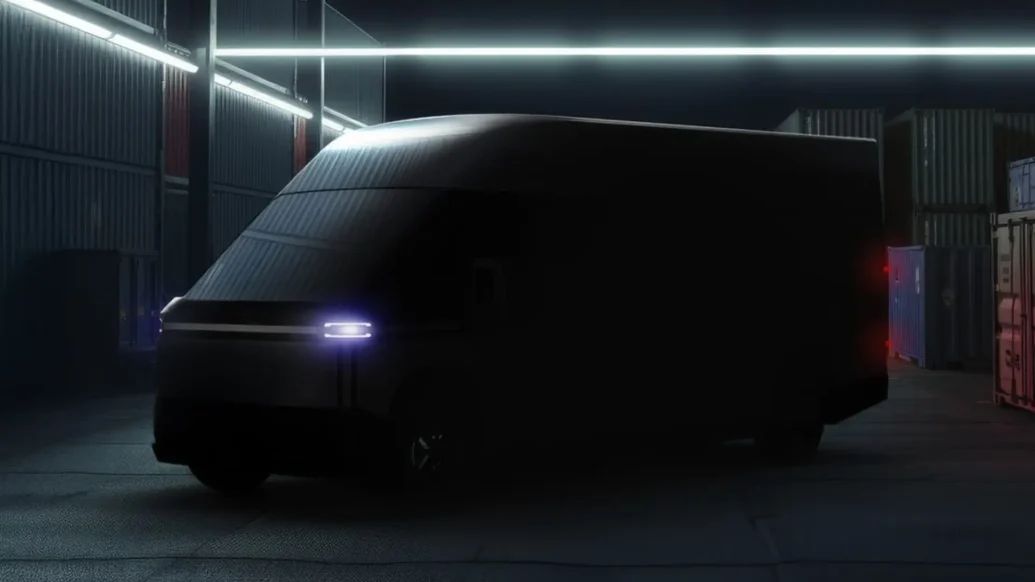
A new electric van brand is heading to Europe, promising to tackle carbon emissions head-on with a purpose-built, fully electric light commercial vehicle platform designed specifically for business users: Flynt. It’s a fresh name with bold ambitions and a European focus, backed by Chinese engineering muscle.
At a time when Europe’s van sector is still dominated by diesel — electric vans accounted for just 6% of sales in 2024 — Flynt says it’s going back to the drawing board to rethink how an electric van should be built. Rather than retrofitting existing combustion models, the brand’s new eLCV is a ground-up design that aims to deliver more space, better efficiency, and a lower total cost of ownership.
Leading the charge is Dr Daniel Kirchert, Flynt’s founder and CEO, who previously co-founded Chinese EV brand Byton and spent time at BMW and Infiniti. “Our fully electric platform is not a mere adaptation of traditional concepts,” he explains. “It represents a complete redefinition of what light commercial vehicles can and should be.”
Flynt is launching into a huge market. More than 1.5 million LCVs are sold in Europe each year, with most still running on diesel. The sector contributes over 91 million tonnes of CO₂ annually — and with e-commerce fuelling demand for last-mile delivery, that number’s still rising.
Backed by China’s GAC Group
To build its van, Flynt has partnered with Chinese firm MiracoMotor Technology, which will develop and manufacture the vehicles. MiracoMotor launched less than a year ago, and is the light commercial vehicle division of Chinese giant GAC, one of China’s largest automakers.
For Flynt, the partnership provides access to cutting-edge EV and battery technology, while allowing the European brand to focus on product strategy, customer service, and aftersales for local fleets.
“Operating successfully in Europe requires more than just technological excellence,” says MiracoMotor’s CEO Xiao Ning. “It demands a robust brand and exceptional service guarantees.”
Flynt says it will distribute its vehicles independently, under its own brand, with a dedicated aftersales network, local parts supply, and what it describes as a “seamless” customer experience. The idea is to give fleets a one-stop shop for going electric, without compromising uptime.

Specs and space: What we know so far about the Flynt van
The first van from Flynt will offer between 8.7 and 16.5 cubic metres of load space, built on a bespoke electric platform that’s said to be up to 28% more space-efficient than key competitors.
Top models will be capable of around 310 miles on a charge, using a 100kWh Nickel Cobalt Manganese (NCM) battery. Entry-level and mid-range versions will come with more affordable Lithium Iron Phosphate (LFP) packs.
All versions support 22kW AC charging, up to 220kW DC fast charging, and vehicle-to-grid (V2G) functionality. The brand says the vans will use around 20kWh per 100km, which — if accurate — would make them among the most efficient in the class.
There’s also a promise to keep costs down, with reduced servicing needs, fewer emissions-related tax burdens, and lower energy bills all contributing to a competitive total cost of ownership.
Joining a growing list of electric newcomers
Flynt isn’t the only new player eyeing Europe’s electric van market. Chinese powerhouse BYD is ramping up its commercial vehicle offering, while Kia is set to launch a new modular EV van range later this year under its Platform Beyond Vehicle (PBV) programme, starting with the medium-sized PV5. Both bring serious scale and tech clout, and could soon be major players in the LCV space.
When will Flynt arrive?
Prototypes of the first Flynt vans are expected to land in Europe during the first half of 2025, with customer deliveries planned for the first half of 2026. The brand will start in Western Europe before expanding further.
“Our market entry is carefully planned to deliver the best electric products and services in Europe,” says Kirchert. “Together with MiracoMotor, we offer not just vehicles but a holistic, low-carbon, low-TCO, and highly convenient solution that futureproofs fleets.”

- Mitsubishi L200 Commercial swaps rear seats for van tax treatment - 10 September 2026
- Volkswagen launches blacked-out Amarok Dark Label pickup - 9 September 2026
- Pickup market plunges to lowest level since Covid lockdown - 8 September 2026