

Tata Motors has announced plans to acquire Iveco Group, in a move that will shake up the global commercial vehicle market across Europe and beyond.
The Indian automotive giant has reached an agreement to launch a €3.8 billion (£3.28bn) all-cash offer for Iveco Group, excluding its defence business. The proposed acquisition, unanimously backed by the Iveco board and supported by major shareholder Exor, is expected to close in the first half of 2026.
If approved, the merger will combine Tata’s commercial vehicle operations with those of Iveco Group, including brands such as Iveco trucks and FPT Industrial, to form a heavyweight global player with over 540,000 vehicle sales annually and revenues topping €22 billion (£19bn).
What this means for the van sector
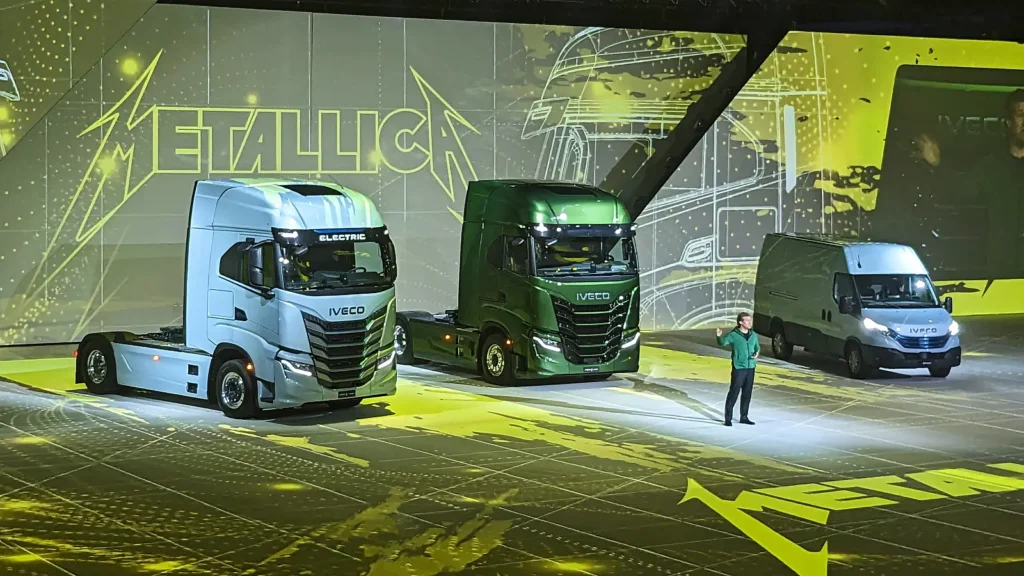
While both firms have a diverse portfolio, the impact of this deal will be felt most keenly in the commercial vehicle sector. Iveco is a major European van and truck manufacturer, with the Daily and eDaily ranges familiar sights on UK roads. Tata’s footprint is far stronger in emerging markets, particularly India, where it leads in commercial vehicles.
Together, the brands say they can accelerate innovation and growth by pooling R&D capabilities, spreading investment across higher volumes, and tapping into new markets.
For now, Iveco Group’s operations, including its factories and product lines, will remain largely unchanged. The Turin-based firm will continue to operate under its own identity, with headquarters, brand names, and production sites all retained under a two-year set of “non-financial covenants” agreed with Tata Motors.

Opportunity for all
The deal appears to have minimal geographic and product overlap, which has helped secure support from both boards and regulators. With different regional strengths and capabilities, they expect the merger to bring benefits without the usual complications of consolidation.
The scale of the combined business, split roughly 50% Europe, 35% India, and 15% Americas, will allow for more efficient investment in zero-emission transport solutions and better leverage in global supply chains.
Tata and Iveco also highlight the benefits to FPT Industrial, Iveco’s powertrain division, which could benefit from greater scale and reach across Tata’s vehicle range.
Tata and Iveco shareholder support
The €14.10 (£12.20) per share offer price, to be adjusted depending on the proceeds of the Iveco defence business sale, has been endorsed by Iveco’s board following an independent fairness opinion from Goldman Sachs. Shareholders are also expected to receive an extraordinary dividend from the defence business sale, estimated at €5.50–€6.00 (£4.75–£5.19) per share.
Iveco’s largest shareholder, Exor (which holds over 27% of shares and 43% of voting rights), has already committed to support the deal, including voting in favour of related resolutions at a forthcoming shareholder meeting. Additional support has come from Iveco board members who collectively hold another 1.4% of shares.
The offer is conditional on securing at least 80% of Iveco’s shares (or 95% without post-offer restructuring), as well as regulatory approval. If completed, the Iveco Group would be delisted from the Euronext Milan stock exchange.
Tata Motors chairman Natarajan Chandrasekaran described the deal as “a logical next step” following the demerger of Tata’s commercial vehicle division. “The combined group’s complementary businesses and greater reach will enhance our ability to invest boldly,” he said.
Iveco chair Suzanne Heywood called the move “strategically significant,” praising the benefits to employment security and industrial continuity. Iveco CEO Olof Persson added that the combination would help “accelerate innovation in zero-emission transport.”
What’s next for Tata and Iveco?
The deal hinges on the separation of Iveco’s defence operations, which is due to complete by March 2026. Regulatory filings and shareholder approvals will follow over the coming months, with deal closure targeted for the second quarter of 2026.
Both Tata and Iveco stress that this is not a cost-cutting merger. There are no plans to close plants or reduce headcount as a direct result of the combination, and Iveco’s identity will remain intact — for now.
But this is undoubtedly a significant power shift in the global van and truck market. With Chinese players making waves in the electric LCV space, a revitalised Tata-backed Iveco brand could emerge as a formidable and flexible competitor across multiple continents.
