
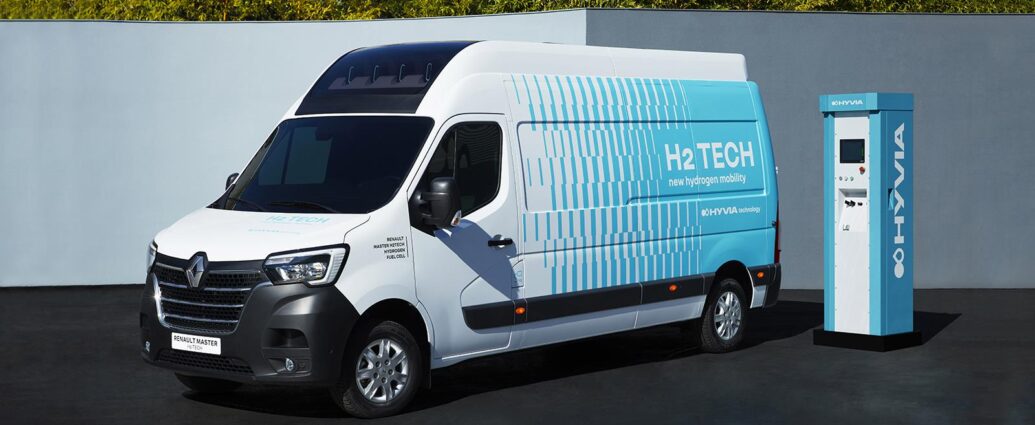
A prototype of the hydrogen-powered Renault Master van that is set to go into production next year has been revealed by Hyvia.
A joint venture between Renault and Turkish energy company Plug Power, Hyvia has unveiled the Renault Master Van H2-Tech prototype alongside its Hydrogen Refuelling Station prototype as it looks to deploy its own entire hydrogen-based ecosystem. This plan includes green hydrogen production and distribution, and a range of fuel cell-powered light commercial vehicles.
“I am proud to unveil our first hydrogen prototypes,” exclaimed David Holderbach, CEO at Hyvia . “Hyvia, it’s about hydrogen mobility solutions for a tailor-made offer to our customers to meet the challenges of hydrogen mobility.
“Hyvia will be able to deploy its entire ecosystem in all territories and professional fleets for carbon-free mobility.”

Renault Master Van H2-Tech prototype
With production expected to commence in 2022, the hydrogen-fuelled Master Van H2-Tech produces zero emissions, including CO2 or harmful particulates, as well as increased range and faster refuelling times over more conventional battery-powered vehicles.
Power comes from a 30kW fuel cell that feeds a 33kWh battery pack. The fuel cell combines hydrogen – stored in four tanks containing a total of 6kg of hydrogen – and oxygen with a catalyst to create electricity, and it’s this that drives the van. Emissions are limited to just water, and it’s clean enough to drink.
With a cargo capacity of 12m3 and a driving range between refuelling of up to 310 miles, the Master H2-Tech could easily meet the needs of businesses, fleets, and local communities.
Hyvia is also working on larger vehicles, including the Renault Master Chassis Cab H2-Tech. This will allow for more cargo capacity (up to 19m2) while still retaining a useful 155-mile range.

Hydrogen Refuelling Station prototype
Hyvia also showed its latest Hydrogen Refueling Station concept. These pumps will be available to purchase, lease or rent and are designed to meet and exceed all safety regulations and best practices while allowing fast fueling times similar to ICE vehicles – just five minutes – to maximise vehicle availability.
The way the refuelling station operates is simple – hydrogen supplied will either be generated on-site using water electrolysis or supplied in bulk using gaseous tube trailers. The system then compresses H2 into storage, before dispensing it into the vehicle when needed.

- Renault Niagara pickup revealed, but it’s only for Latin America

- Mitsubishi L200 Commercial swaps rear seats for van tax treatment
- Volkswagen launches blacked-out Amarok Dark Label pickup
- Pickup market plunges to lowest level since Covid lockdown
- KGM appoints Mertrux as new Derby dealer

- Renault Niagara pickup revealed, but it’s only for Latin America - 10 September 2026
- Mitsubishi L200 Commercial swaps rear seats for van tax treatment - 10 September 2026
- Volkswagen launches blacked-out Amarok Dark Label pickup - 9 September 2026