
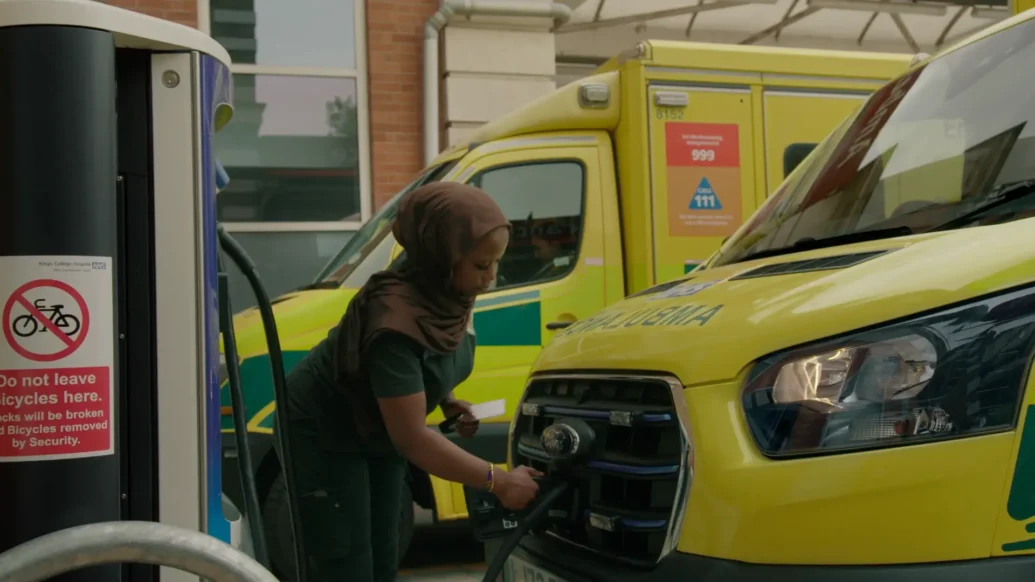
The next time an ambulance rushes through London’s streets, it could be running on battery power instead of diesel, as the London Ambulance Service (LAS) continues its efforts to cut emissions and operating costs.
Since January last year, LAS has been using Ford E-Transit electric ambulances as part of its fleet. Developed with input from Ford’s Special Vehicles team, these electric ambulances have been performing the same front-line duties as their diesel-powered counterparts while producing zero emissions.
A Move Towards Net Zero
This initiative ties in with LAS’s Carbon Neutral Plan, which aims to achieve net zero emissions by 2040. By integrating electric vehicles into its fleet, the service is taking steps towards this target while benefitting from reduced running costs. According to LAS, the E-Transit electric ambulances have delivered fuel cost savings of almost 75% compared to diesel models.
Beyond financial savings, using electric ambulances also reduces the environmental impact of emergency response operations, helping to improve air quality in the capital while maintaining operational effectiveness.

Performance on the front line
Despite initial concerns over whether an electric vehicle could handle the demanding nature of emergency response work, paramedics using the E-Transit have reported positive experiences. Himnah Kibuka, a LAS paramedic, said the vehicles have proven reliable even under intensive use. “I don’t think we’ve ever gone below 50% of battery, and that’s on a 12-hour shift,” she said.
Ford has documented two back-to-back shifts in a new film — 24 Hours with Ford Pro’s E-Transit Electric Ambulance — offering an inside look at how the electric ambulances perform over a typical weekend. The filmakers follow crews as they navigate London’s busy streets, responding to emergencies and delivering critical care around the clock.
The whole story of the Ford E-Transit ambulance trial can be found on the manufacturers website or watch the film below.

- Renault Niagara pickup revealed, but it’s only for Latin America - 10 September 2026
- Mitsubishi L200 Commercial swaps rear seats for van tax treatment - 10 September 2026
- Volkswagen launches blacked-out Amarok Dark Label pickup - 9 September 2026