
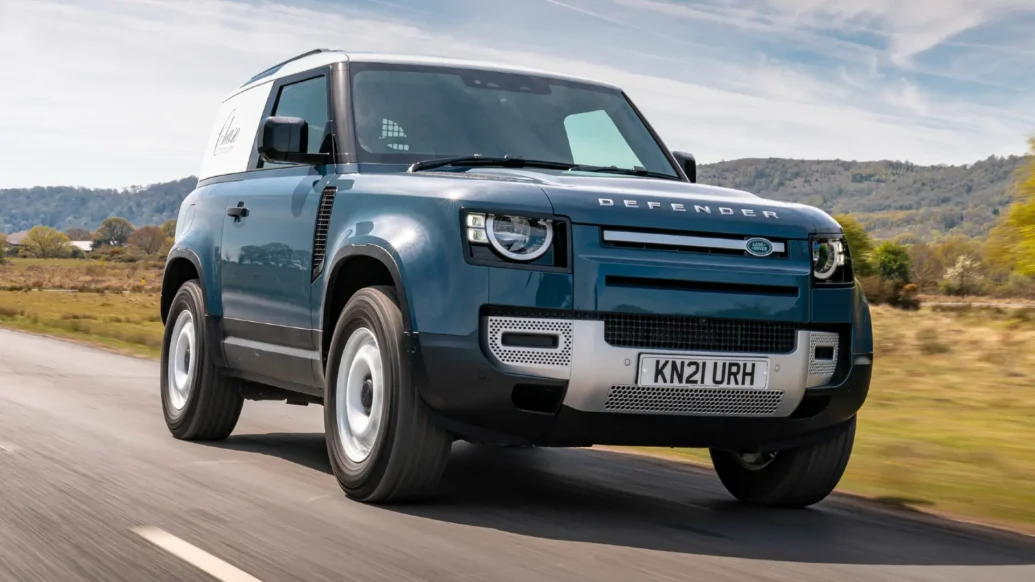
Our first job in the new Land Rover Defender Hard Top was delivering potatoes. Collected from JLR in Gaydon, they were bound for the Chase distillery to be turned into vodka. A useful cargo, some muddy off-roading along the way, a worthwhile destination, and a bottle or two to take home with me and enjoy in the evening. There are worse ways to demonstrate a commercial vehicle.
The Defender made light work of the day.
The Hard Top is the commercial version of the latest Defender, replacing the rear seats with a flat load floor and a full-height bulkhead. Available in short-wheelbase 90 and longer 110 forms, it looks much like the passenger model, just missing some windows.

Mechanically, it’s the same vehicle as the passenger version, which means it’s very good indeed. The question is whether its talents justify the expense for a working operator.
Engines and Driving
Every Hard Top gets a 3.0-litre six-cylinder diesel, mild-hybrid assistance, an eight-speed automatic gearbox and four-wheel drive with a low-range transfer box. The 90 comes with the 200hp D200, while the 110 offers either 249hp D250 or 300hp D300 engines. The 90 has one trim level; the 110 adds S, SE and HSE versions above the base specification.
The D250 is the sensible starting point for the larger model. With 570Nm of torque, it has the muscle to make progress without constant downshifts, while the automatic transmission shifts smoothly and generally leaves you to get on with driving. The six-cylinder engine is also considerably more refined than the four-cylinder diesels found in most pickups.

There’s little reason to stretch to the D300 unless you particularly want the extra performance. The middle engine already provides ample pulling power, and all versions can tow a braked trailer weighing up to 3,500kg.
Comfort is the bigger attraction. The Hard Top retains the passenger Defender’s suspension layout, giving it a composure that most working pickups struggle to match, particularly when running empty. Coil springs are standard, with optional air suspension available on the 110. The latter adds ride comfort and adjustable ground clearance, making it a useful upgrade for buyers spending time both on motorways and rough tracks.
Off-Road Ability
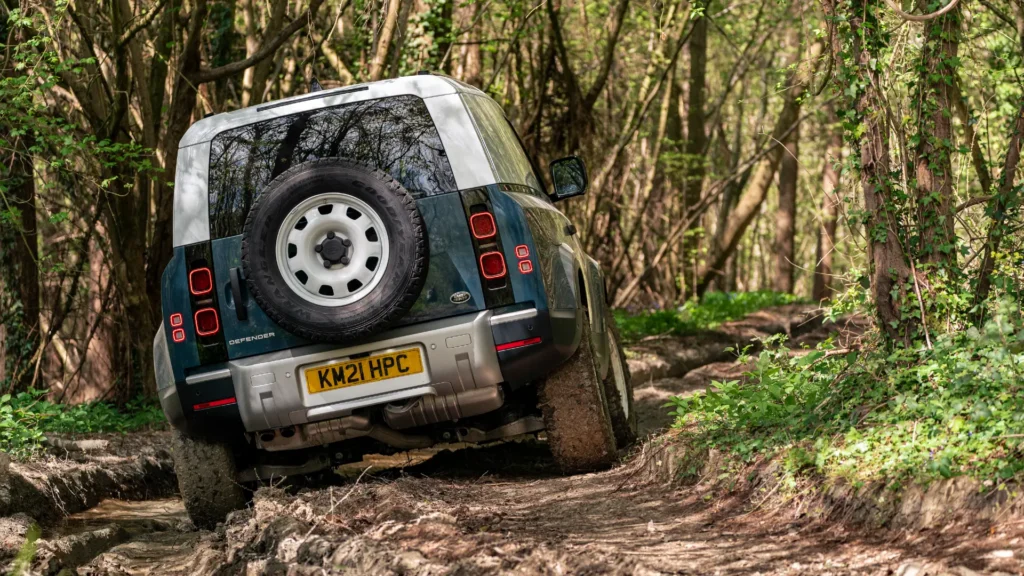
Our muddy detour provided a reminder that removing the rear seats has done nothing to dilute the Defender’s off-road credentials. It handled the going without giving us anything untoward to report.
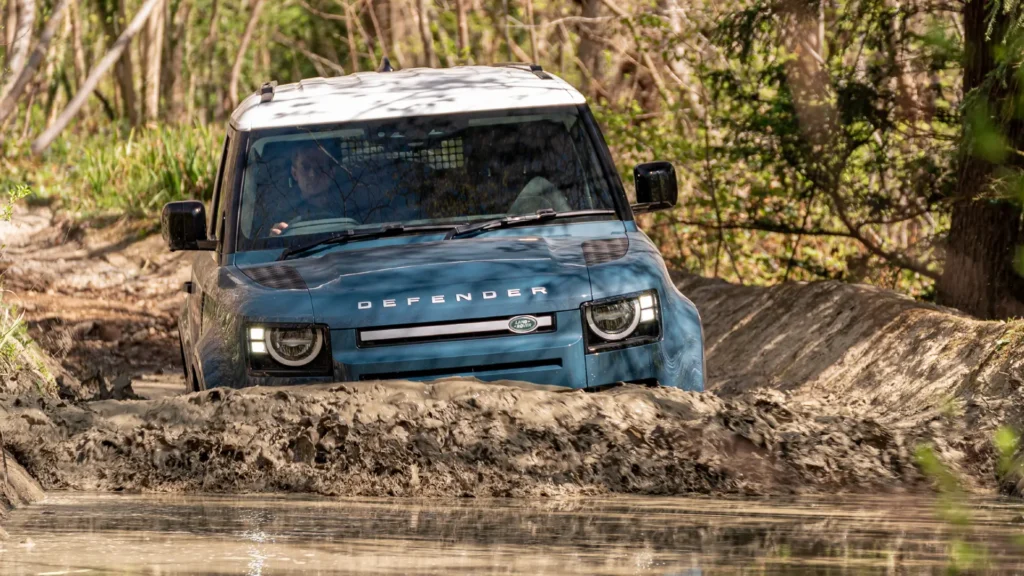
Terrain Response comes standard, letting the driver select settings suited to different surfaces, while low-range gearing provides control when the going gets particularly awkward.
With air suspension, the 110 offers up to 291mm of ground clearance. It also offers an impressive maximum wading depth of 900mm. That’s better than most pickups.
For infrastructure, forestry and rural businesses, that ability has a clear purpose. For everyone else — like those with a light load of potatoes in the back — it may be expensive overkill.
Cabin and Equipment
The cabin mixes exposed fixings, rubberised surfaces and useful storage with the equipment expected of an expensive SUV. It feels suitably practical without asking occupants to put up with the old Defender’s discomfort.
Standard equipment includes heated front seats, climate control, a heated windscreen and a 10-inch ‘Pivi Pro’ infotainment screen. Surround-view cameras help when manoeuvring, while large mirrors become particularly important because the blanked-out rear side windows restrict visibility at awkward junctions.
An optional ClearSight camera-based rear-view mirror is worth considering, especially if cargo blocks the view through the bulkhead.
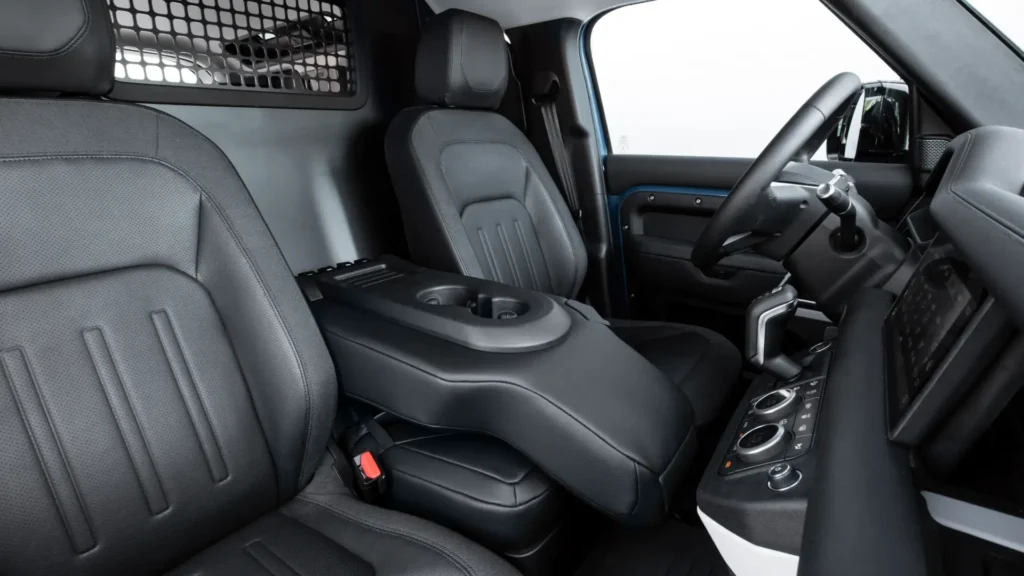
The optional central jump seat is less convincing as everyday passenger accommodation. It provides a third seat for occasional use, but a conventional van offers more space for three adults.
Load Space and Practicality
The 90 offers 1,355 litres of total storage and a maximum payload of 670kg. The 110 increases those figures to 2,059 litres and up to 800kg, making it the more useful choice for most operators. Those volumes include the 58-litre underfloor compartment in both models, and the 155 litres in the 110 where the rear footwells would normally sit, which is perhaps cheating a little.
Its load floor is 1,031mm or 1,472mm long for the 90 or 110, respectively, with 1,160mm between the wheel arches, allowing room for a Euro pallet. Heavy-duty rubber mats, lashing points and lockable underfloor storage make the space more useful than a simple rear-seat removal might suggest.

While the 90 is a strict three-door van, the 110 retains its rear side doors, providing additional access to the load area. That matters because the side-hinged rear door needs room to swing open and can be awkward with a trailer attached.
Is it compromised? Well, an ordinary van carries more volume, while many pickups offer payloads exceeding a tonne. Few alternatives, though, combine an enclosed load area, serious off-road ability and this level of comfort.
Land Rover Defender Hard Top: First Drive Verdict
Launch prices of £35,820 for the 90 and £43,012 for the 110, on the road excluding VAT, put the Hard Top firmly at the expensive end of the commercial market — and more expensive than a top-of-the-range Ford Ranger Wildtrak. Options can push it much higher, too, while official fuel economy of around 29.5mpg promises little relief at the pumps.
Our potato delivery hardly tested its limits, but it demonstrated how comfortably the Defender combines road miles, cargo carrying and muddy tracks. Its enclosed load area and towing ability add to the appeal. A van or pickup will do many jobs for less money, but operators who need this combination of capability and comfort have a compelling option.
Very good, then. Just expensive.
