
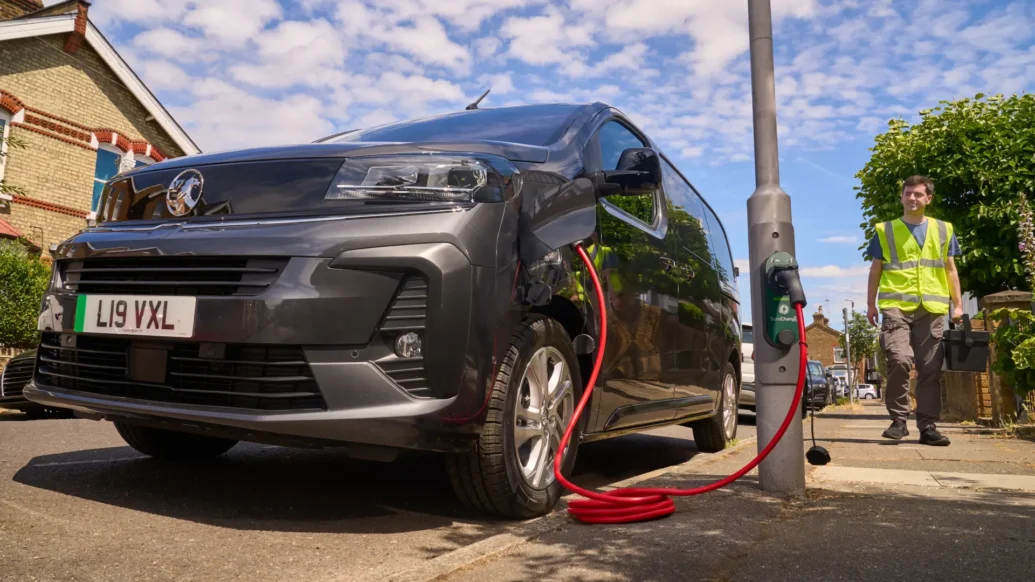
The UK government has confirmed a £1 billion funding package to support the transition to zero-emission commercial vehicles, with the Plug-in Van Grant (PiVG) remaining in place until at least the end of the 2026/27 financial year — an extension first confirmed in August 2025.
For van operators, that means continued discounts of up to £5,000 on new electric vans, alongside a significant expansion of support for depot charging infrastructure.
Announcing the funding, Aviation, Maritime and Decarbonisation Minister Keir Mather said: “This £1 billion investment cuts cost for British businesses, supports jobs, cleans up our roads, and gives operators protection against shifting global fuel prices.”
Infrastructure takes centre stage
While the continuation of the Plug-in Van Grant provides welcome stability, the bigger shift comes from the expansion of the Depot Charging Scheme.
In practice, this is as much an infrastructure package as it is a vehicle incentive.
The scheme has received an additional £170 million in funding, with operators now able to claim up to £1 million per site, covering up to 70% of the cost of installing charging infrastructure for vans and other commercial vehicles.
The support reflects a growing recognition that vehicle grants alone are not enough. For many operators, the barrier isn’t buying an electric van, but being able to charge a fleet of them reliably and cost-effectively.
The British Vehicle Rental and Leasing Association has previously highlighted depot charging as a key obstacle, particularly for rental companies and SMEs trying to electrify at scale.
Support continues, but challenges remain
The Plug-in Van Grant itself remains unchanged in structure, offering up to £5,000 off the cost of larger electric vans (and up to £2,500 for smaller models), applied at the point of sale.
That’s enough to take the edge off the upfront cost, but it doesn’t eliminate the price gap with diesel. Instead, it continues to form part of a broader business case built around running costs, taxation, and compliance with tightening emissions rules.
In that sense, the confirmation that the programme will will remain in place through to 2026/27 is less about transformation and more about continuity, and giving operators the confidence that support will still be there as they plan fleet replacement cycles.
Manufacturers welcome clarity
Unsurprisingly, manufacturers have welcomed the decision to maintain the grant.
Peugeot was quick to underline that its entire electric van line-up qualifies for the scheme, with Nicola Dobson, managing director of Peugeot UK, adding: “We welcome the increased investment from the government to support the transition to electric in the light commercial vehicle sector. Continued funding for the Plug-in Van Grant will help give businesses the confidence they need to move towards fully electric fleets.”
Stellantis stablemate Citroen struck a similar tone, with managing director Greg Taylor saying: “We’re encouraged to see the government increasing its support for the shift to electric vehicles in the light commercial vehicle segment, making going electric more accessible. Ongoing backing for the Zero Emissions Van Grant plays an important role in helping businesses of all sizes feel reassured as they transition to fully electric fleets.”
In practical terms, this announcement reinforces the direction of travel rather than changing it.
The £5,000 grant remains in place, depot charging support has been strengthened significantly, and operators now have a clearer timeframe in which to plan their transition to electric vans.
For fleets already moving towards electrification, that’s likely to be enough. For those still on the fence, the improved support for charging infrastructure may ultimately prove to be the deciding factor.
