

Ford has added a fifth model to its Transit family with the launch of the new Transit City, an all-electric one-tonne van aimed squarely at operators working in towns and cities. Positioned as a simpler and cheaper alternative to the E-Transit Custom, it has been designed for fleets that want zero-emission access without paying for capability they don’t need.
Hans Schep, general manager of Ford Pro Europe, said: “The path to electrification is not straightforward… Any solution needs to start and finish with the needs of our customers, making going electric as simple and as attractive as possible for a business user.”

Built for city fleets
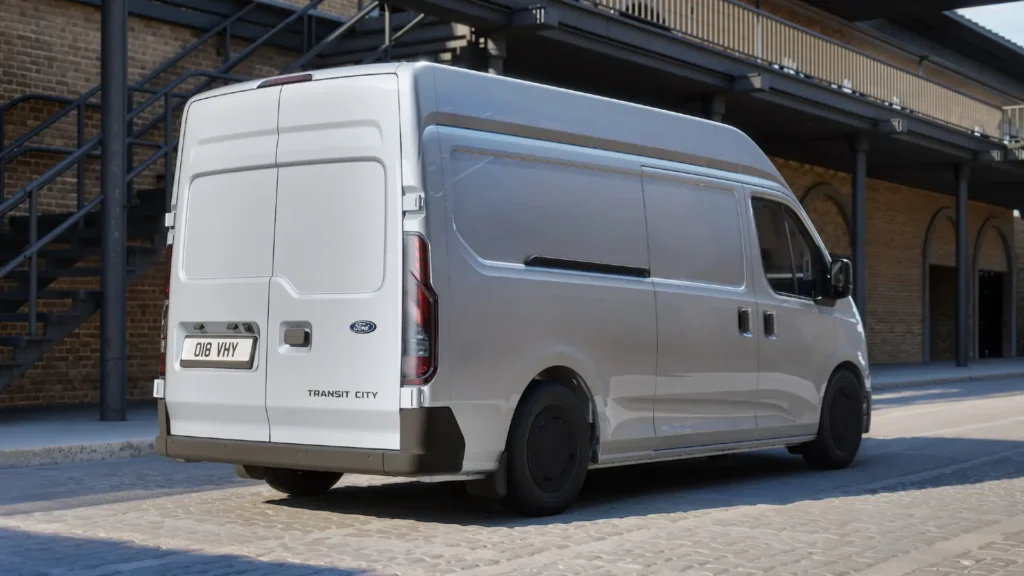
That means a simpler range, a smaller battery and a deliberate lack of complexity. Transit City will be sold in three body styles — L1H1 van, L2H2 van and chassis cab — with a single standard specification and no optional extras. Ford says the approach is intended to keep both purchase and running costs under control for operators who do not need a larger, longer-range electric van.
Dean Griffiths, Transit City brand manager, added: “We’ve been very careful not to re-engineer another Transit Custom. We’ve been very disciplined with keeping the products very affordable and have them very close to what the customer needs in the urban environment.”

Battery, charging and payload
Power comes from a 56kWh LFP battery and a 110kW front-mounted motor, with Ford targeting a range of up to 158 miles. The company says data from its connected-vehicle fleet shows that 90% of vans in this part of the market cover less than 68 miles a day, so there was little point in burdening Transit City with a larger, more expensive battery pack.
Charging speeds are not exceptional — Ford quotes an average charge rate of 67kW, peaking at 87kW — but they should be sufficient for the sort of depot-based urban operation Ford is targeting. The firm quotes charging from 10-80% in around 33 minutes on DC power, or roughly 4.5 hours on 11kW AC, while a 10-minute rapid charge is said to add around 30 miles of range.
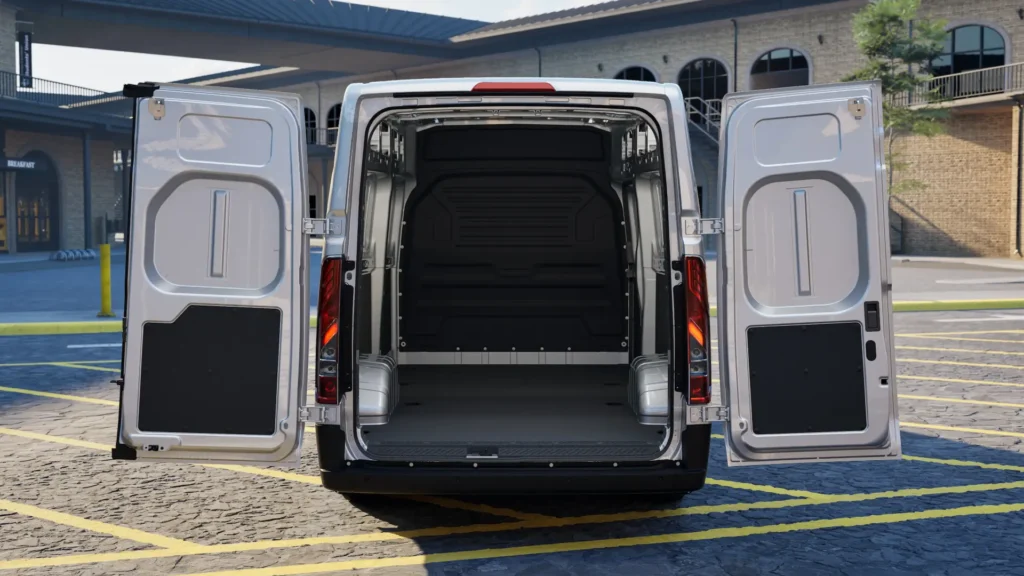
Ford is pitching the new van to last-mile delivery firms, service and maintenance operators, utilities, municipal fleets, and refrigerated delivery users — businesses that need zero-emission access to urban areas but may not require the broader capability, trim choices, or towing ability offered by Transit Custom. In fact, Ford confirmed during the reveal Q&A that Transit City has not been engineered for towing at all, arguing that most of its target customers simply will not need it.
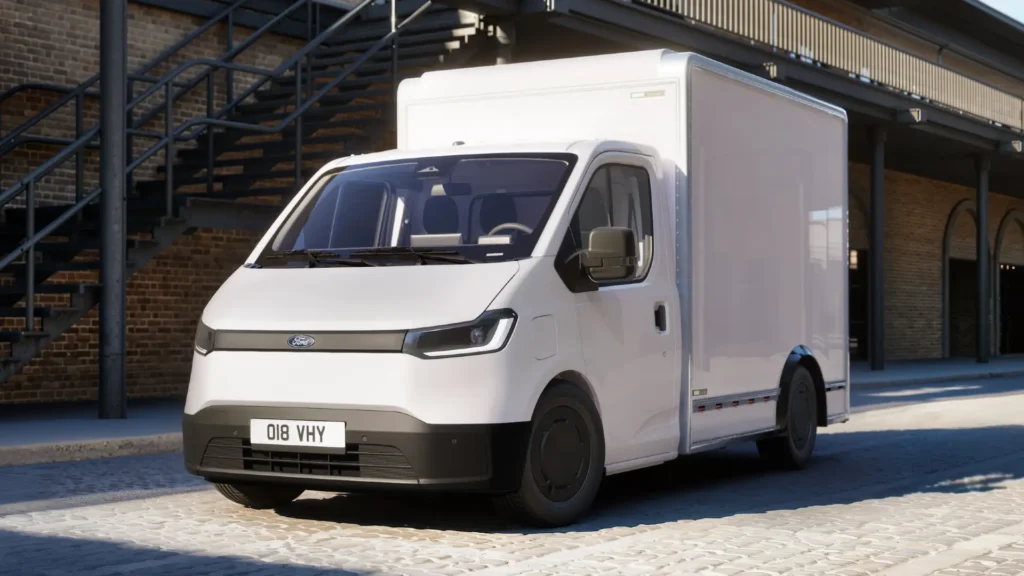
The chassis cab could prove one of the more interesting parts of the range. Ford says it is the first one-tonne chassis cab it has offered in this segment, and it has been developed with converters in mind, with the front-mounted motor and rear structure designed to make body-building easier. That could make it particularly relevant for municipal operators, utility fleets and specialist urban delivery work.
Payload is quoted at up to 1,275kg, with a load volume of up to 8.5 cubic metres in the L2H2 model. Ford also says the larger van offers more than 3,000mm of load length and room for three Euro pallets, which should make it usable enough for plenty of real-world fleet jobs despite its city-focused brief.
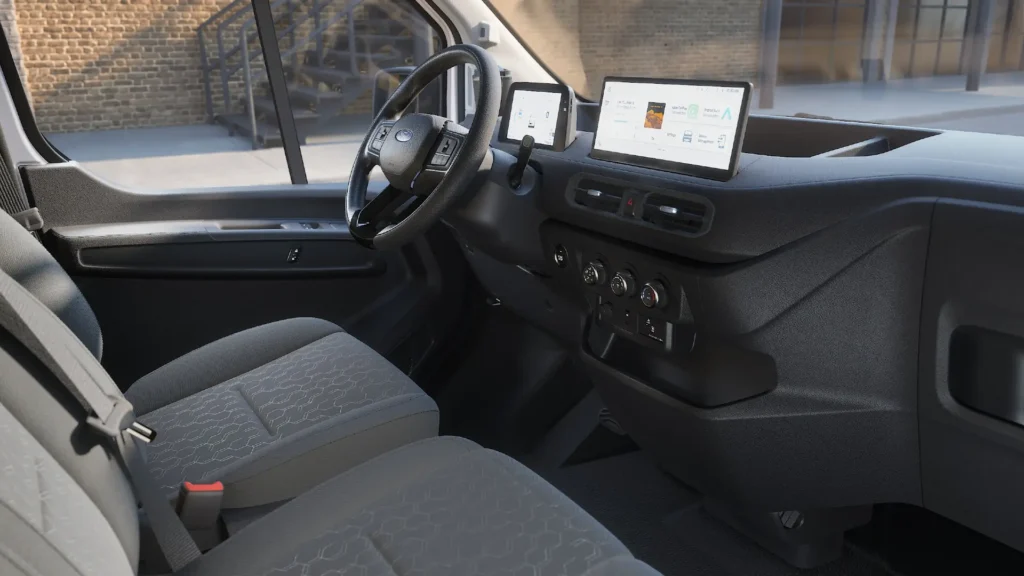
Standard equipment includes a 12-inch touchscreen, Apple CarPlay and Android Auto, keyless start, air conditioning, a heated driver’s seat and a rear-view camera, while driver assistance systems include adaptive cruise control, parking sensors, lane departure warning and automatic emergency braking. Again, Ford’s emphasis is on everyday fleet usability rather than luxury.
Running costs and market positioning
Ford is also talking up lower ownership costs, claiming servicing costs should be around 40% lower than an equivalent diesel and quoting service intervals of two years or 25,000 miles. Transit City will be backed by Ford Pro’s existing support network, including more than 800 Transit Centres across Europe and around 500 mobile service vans in key markets.
One detail that is likely to draw attention is Transit City’s origin. The vehicle has been developed with long-time Chinese joint venture partner JMC and will be built in Nanjing, China. Ford’s line is that Transit City has been engineered around European customer needs and is intended to sit alongside, not replace, Transit Custom in the brand’s one-tonne van range.
Whether Transit City proves a genuinely smart urban fleet tool or simply a cheaper, more limited addition to the Transit range will depend heavily on where Ford sets the price, but the company has at least been unusually clear about what this van is and what it is not.
The Transit City will be shown to the public for the first time at the CV Show in Birmingham this April. Production is due to begin in the summer, with the first European deliveries expected from October. UK pricing has yet to be confirmed, but Ford says it will undercut the E-Transit Custom.
