
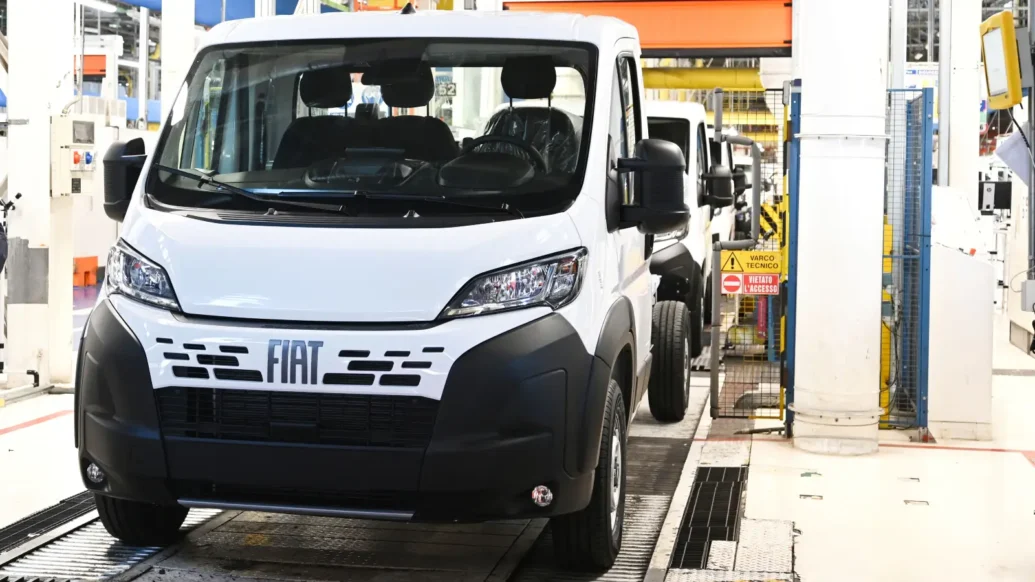
The first Fiat E-Ducato has rolled off the production line at Stellantis’ Atessa plant in Italy — the first large electric van from Stellantis to be built in Italy.
The Ducato has long been a dominant force in Europe’s LCV market. Holding a commanding 23.8% share of the large van segment in Italy, it’s the country’s best-selling commercial vehicle. Across Europe, the Ducato performs well, achieving top three positions in France, Poland, Spain, and Portugal. It’s less successful in the UK, where the Fiat Ducato accounts for just 10% of Stellantis’s large van sales.
The new all-electric E-Ducato builds on this, offering an electric alternative without sacrificing performance or versatility. Powered by a 110kWh battery, it boasts a range of up to 263 miles (WLTP cycle). With multiple configurations and rapid charging options, the E-Ducato aims to meet the diverse needs of SME and fleet customers.
Production takes place at the Atessa plant, a facility that has been central to Fiat’s commercial vehicle operations since 1981. Covering over 1.2 million square metres, the site is Europe’s largest light commercial vehicle plant, capable of producing up to 1,200 vehicles daily, with 80% of its output exported to 75 countries.
The addition of the E-Ducato to the production line highlights Atessa’s adaptability and underlines Stellantis’ investment in Italian manufacturing. It also comes at a time when Stellantis is planning on closing the Luton van factory, which builds medium-sized vans, including the Fiat Scudo. The company is also expanding production at Ellesmere Port, which currently builds compact electric vans for Citroen, Fiat, Opel, Peugeot, and Vauxhall.
