
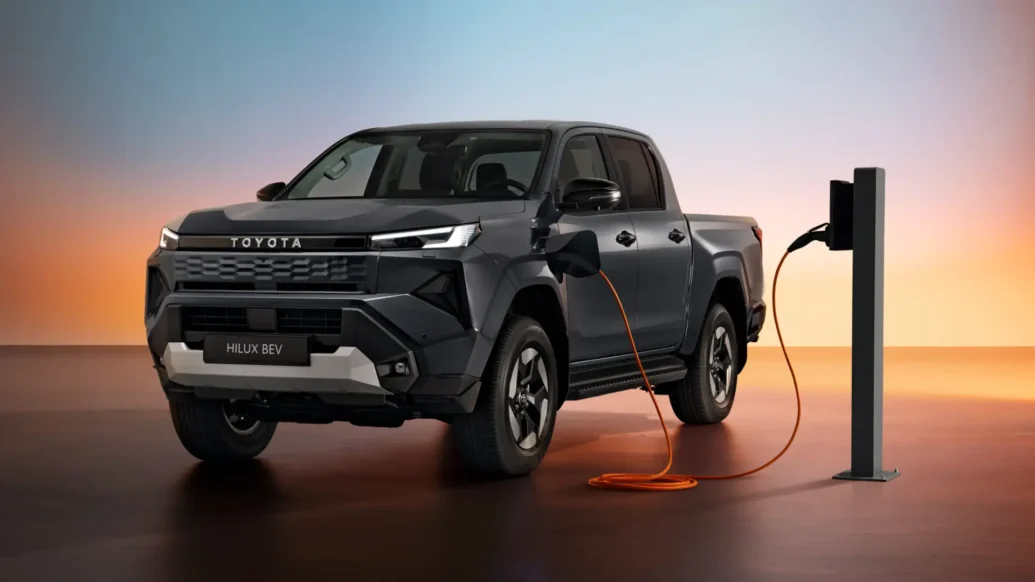
Toyota has lifted the lid on the all-new, ninth-generation Hilux arriving in 2026, and the world’s best-known pickup has finally gone electric — and we’ve driven it already, so check out our full review. The new model ushers in a new era for Toyota’s legendary workhorse, combining modern electrified powertrains with the rugged dependability that’s made it a global icon.
Alongside the first-ever Hilux BEV, there’s an upgraded diesel-powered Hilux 2.8D 48V mild hybrid, while a hydrogen fuel cell version has now been confirmed for 2028.
For the UK, the line-up will centre around two models: the battery-electric Hilux BEV and the 2.8D 48V hybrid, which Toyota expects to be the volume seller.
The company says the approach recognises that a single technology won’t suit every customer. In regions where electric infrastructure or operating environments remain challenging, conventional diesel engines will continue to lead, while hydrogen technology is being developed for the future.

Tougher, more agile design
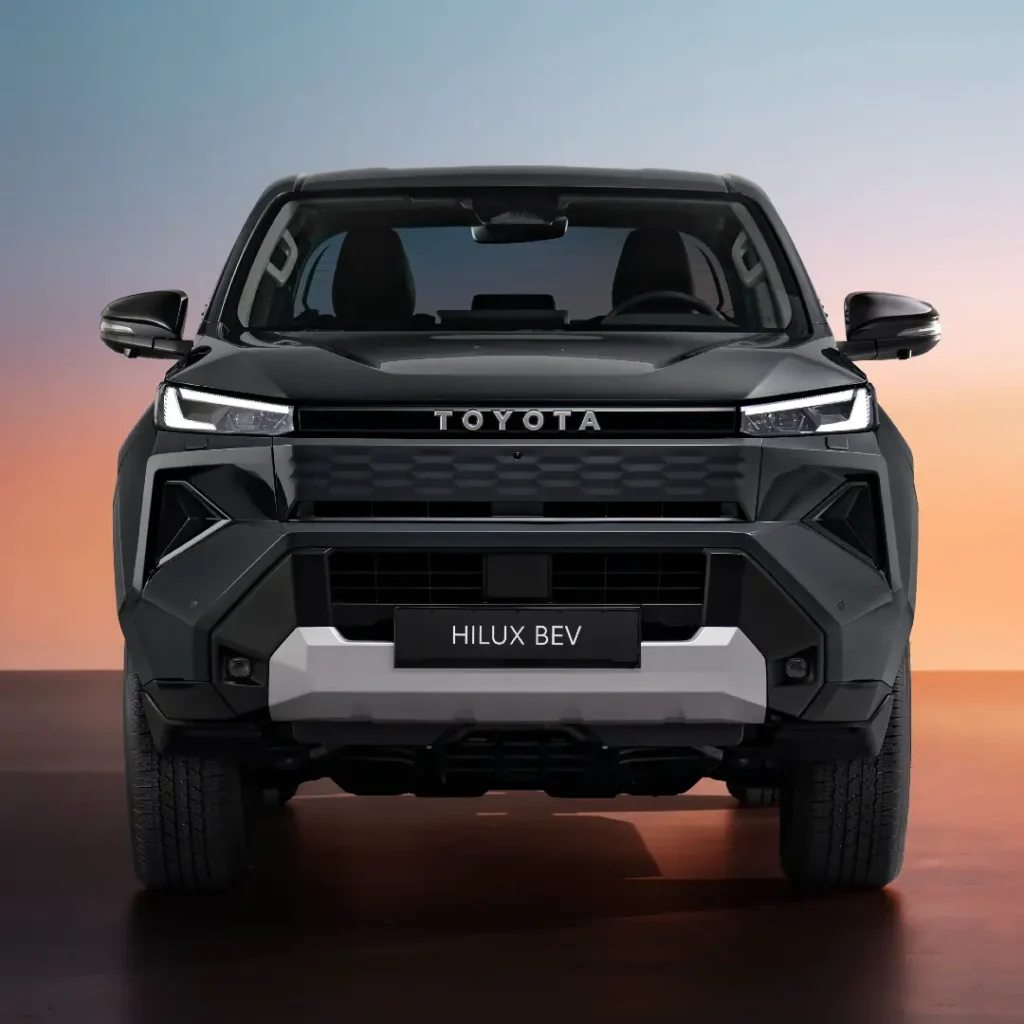
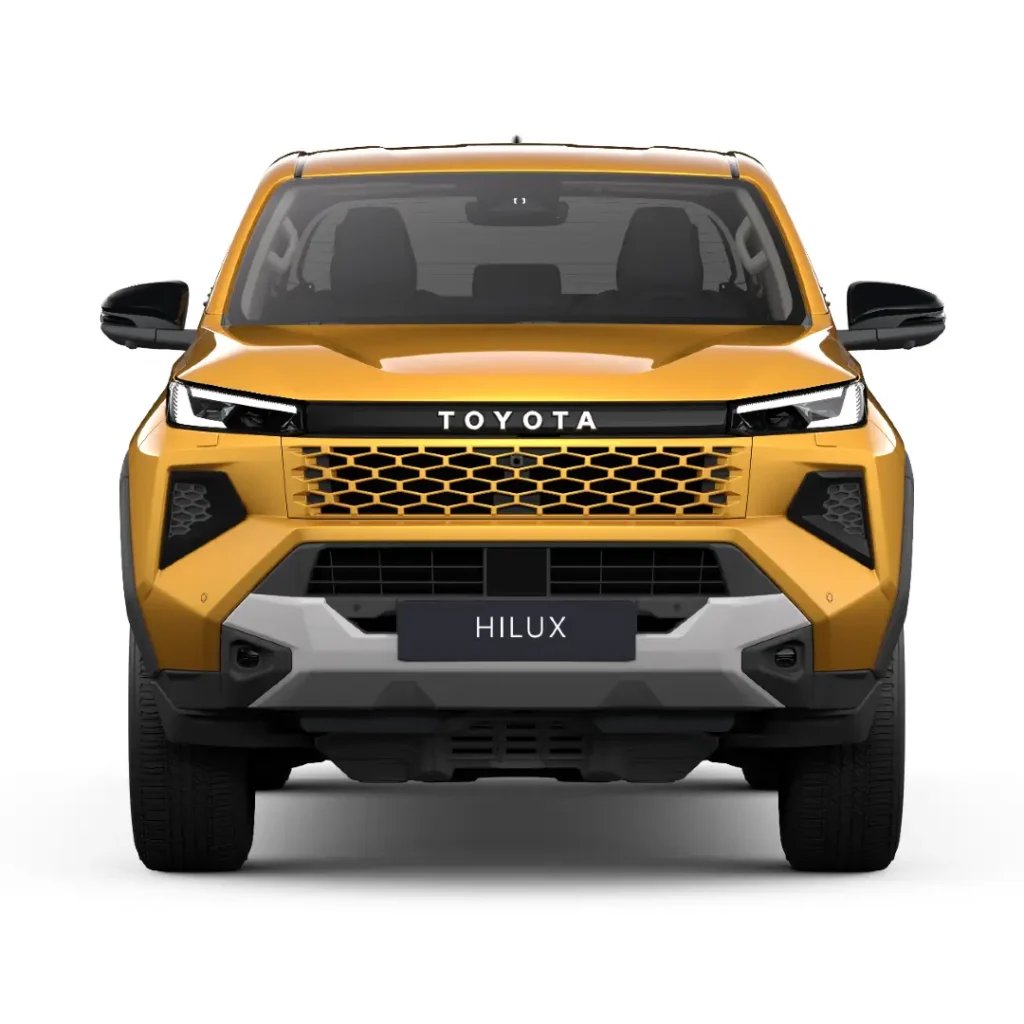
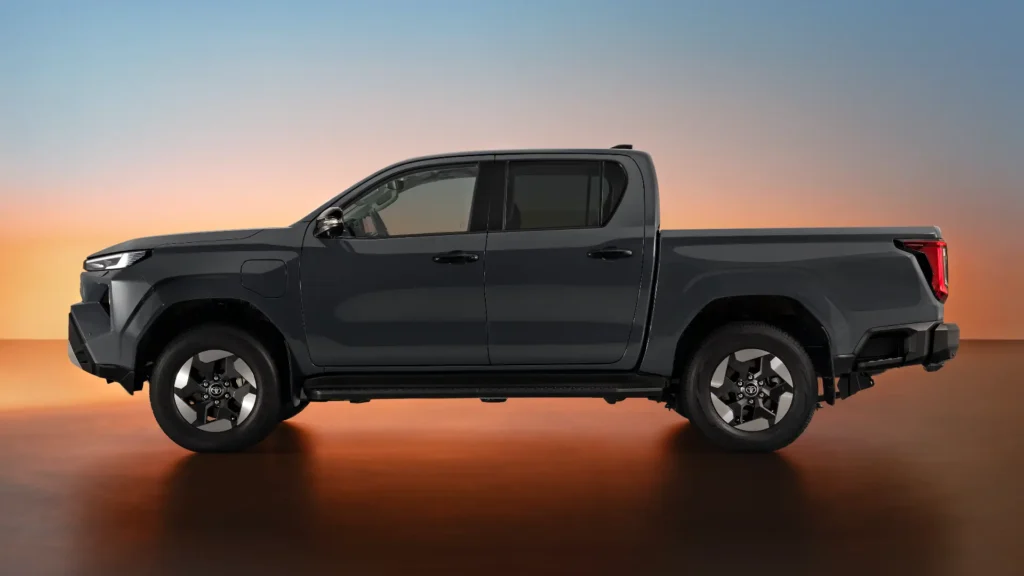
Externally, the new Hilux adopts what Toyota calls a “Tough and Agile” design language. The look is heavily influenced by the latest Land Cruiser, giving the pickup a bolder stance and a more sculpted, modern appearance.
At the front, slim new headlight units are linked by a horizontal bar carrying the TOYOTA name, while the BEV model swaps a traditional grille for a smooth, aerodynamic panel.
Every model now includes a rear deck step to make climbing into the bed easier, and some versions gain revised side steps. Toyota has simplified the body range too — as we revealed last month, the new Hilux will be offered exclusively as a Double Cab, reflecting customer demand.

New interior, more tech
Inside, the Hilux has been brought firmly into the modern era, with a layout inspired by the latest Land Cruiser. The centre console features a horizontal design, topped by a 12.3-inch digital instrument cluster and, on higher trims, a large multimedia touchscreen of the same size.
Off-road and drivetrain controls are now grouped together for easier use, and the BEV model introduces a shift-by-wire drive selector instead of a traditional lever.
Connectivity has also taken a step forward. Depending on spec, drivers get a wireless phone charger, rear USB ports, and access to a suite of connected services via the MyToyota app. Fleet managers can view live data for up to 10 vehicles, including fuel levels, EV charging status, and journey history.

Electric power steering and upgraded safety
For the first time, the Hilux gains electric power steering, which Toyota says will make low-speed manoeuvres easier and reduce kick-back when driving over rough terrain.
Safety tech has also been significantly enhanced. The latest Toyota Safety Sense suite introduces Low Speed Acceleration Suppression, Proactive Driving Assist, and an Emergency Driving Stop System, among others. Additional equipment, such as a Blind Spot Monitor, Safe Exit Assist, and Driver Monitor Camera, will also be available, with over-the-air software updates keeping the systems up to date.
Toyota Hilux BEV: Electric power
The biggest story, of course, is the debut of the Hilux BEV — the first battery-powered version of Toyota’s iconic pickup.
Under the skin, it retains the Hilux’s traditional body-on-frame chassis, with reinforcements and protection for the underfloor battery pack. Wading depth is said to match that of the diesel model, ensuring no loss of off-road ability.
Power comes from a 59.2kWh lithium-ion battery feeding front and rear eAxles for permanent all-wheel drive. Output is quoted at 205Nm at the front and 269Nm at the rear, with a combined towing capacity of 1,600kg and a payload of around 715kg.
Toyota claims a WLTP range of roughly 150 miles, with a focus on fast charging performance to minimise downtime for fleet operators.
A Multi-Terrain Select system adjusts braking and torque delivery for different surfaces, providing performance equivalent to low-range gearing in traditional 4×4 models.
Toyota says it’s targeting the same quality, durability and reliability that the Hilux is known for.
Toyota Hilux 2.8D 48V: Mild-hybrid diesel power stays centre stage
For most customers in Europe, the backbone of the new Hilux line-up will remain the 2.8D 48V version, which pairs the proven 2.8-litre diesel with a compact 48V mild-hybrid system.
The setup includes a lithium-ion battery beneath the rear seats, an electric motor-generator, and a DC-DC converter, designed to improve efficiency and refinement. The hybrid system assists with smoother start-up and acceleration while maintaining the same one-tonne payload and 3.5-tonne towing capacity.
The components have been designed for tough operating conditions, with the motor-generator mounted high on the engine to preserve the Hilux’s 700mm wading depth.
A Multi-Terrain Select system and optional Multi-Terrain Monitor help drivers tackle demanding surfaces, while a Panoramic View Monitor assists with parking and positioning on narrow sites.
Hydrogen Hilux confirmed for 2028
Finally, Toyota has confirmed that a hydrogen fuel cell Hilux is in development and scheduled for production in 2028. The model will use Toyota’s latest fuel cell technology, further expanding the brand’s zero-emission options.
The company sees it as part of a wider move toward hydrogen ecosystems and infrastructure across Europe, building on lessons learned from the prototype fuel cell Hilux currently undergoing testing in the UK.
Ninth-generation Toyota Hilux UK launch and availability
The all-new Hilux will reach the UK in June 2026, with more detailed specifications, grades, and pricing announced nearer the time. We imagine the diesel-powered model will reach £42,000 or so, while the BEV is expected to set buyers back around £50,000, before VAT and any government grants.
