
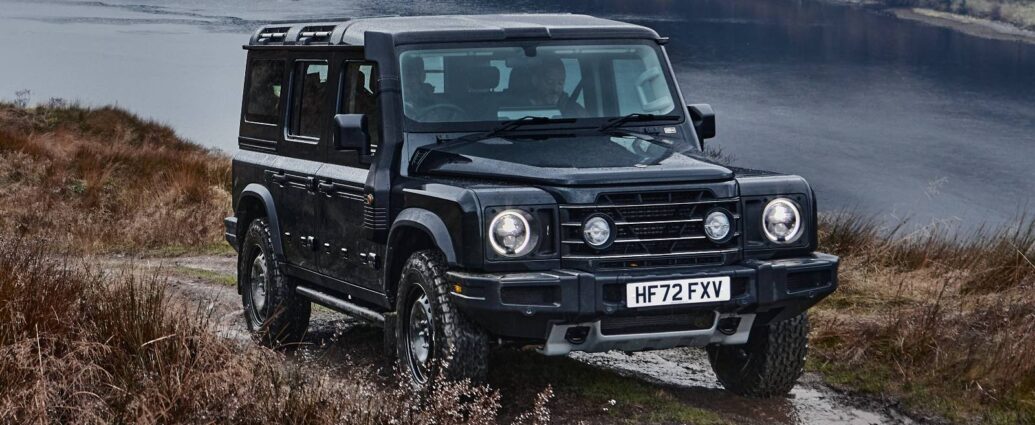
Building a car company from scratch isn’t an easy task, but that’s not stopped Ineos, which, just six years on from first mooting a spiritual successor to the Land Rover Defender, has finally unleashed the Grenadier.
The drip feed of information has been continuous, with Professional Van getting up close and personal with a prototype, fiddling around with the distinctive interior, and even being the first title to get a passenger ride in the UK — riding up the famous hill climb at the Goodwood Festival of Speed, no less. We’ve even driven the prototypes off-road, but it wasn’t until a snowy January day in Scotland that we finally got our hands on the finished article.
A quick heads up first: What we didn’t get to drive was the Utility Wagon, so our definitive verdict on the LCV version of the vehicle will have to wait a little longer. Instead, we got the keys to both diesel-powered Trialmaster and petrol-powered Fieldmaster Station Wagon models.
Both trim levels are sub-models of the Belstaff cars (Belstaff is a clothing brand also owned by Ineos CEO Sir Jim Ratcliffe), which offer a little more room to rear passengers at the expense of boot space. The Utility Wagon is built around the plain old Station Wagon but sacrifices its rear seats entirely to create a spacious cargo area.
Ineos Grenadier: Cabin
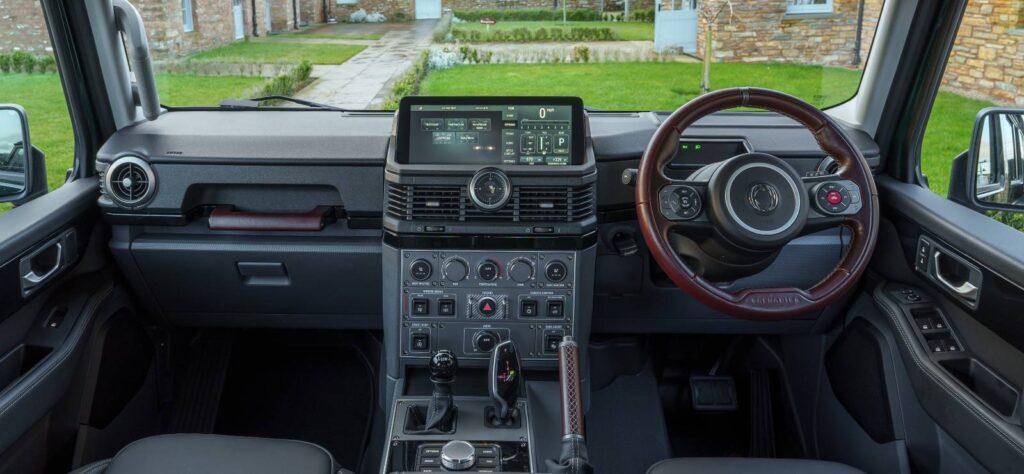
The interior of the Grenadier is unlike any other vehicle. Designed by Toby Ecuyer — a man previously used to penning yachts — it’s an immediately appealing environment. Chunky buttons and knobs are lined up in the centre stack, all usable while wearing thick gloves. They don’t feel quite as solid as they look, but it’s an innovative and analogue design in a world that’s switching to digital panels and touchscreens.
That said, there is a large 12.3-inch screen at the top of the dashboard. While it provides plenty of information, it’s sometimes painfully slow to react, undermining its usefulness, especially as provides access to most systems in the vehicle, including navigation. There’s more to it than just plain old sat-nav, though, as the included Pathfinder off-road navigation doesn’t cover road use, or at least not in the traditional sense. Instead, it’s designed for off-road use, letting you plot your own route and waypoints, with breadcrumbs always allowing you to find your way home. Want to find your way along the motorway network to the outskirts of Reading? You’ll have to use a connected smartphone for that.
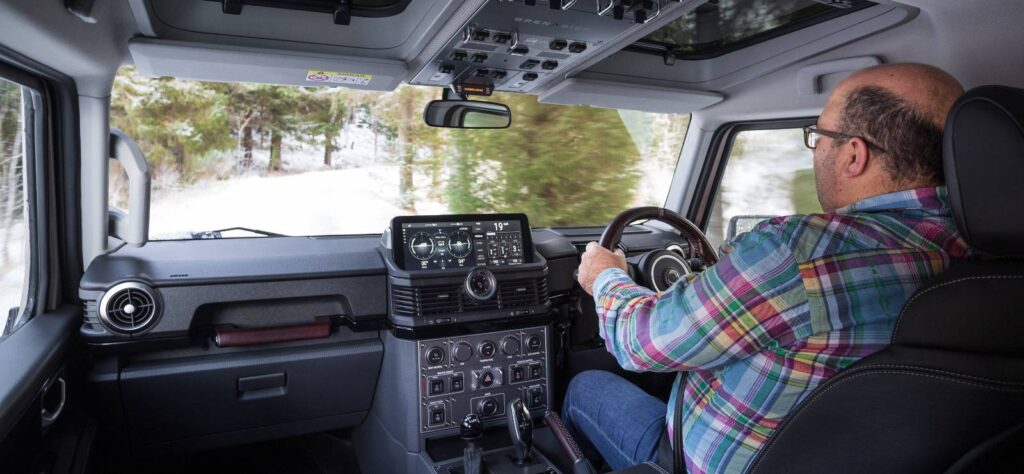
The system also houses the speedometer, displaying a digital readout in the upper right of the screen. It looks clear when stationary, but once on the move, it becomes difficult to glance at, given that there’s so much other information on display. A simple LCD readout in front of the driver would be more helpful and also introduce a degree of redundancy.
The overhead switches are the biggest talking point of the cabin — and have been since they were first revealed. These are for less frequently used features and include buttons to lock differentials, set off-road mode on or off, and engage hill descent control. Behind them sit two rows of pre-wired auxiliary switches, allowing owners to plug in things like light bars or a winch simply. It’s quite a sensation using them for the first time, leaving you feeling like you’ve got behind the yoke of a 747, but the magic does fade a little through use. The buttons aren’t clear, with a twisting of the neck needed to see what each is for, and that didn’t improve much with familiarity. Similar grey buttons with small text and icons make them difficult to pick out, especially when viewed from quite an acute angle; perhaps some colour coding would help, or more of the metal hoops that protect the differential lock buttons.
Elsewhere, there’s a lot of good news. The seats are incredibly comfortable and supportive and are amongst the best seats we’ve experienced in any vehicle. Disproportionately important is the top of the door panel, which is flat and very wide — perfect for resting a weary elbow on, especially as it’s at just the right height. The driving position is, likewise, excellent, with everything falling centrally to the driver, with little to no offset.
Right-hand drive cars have an odd lump in the footwell, though, which is big enough to cause some discomfort as it’s too close to be used as a relaxing footrest. Without reengineering the entire vehicle and extending the car yet further (it’s already 4,896mm long), it’ll remain there. However, those lucky enough to have left-hand drive cars will find a flat floor with a more suitably positioned footrest.
Equipment levels on our Trailmaster car are good. The large 12.3-inch infotainment screen allows access to most kit, which includes a DAB radio, Android Auto and wireless Apple CarPlay, and a powerful climate control system. There’s also a compass with altimeter, and a little ‘toot’ button on the steering wheel that gently parps the horn as a polite warning to pedestrians, cyclists or even wildlife.
The glass roof panels in the Fieldmaster let in a lot of extra natural light, although the large flat-glazed windows on the side are big enough to leave the cabin feeling airy. The equally flat windscreen is a little narrow, though, so you can find yourself ducking down slightly for a better view.
Access is easy for most, with grab handles inside the passenger door but not the driver’s door inexplicably. Talking of missing things, there’s a dearth of storage spaces in the car, leaving you wondering what to do with items from your phone to any kind of paperwork.
Despite some misgivings, the cabin really is a nice place to while away your time. It’s comfortable on the road, supportive off it, and loaded with enough equipment to keep you warm — the heated seats of the Fieldmaster are volcanic, although are absent from the Trialmaster! — secure and comfortable.
Ineos Grenadier: Off the Road
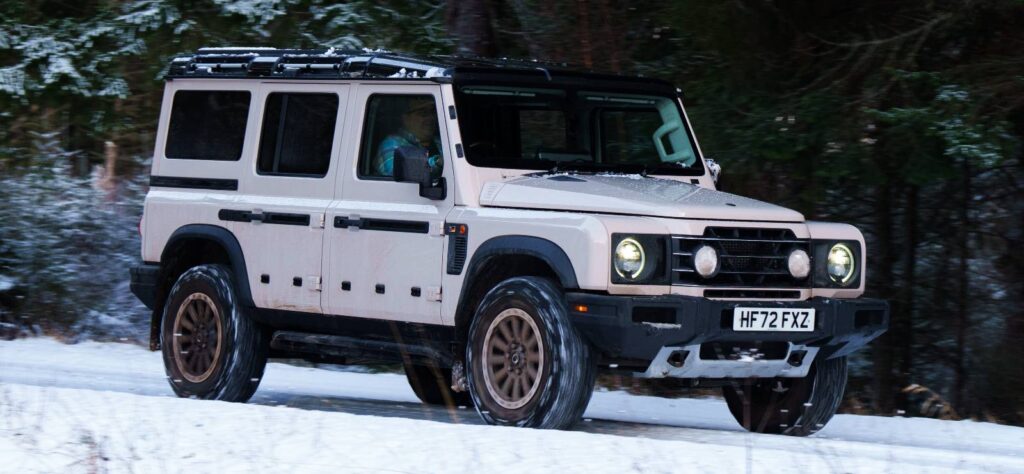
Ineos doesn’t hide from the fact that the Grenadier was designed for its off-road prowess first, with on-road manners coming along later. It absolutely nailed the off-road part at the basic level, proving that as we tackled challenging terrain around a frozen Scotland. Ok, it wasn’t the most demanding you’ll ever see, but we put the Grenadier through more of a test than most vehicles will ever see.
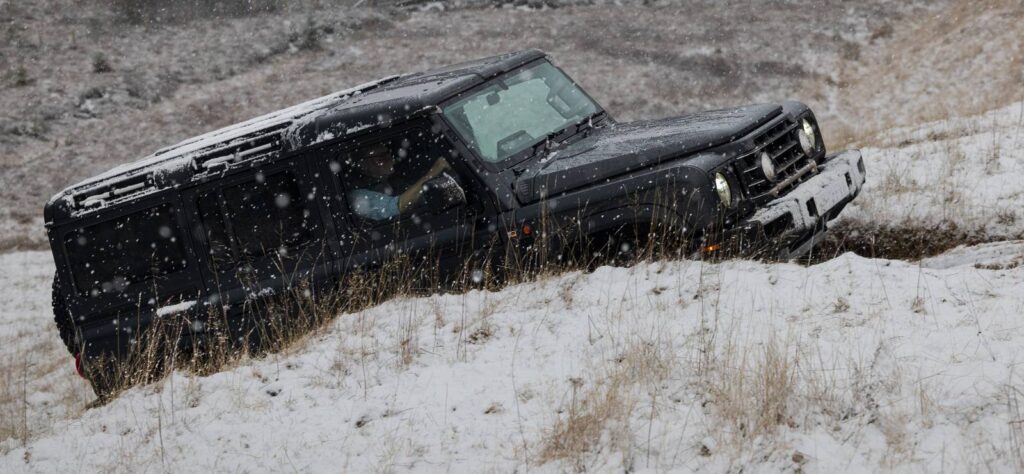
There’s a permanent four-wheel drive system with low and high range drive and a locking central differential. Pick the right model, such as this Trialmaster, or tick some boxes on the options list, and you’ll also get locking front and rear diffs and BF Goodrich A/T KO2 tyres, so most terrain should be passable. The Trialmaster model scrambled up every climb without needing to lock anything but the centre diff, although it certainly made it easier when we did.
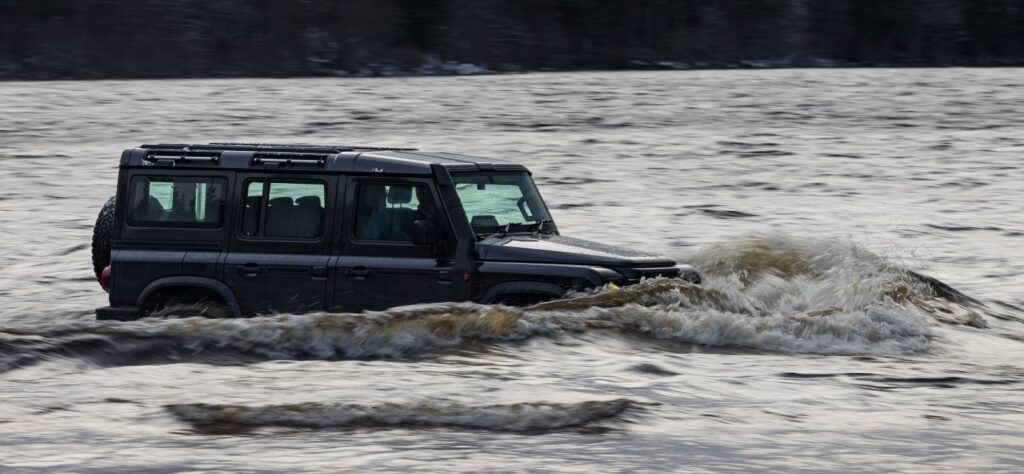
An off-road mode, accessible by pressing and holding a button on the roof, doesn’t change anything mechanical but does disable the engine start/stop system, parking sensors and seat belt reminders. The wading button switches off the engine fans to minimise the risk of water getting into the engine, although the Trialmaster model has a high-level air intake. That was enough to survive driving through a Scottish loch, as you do, but remember it’s not a snorkel as it’s not waterproof, so don’t get too brave.
When you’re on the really rough stuff, you’ll need to engage the front and rear diffs, where fitted. This is, theoretically, a simple case of pressing and holding some buttons, but the reality is a little different. While pressing the buttons lets the onboard computers know you want the diffs locked (or unlocked), the sensors to confirm it are mounted on the wheels, so you’ll need to move around and get some differential in wheel speeds for the car to know it’s done its job. That’s not too difficult unless you’re at the top of a steep decline and want to put hill descent control on, which can’t be activated while the diffs are locked. With a straight approach, we were left wiggling around on a mountainside, trying to reassure the Grenadier that, yes, the diffs were disengaged. It took some time before it believed us.
Some of the electronic aids are nice to have but far from essential if you’ve got some delicacy in your right foot, which is a credit to the basics of the car.
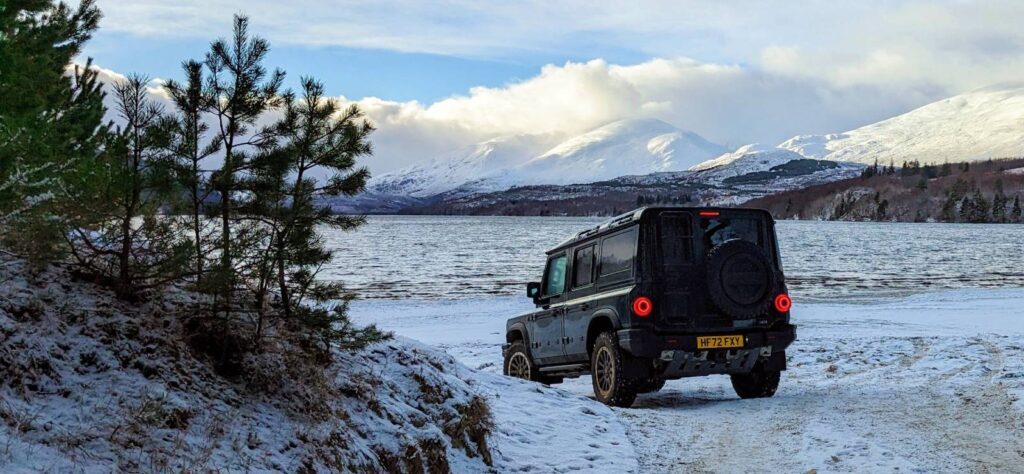
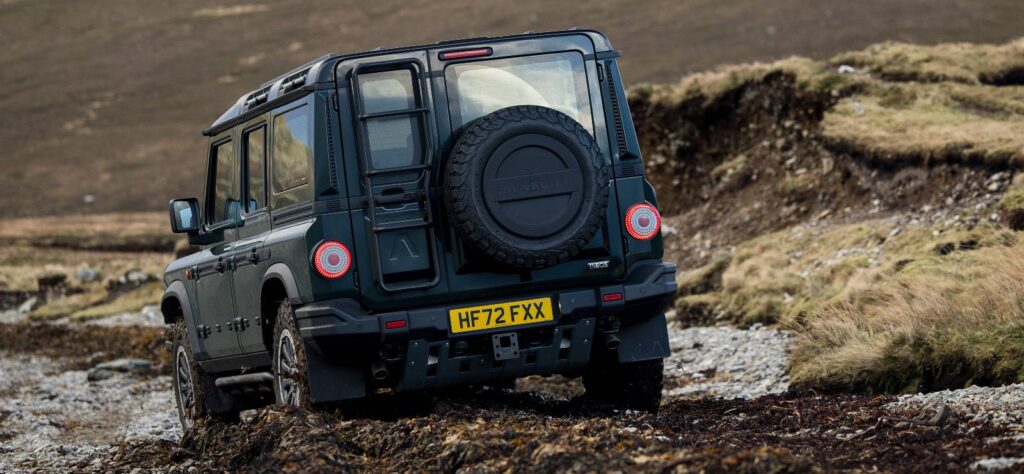
You’ll get through most terrain without needing such niceties, as the big Ineos really is capable of going virtually anywhere you’ll find in the UK. We tackled lochs, gravel climbs, muddy descents, ice-ridden forest tracks, and that most fearsome of tests — a damp, grassy hill, and the Grenadier got through it all without skipping a bat.
Switching from diesel to petrol made little difference either, with both engines offering good levels of torque (550Nm compared to 450Nm) and similar speed of response.
| Approach angle | 35.5° | Climbing angle limit | |
| Departure angle | 36.1° | Ground clearance | 264 mm |
| Ramp angle limit | 28.2° | Wading depth | 800 mm |
Ineos Grenadier: On the Road
It’s not quite as convincing on the road. The decision to favour off-road capabilities has left the car feeling unburstable in places, but it’s left it feeling imprecise on the road. Much of that is due to the lack of self-centring in the steering, a hangover from the off-road focus, which makes it feel vague on the tarmac. It’s something you’ll get used to, but the first few roundabout exits will grab your attention.
The steering isn’t consistent, either, with an over-light touch around the straight ahead, followed by a marked increase in resistance when you’ve got the wheel turned by a fifth or so.
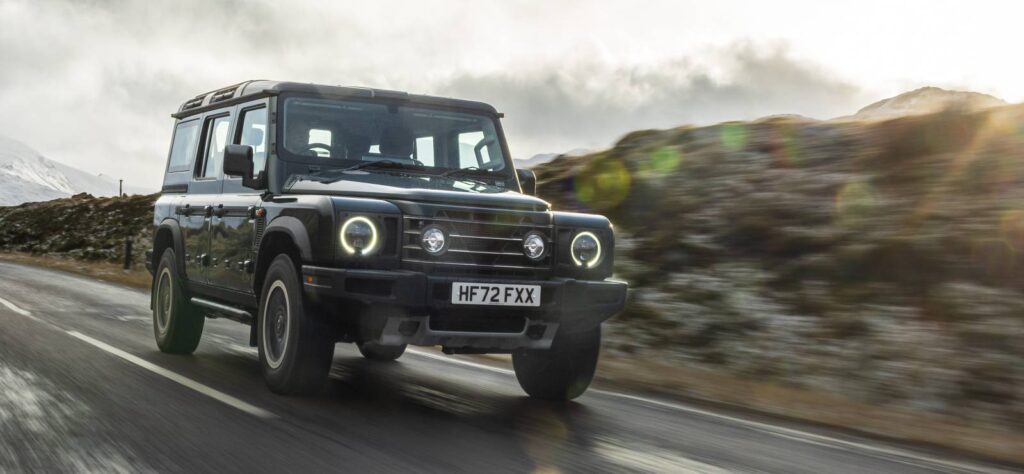
Aside from that, it’s fairly well-mannered on the road. There’s no getting away from the fact that you’re pulling 2.8 tonnes along — the Grenadier could do with going on a diet — but that bulk does give it a reassuring stability.
It’s reasonably comfortable, too, thanks to the relatively soft suspension and tall tyres. It takes all the cracks and ridges of the road in its stride, not quite gliding over them but never being disturbed.
With 249hp and 550Nm of torque, the 3.0-litre diesel-powered model has a surprising turn of speed, accelerating to 62mph in 9.9 seconds. Opt for the petrol model, also a 3.0-litre unit, and you gain power (286hp), lose torque (450Nm), and get a boost in performance (8.6 seconds to get from zero to 62mph).
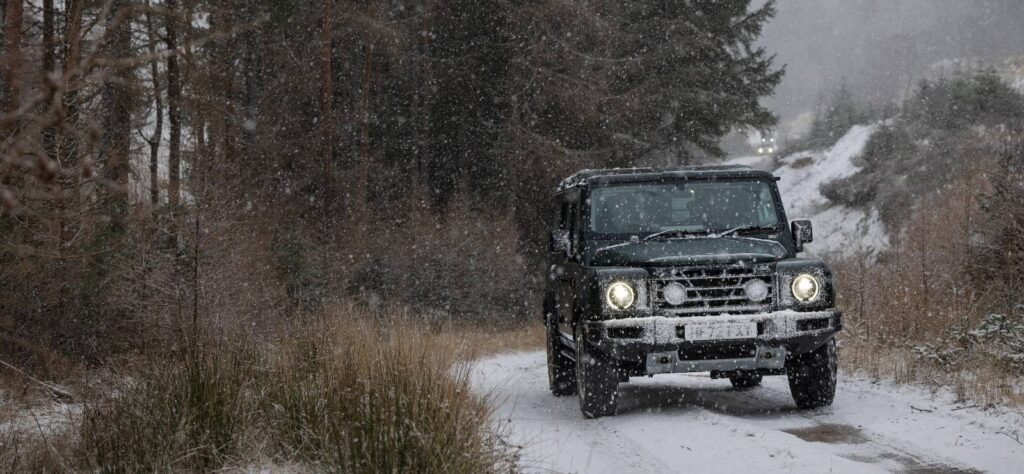
Out on the road, you don’t feel that difference. The diesel model has a pleasing truck-like rumble to the engine, while the petrol model is quieter but still vocal, but both are smooth and provide their performance in a linear fashion. The stopwatch will show the petrol model is the quicker option, but there’s little physical feedback to suggest any significant advantage.
Visibility is mixed. The large side windows and flat glass all around provide good visibility, but the rear doors and door-mounted spare wheel make the rear view pretty useless. Likewise, the aerodynamics — or lack of — create a thick patch of road grime on the side windows if you’re out on wet roads, and it’s thick enough to block your view through the side mirrors.
Assuming the windows are clear, then the square corners of the vehicle make placing it in any situation a breeze, even when reversing into tight spots in town. A reversing camera helps, although, while standard on the Trialmaster and Fieldmaster models, it’s an option on the Station Wagon and Utility Wagon.
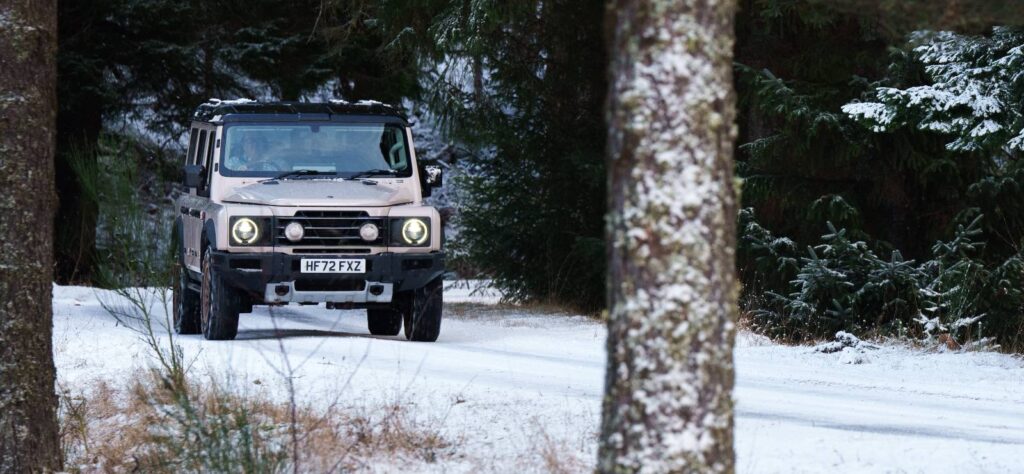
Our Trialmaster adds a raised air intake, exterior utility belt, a rear-mounted access ladder, front parking sensors, heated door mirrors and washer jets, and a lockable central cubby hole.
Ineos Grenadier: Economy and Running Costs
No bluff-fronted SUV weighing 2.8 tonnes and powered by a 3.0-litre straight-six engine will ever be considered frugal, even in diesel form, so we weren’t surprised to see the fuel economy meter reading just 22mpg after some road driving. In fairness, we topped more than 35mpg on a gentle run alongside Loch Lomond, so it’ll be possible to get a slightly sensible return from the Grenadier.
Officially, it’ll manage 28mpg, according to WLTP testing, so our result looks pretty good. The petrol model fared a little worse, dropping down to 16mpg at one point, but with an official figure reaching just 21.9mpg, it’s not a bad result considering the circumstances.
A 90-litre fuel tank will impress, as you’ll be able to cover more than 550 miles between fill-ups. The £150 bill might hurt, though.

What’s less convincing is the purchase price, which will come as a shock to those who remember the ‘around £35,000‘ quotes when the Grenadier was little more than a clay model. The Trialmaster and Fieldmaster models come in at £69,000, while the lower spec Station Wagon is £58,000. The Utility Wagon starts from £55,000, although that includes VAT.
Insurance will be steep as the Grenadier falls into group 50, the highest group. Likewise, with CO2 emissions starting at 263g/km, every model falls into the highest company car tax category, so you’ll face a BIK burden of 37%.
Servicing is required every 12 months, which Bosch, Ineos’ service partner, will carry out. Impressively, Ineos is backing the vehicle with a five-year warranty with unlimited miles.
Ineos Grenadier: Payload and Towing
We’ve not driven the Utility Wagon yet, sticking to the Belstaff models in Trialmaster and Fieldmaster specifications. The Belstaff models boost passenger space by moving the rear seats back a little, at the expense of cargo space, but that still leaves plenty of room for a passenger vehicle.
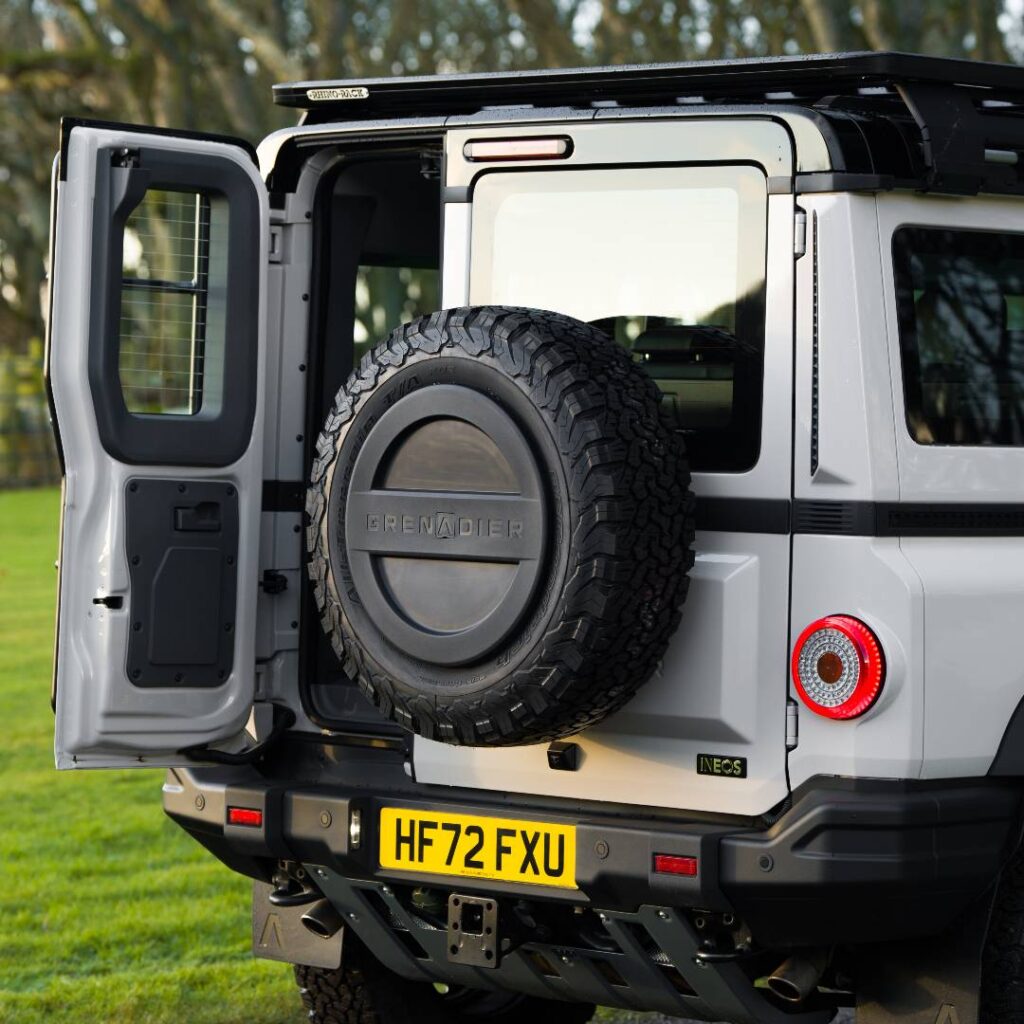
The split rear doors look good, but the smaller door on the left is probably just a little too narrow. It’s a convenient way to get quick and easy access to the contents of the boot, but there’s not much width to lift anything in or out, meaning you still need to open the wide door anyway.
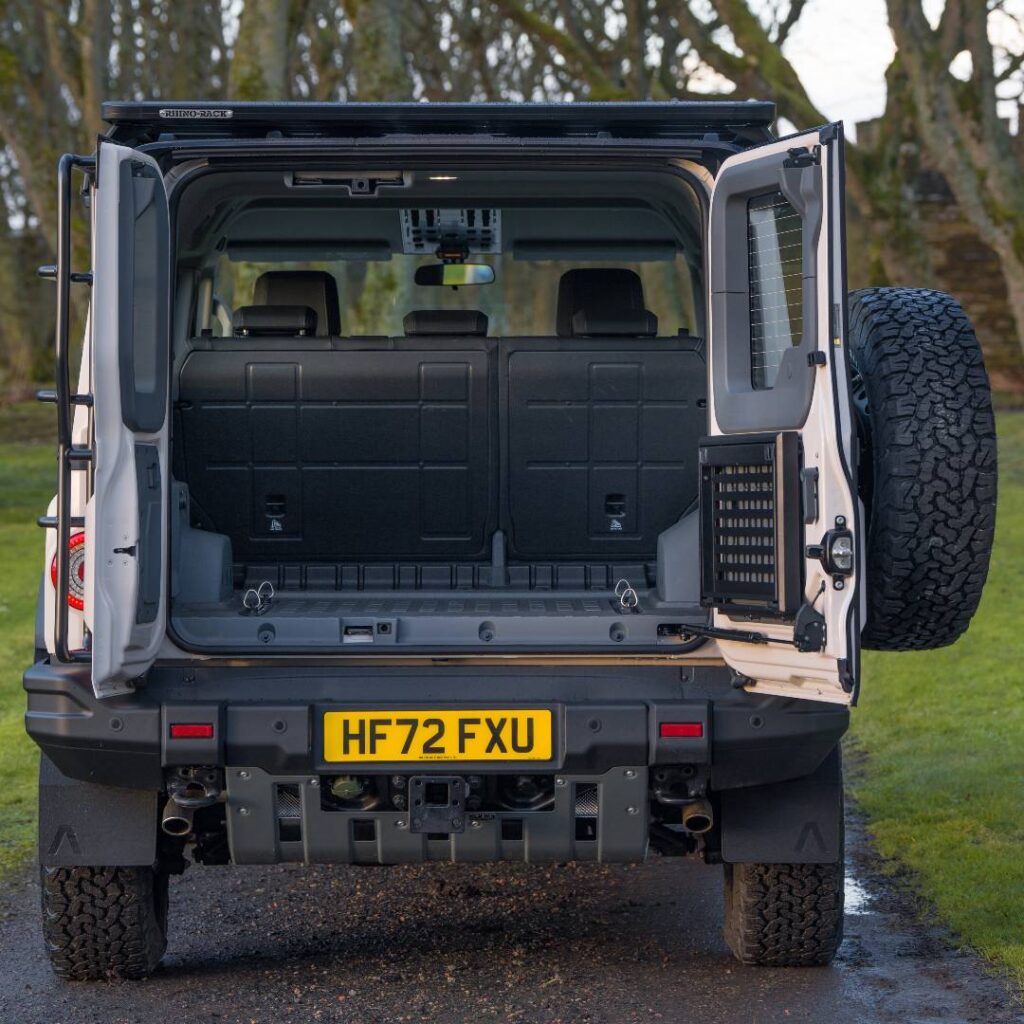
Ineos tells us that the Grenadier SUV provides 2,035 litres of cargo capacity once the rear seats have been folded down. That’s only marginally less than the Utility version, which offers 2,088 litres of carrying capacity. The Utility model will also provide a higher payload limit of up to 871kg for the petrol models. Diesel-powered models lose a bit, dropping to 796kg.
The dimensions and payload limits are broadly in line with what’s offered by the Land Rover Defender Hardtop 110 and Toyota Land Cruiser Commercial LWB, while the 3.5-tonne towing limit is matched by the Defender and beats the Land Cruiser by 500kg.
Numbers only tell you so much, though. Once we get hold of the Grenadier Utility Wagon, we’ll do a thorough analysis.
| Kerb weight | 2,811 kg | Load bay length | 1,645 mm |
| Gross vehicle weight (MAM) | 7,000 kg | Load bay width | 1,268 mm |
| Payload | 764 kg | Load bay height | 1,039 mm |
| Gross vehicle mass | 3,500 kg | Liftover height | 899 mm |
| Towing capacity (unbraked) | 750 kg | Towing capacity (braked) | 3,500 kg |
Ineos Grenadier: Verdict
It’s difficult to reach a conclusive view of the Ineos Grenadier for commercial users, and we’ll have to wait until the keys for the Utility Wagon reach our desk.
That said, it’s clear that the Ineos Grenadier is an impressively capable vehicle and, for a first effort from an inexperienced manufacturer, hits most of the marks it needs to hit.
Yes, some flaws are more significant than we might like, but they don’t detract from the whole package too much.
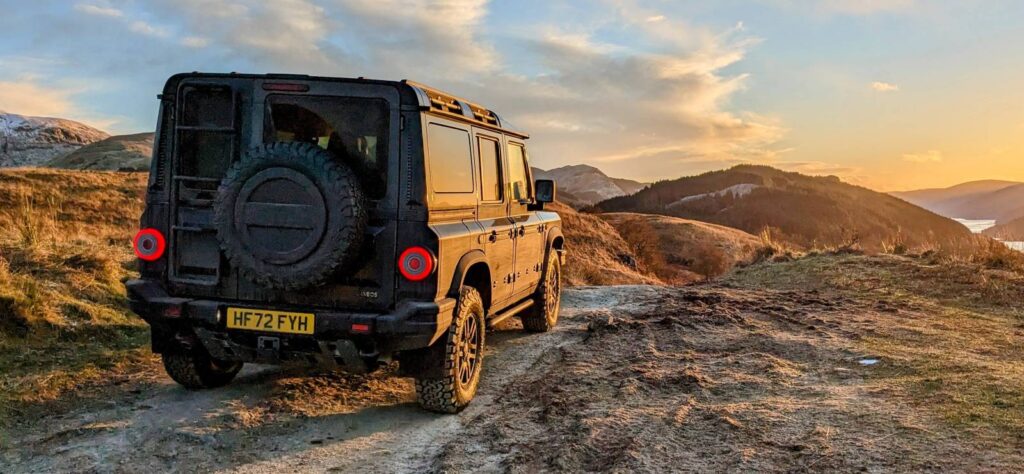
The whole project started with the company trying to buy the rights to manufacture the old Land Rover Defender, and, compared to that prospect, the Grenadier is an unqualified success. It’s light years ahead of even the best Defender, as it should be.
When measured against the current Defender, things get more complicated. Both will conquer any terrain and are eye-catching inside and out, although for very different reasons. The Defender will, ultimately, be easier to live with day to day, but the Grandier will better suit being a work tool.
For Professional Van and Professional Pickup readers looking for a rugged, powerful and capable off-road commercial vehicle, it’s probably going to be a tempting vehicle. We’ll find out for sure when we try the Utility Wagon.
Model tested: Ineos Grenadier Station Wagon Belstaff Edition Trialmaster 3.0 Diesel
| Basic price | £57,500 | On the road inc VAT | £69,000 |
| VAT | £11,500* | Model range exc VAT | £55,000-£69,000 |
- Ford Ranger PHEV onboard power is cleaner and cheaper than a generator
- Pickup market slumps for ninth straight month after tax changes
- Ineos Grenadier and Quartermaster cleared for UK blue-light use

- JAC Hunter PHEV points to faster-moving electrified pickup market
- Urban builds the Defender pickup Land Rover won’t sell