
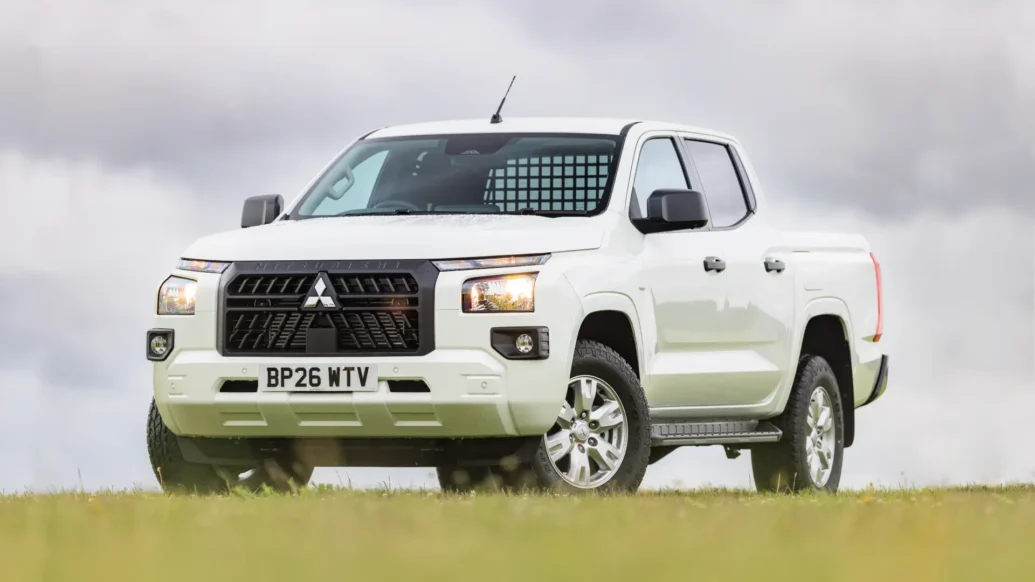
Mitsubishi has launched a two-seat commercial version of the new L200 Series 7, sacrificing its rear seats to secure more favourable tax treatment for business users.
Available in Titan and Barbarian specifications, the L200 Commercial retains the four-door body of the regular double-cab pickup. However, Mitsubishi removes the rear seats and seatbelts before fitting a perforated steel bulkhead and a durable phenolic load floor.
Four integrated D-ring restraints allow equipment to be secured in the converted rear compartment, while privacy glass is fitted to the rear doors.
Why has Mitsubishi removed the rear seats?
The conversion is a direct response to the tax changes affecting double-cab pickups.
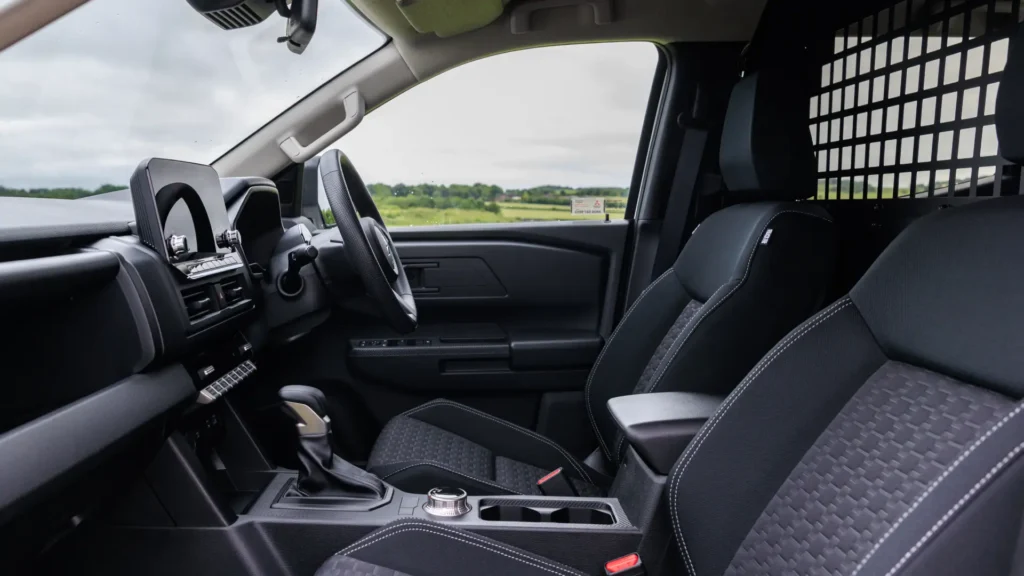
Since April 2025, most double-cab pickups have been treated as company cars for Benefit in Kind and capital allowance purposes, regardless of whether their payload exceeds one tonne. That can leave company pickup drivers facing a considerably larger personal tax bill than they would with a conventional van.
By removing the second row of seats and converting the space into a dedicated load compartment, the L200 Commercial qualifies for van-style taxation.
For the 2026/27 tax year, that includes a fixed taxable Benefit in Kind value that means an employee would pay £834 in income tax as a basic-rate taxpayer, while a 40% taxpayer would pay £1,668.
Annual Vehicle Excise Duty, or road tax, of £360, reclaimable VAT for qualifying businesses and the possibility of claiming the full purchase cost through capital allowances, are all associated benefits.
One-tonne payload and 3.5-tonne towing capacity
Converting the rear passenger compartment hasn’t affected the L200’s conventional load bed, which measures 1,555mm long, 1,545mm wide and 526mm deep.
It can accommodate a standard 1,200mm by 800mm Euro pallet, while both versions retain a 3,500kg maximum towing capacity.
Payload varies slightly according to specification. The Titan Commercial can carry up to 1,092kg, while the additional equipment fitted to the Barbarian reduces its maximum payload to 1,025kg. Both have an 80kg roof-load limit.
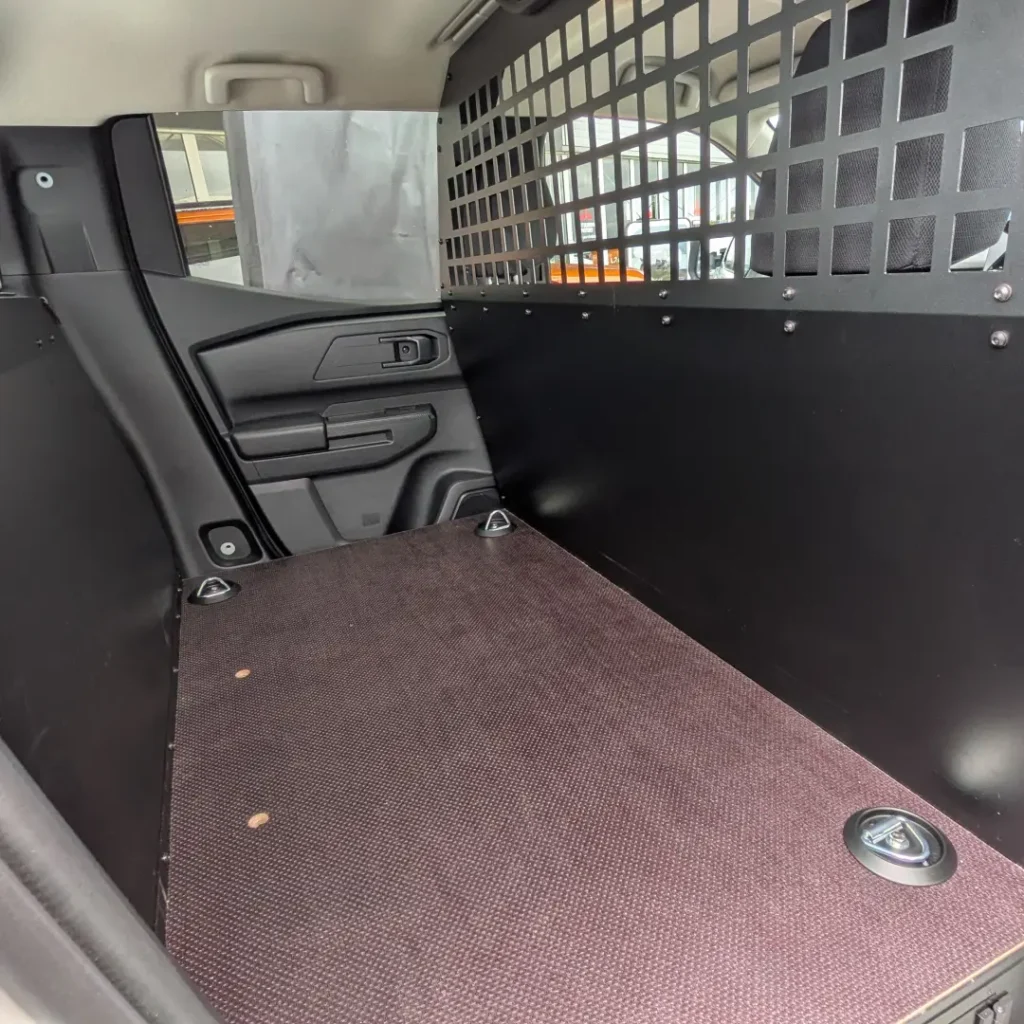
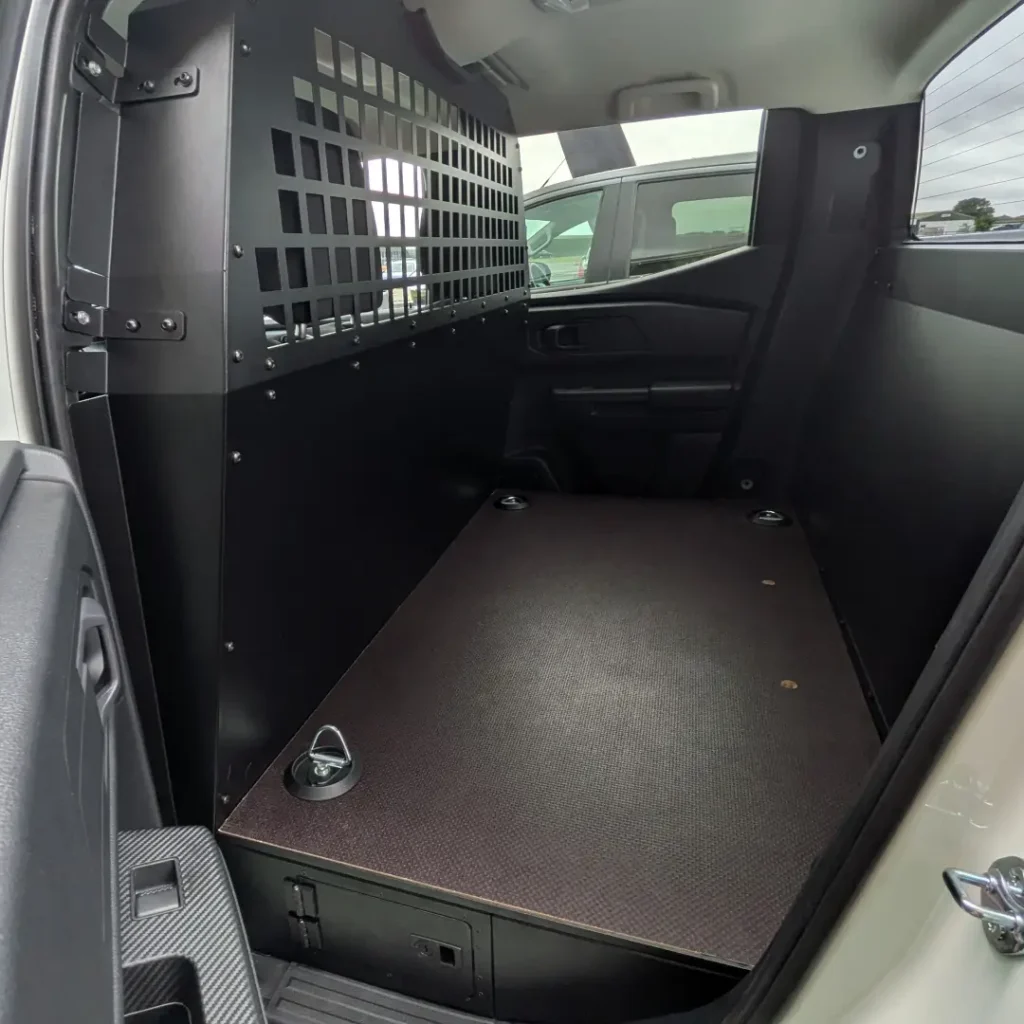
Mitsubishi hasn’t yet provided the dimensions or capacity of the additional load area created behind the front seats.
What engine does the L200 Commercial use?
Both versions are powered by the same 2.4-litre twin-turbocharged diesel engine as the five-seat L200, producing 204hp and 470Nm of torque. A six-speed automatic transmission is standard. The L200 normally drives its rear wheels, with selectable four-wheel drive available when additional traction is required.
The higher-specification Barbarian gains Mitsubishi’s Super Select 4WD II system. Its torque-sensing locking centre differential allows four-wheel drive to remain engaged on dry tarmac, making it particularly useful when towing or driving in changeable conditions.
Pricing and availability
Prices start at £37,495 before VAT for the L200 Titan Commercial, rising to £41,195 for the more lavishly equipped Barbarian Commercial.
That’s £1,200 more than the corresponding five-seat Titan and Barbarian models, despite losing its rear seats. For company users facing car-rate Benefit in Kind taxation, however, that conversion charge could be recovered remarkably quickly.
“The addition of a commercial option in both Titan and Barbarian specification extends demand for the all-new L200 across industries, coupling its prowess in demanding environments with the tax advantages of a commercial vehicle,” said Alex Sheward, head of sales for Mitsubishi Motors in the UK.

- Mitsubishi L200 Commercial swaps rear seats for van tax treatment - 10 September 2026
- Volkswagen launches blacked-out Amarok Dark Label pickup - 9 September 2026
- Pickup market plunges to lowest level since Covid lockdown - 8 September 2026