
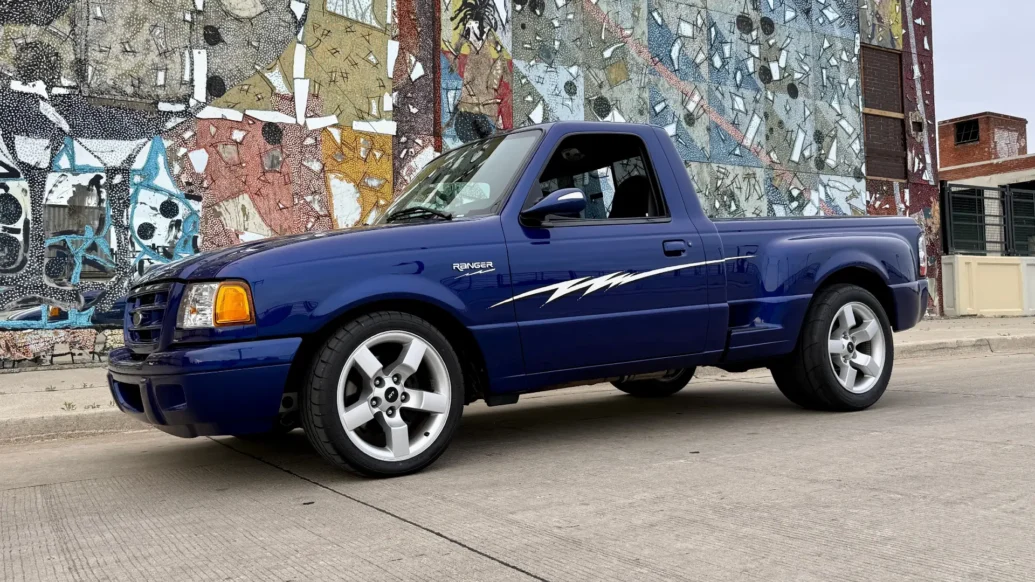
Ford’s Special Vehicle Team, better known as SVT, built a supercharged V8 Ranger in 2002 called the Lightning Bolt, but it never made it to production.
Now one of the more interesting pickups in its Detroit-based heritage fleet, the Ford SVT Ranger Lightning Bolt started with an idea from powertrain engineer Dave Dempster.
His plan was not simply to create a Ranger with paint-and-tape graphics, but a proper performance pickup that could leave its mark — probably in the form of twin black stripes on the tarmac.
Dempster took the idea to O.J. “John” Coletti, SVT’s engineering director, who approved the project under SVT’s performance research work.
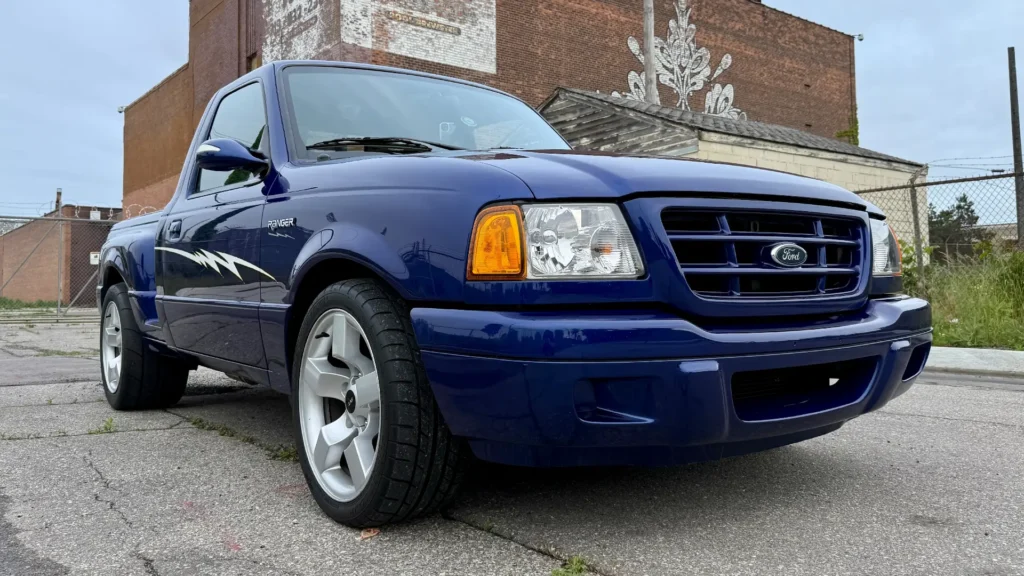
The donor vehicle was not especially glamorous. Ford started with a black single-cab Ranger Styleside fitted with a 2.5-litre four-cylinder petrol engine and automatic transmission.
But that modest setup didn’t last long. The Ranger’s original engine and gearbox were removed and replaced with the supercharged 5.4-litre V8 and 4R100 automatic transmission from the SVT F-150 Lightning.
Ford says the Ranger Lightning Bolt produces around 420hp and 650Nm of torque, making it more powerful than the production F-150 Lightning.
The transplant wasn’t quite as simple as dropping a big V8 into a small pickup and hoping for the best. Ford used as much off-the-shelf hardware as possible to keep the build under control, but the Ranger still needed serious work.
Custom two-foot headers were fitted, along with a K&N air filter and a relocated supercharger air inlet to suit the Ranger’s different intake layout. A stainless-steel exhaust with Borla Super Pro mufflers was also used.
The stock Ranger driveshaft was replaced by a shortened aluminium version from the Lightning, while the rear axle was a narrowed F-150 Lightning 9.25-inch unit with a 3.73 gear ratio.
At the same time, the Ranger was stripped back to its chassis. The frame rails were boxed and cross-braced in several areas to cope with the huge increase in torque over the original four-cylinder Ranger.
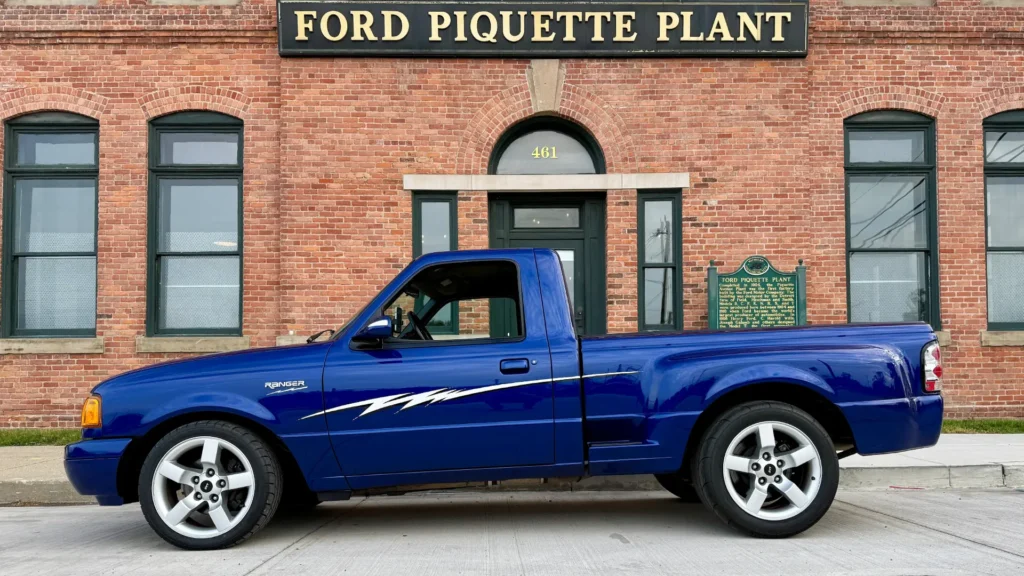
To get the 5.4-litre V8 under the standard bonnet, the suspension was lowered by two inches.
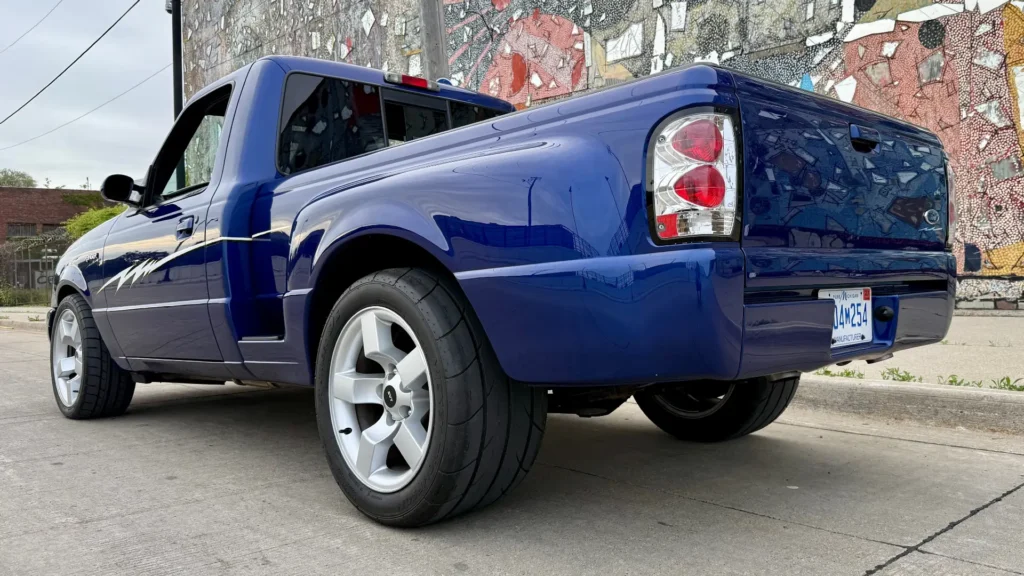
The wheels came from the F-150 Lightning, although they were modified to suit the Ranger. The fronts were narrowed to eight inches and fitted with 235/40ZR18 Michelin tyres, while the rears were widened to 12.5 inches to take massive 345/35ZR18 rubber.
Production F-150 Lightning brakes were fitted, which were more than enough to stop the lighter Ranger.
The result was not just a show truck. At a little over 1,700kg, the Lightning Bolt could manage a quarter-mile performance of 13.6 seconds, crossing the line at 108mph.
Visually, subtle was not the target. The Ranger was repainted in Sonic Blue and finished with custom Lightning Bolt graphics on the doors. It also gained additional Sonic Blue detailing under the bonnet, including the supercharger, air intake and other engine components.

Inside, the Ranger’s seats were retrimmed in black leather, with embossed lightning bolts between the seatbacks and headrests. The cabin also gained custom black carpet, blue trim details, billet controls and SVT-branded sill plates.
Ford Heritage fleet manager Matt Korczyk has described the SVT Ranger Lightning Bolt as his favourite vehicle in the company’s heritage collection, which includes more than 150 historically or culturally significant vehicles.
It is not hard to see why. Ford never put the SVT Ranger Lightning Bolt into production, which was probably sensible. But as a reminder that smaller pickups don’t have to be sensible all the time, it is hard not to admire.
