
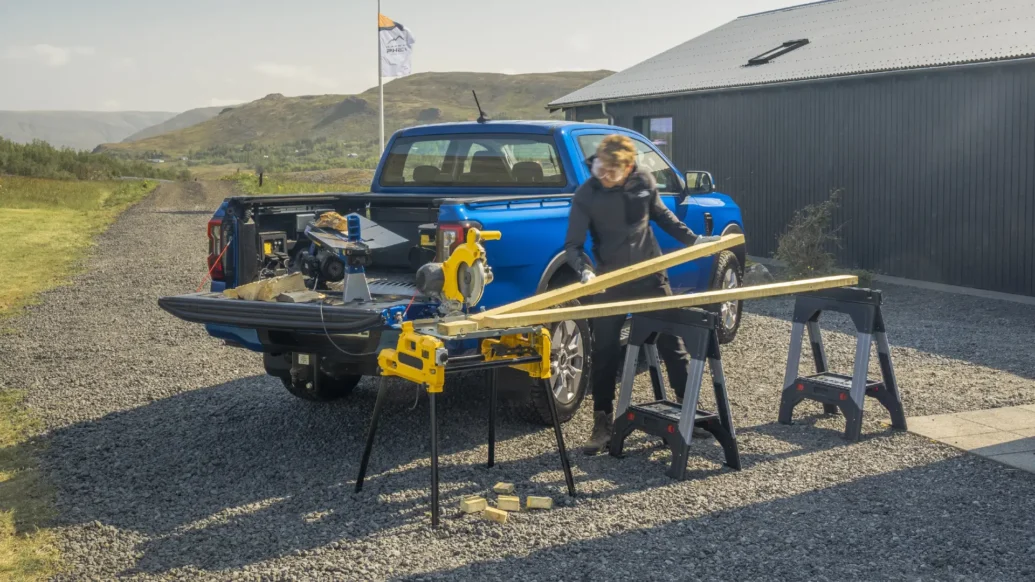
Ford says the Ranger PHEV Pro Power Onboard system can be cleaner and cheaper to run than a conventional petrol generator, after testing the pickup against a typical portable site generator.
The comparison was carried out at Ford’s Dunton engineering centre, using a Ranger PHEV plug-in hybrid with 6.9kW Pro Power Onboard and a hired 4kW portable petrol generator.
The test was designed to reflect typical on-site power use, including charging a tool battery, running a portable heater, boiling a kettle and supporting higher-demand equipment.
Builders, event caterers, forestry workers and many mobile businesses often carry a separate generator, along with fuel, leads and the security worries that go with that. Ford says the Ranger PHEV can remove the need for much of that kit, freeing up load space and payload while reducing the risk of theft.
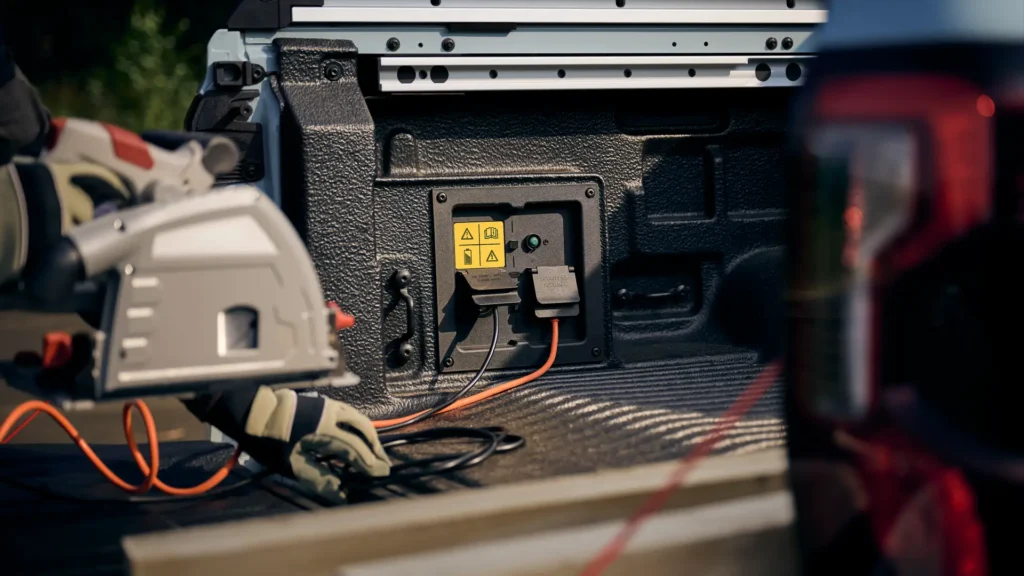
Pro Power Onboard cuts fuel costs
Ford also claims a cost advantage for the Ranger PHEV. When producing 4kW of power, Pro Power Onboard was tested with a full battery, an empty battery and a cold engine, and with an empty battery and the engine already warm.
Although the Ranger PHEV’s petrol engine is larger than the generator’s, Ford says the pickup used less fuel overall. With the engine warm, Pro Power Onboard used around half as much fuel as the generator. When the system only needed the engine to maintain battery level, Ford says fuel cost was around one-third that of the generator.
In financial terms, an hour’s use of the generator would cost approximately £4.50, while using the Ranger’s PHEV system would cut that to between £2.30 and £3.35 an hour depending on conditions. Using just the battery pack in the Ranger reduces that cost to roughly £1.35 an hour, with further savings to be made by using cheap off-peak tariffs at home for charging.
There are caveats, of course. Ford’s comparative figures come from its own testing, while Professional Van has calculated the financial costs. Real-world costs will vary depending on appliance draw, battery charge, fuel prices, electricity prices, ambient temperature and how the vehicle is being used.
Even so, the comparison highlights one of the Ranger PHEV’s more convincing practical arguments. The plug-in hybrid pickup may not be the cheapest way into a Ranger, but for those who regularly need off-grid power, Pro Power Onboard could be more useful than the electric driving range itself.
Far lower local emissions than a generator
The emissions comparison is where Ford’s case becomes more interesting. The company measured nitrogen oxides, carbon monoxide, hydrocarbons and carbon dioxide.
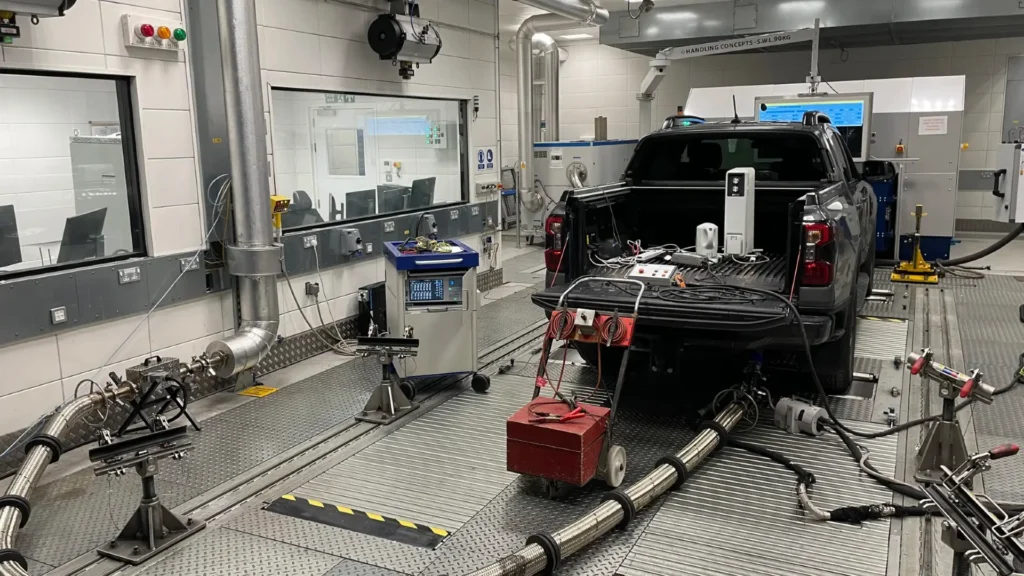
According to Ford, the portable generator produced around 15 times more nitrogen oxide than Pro Power Onboard at low power levels, rising to more than 9,000 times more at very high power demand.
Carbon monoxide emissions were also significantly higher from the generator. Ford says it produced, on average, more than 450 times as much carbon monoxide as the Ranger PHEV, with a peak difference of more than 1,200 times at very high output.
Hydrocarbon emissions from the generator were also higher, ranging from around 15 to more than 110 times the level produced by the Ranger PHEV using Pro Power Onboard. When hydrocarbons and nitrogen oxides were grouped together, Ford says the generator’s average emissions were almost 100 times greater.
The carbon dioxide result was more nuanced. From a cold start, the Ranger PHEV emitted more CO2 than the generator for the same power output. However, Ford says that once the engine and exhaust systems were warm, the generator produced more CO2 when more than 2kW of power was required.
| Generator | Pro Power (cold start) | Pro Power (hot start) | |
|---|---|---|---|
| Carbon monoxide (g/hr) | 340.020 | 1.313 | 0.192 |
| Hydrocarbons & nitrogen oxides (g/hr) | 19.063 | 0.382 | 0.007 |
Kyle Shearer, segment chief engineer for Ranger in Europe, said: “We speak to customers like these all the time in our research; builders, event caterers and forestry workers who are convinced of the benefits of Pro Power Onboard as soon as they realise they no longer need to lug a generator and fuel around to power their equipment.
“Leaving the generator behind also means more available space and payload in their pickup, reduced fuel expense and admin, and no more concerns about generators or jerry cans being stolen.”

- Renault Niagara pickup revealed, but it’s only for Latin America - 10 September 2026
- Mitsubishi L200 Commercial swaps rear seats for van tax treatment - 10 September 2026
- Volkswagen launches blacked-out Amarok Dark Label pickup - 9 September 2026