
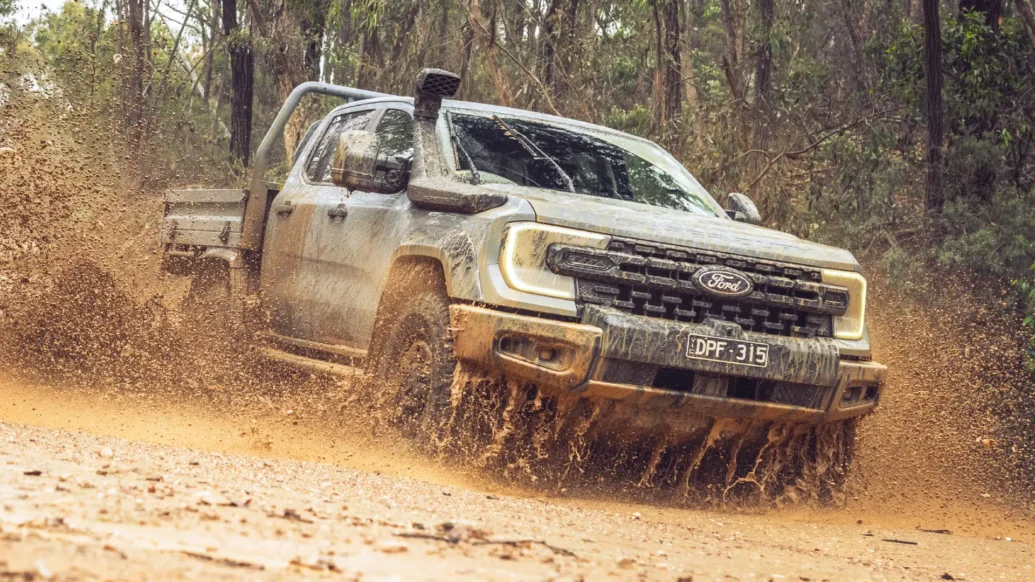
Ford has confirmed that the Ranger Super Duty, a heavy-duty variant of the popular pickup that Ford says creates an entirely new segment in the pickup market, is coming to the UK.
Announced as part of a sweeping product strategy reveal in Salzburg, the Ranger Super Duty is no mild upgrade. Ford’s engineering team has essentially taken the Ranger and rebuilt it from the frame up to carry cargo and tow loads that would stop a standard pickup in its tracks.
When the Ranger Super Duty appeared on Ford’s stand at the Commercial Vehicle Show in April, Ford’s official line was that there were no current plans to bring it to the UK. As we recently noted, that position felt hard to sustain. Days later, here we are.
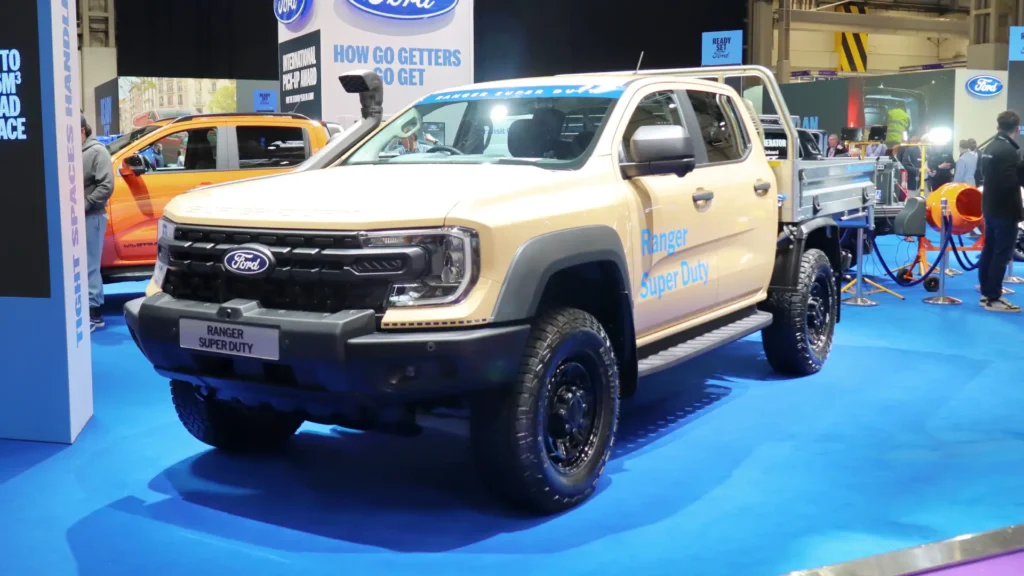
Described by Ford as the “most capable Ranger ever built”, the Ranger Super Duty has been developed for demanding users in sectors such as emergency services, forestry, mining and defence. It brings heavier-duty hardware, a near two-tonne payload, up to 4.5 tonnes of towing capacity and a total combined mass of up to eight tonnes.
Ford says that headroom was the entire point. “Ranger Super Duty is the right vehicle for the job,” said Jim Baumbick, president of Ford in Europe. “It’s the most capable Ranger ever built, creating a new heavy-duty truck segment in Europe.”
Ford Ranger Super Duty: What’s changed?
The Super Duty name has been used on Ford’s heavy-duty trucks in North America for decades, and it made its pickup debut in Australia, New Zealand and Thailand before crossing to Europe, and now the UK. It’s not a badge exercise.
“It’s how customers can recognise the vehicles we’ve engineered to carry and tow the heaviest loads in the harshest conditions,” said Kyle Shearer, engineering manager at Ford, adding that Ford had identified demand from European customers operating pickups at “the extreme edge of capability”.
Underneath, the changes are substantial. The chassis frame is thicker, the driveshafts and suspension are reinforced, and Ford has installed the strongest rear axle ever fitted to a Ranger. The wheel hub pattern moves to eight studs with larger bolts, the tow bar mounts are uprated, and underbody protection gets high-strength steel shielding throughout.
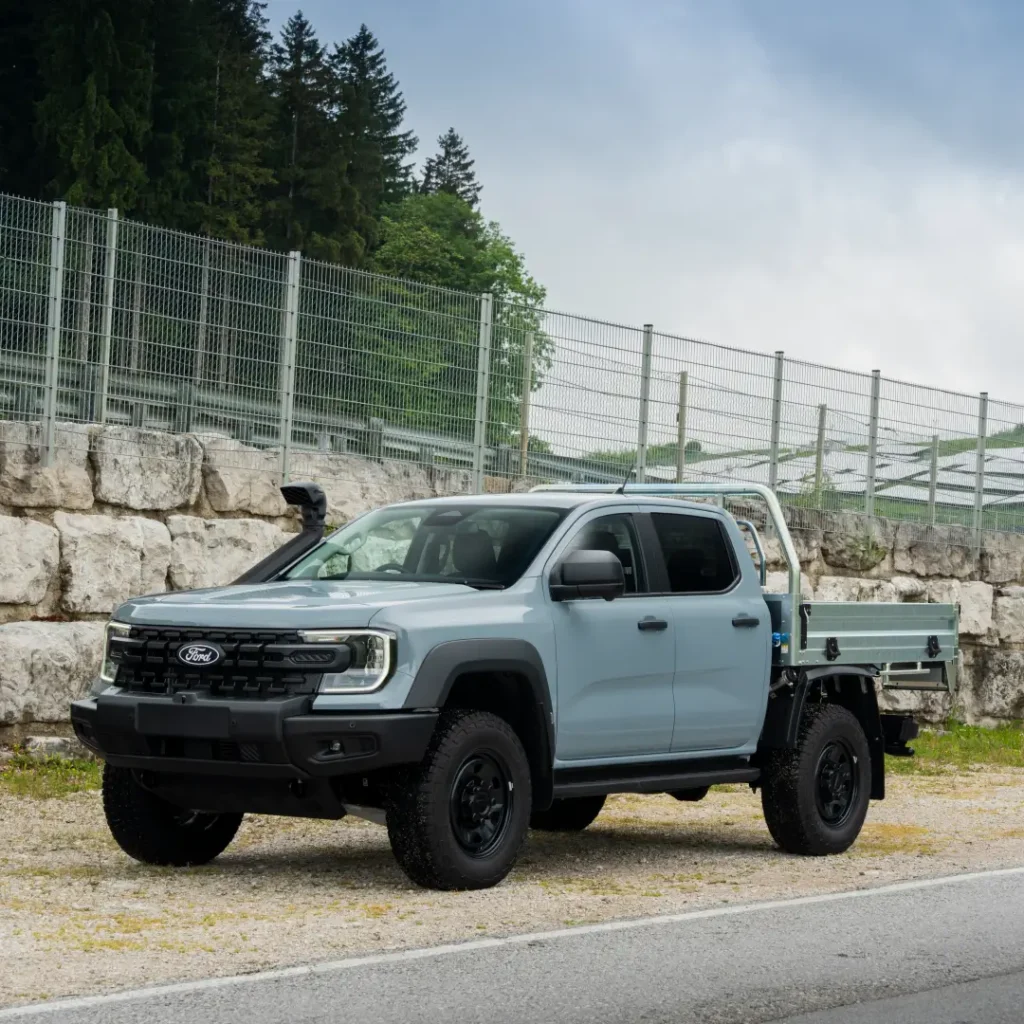
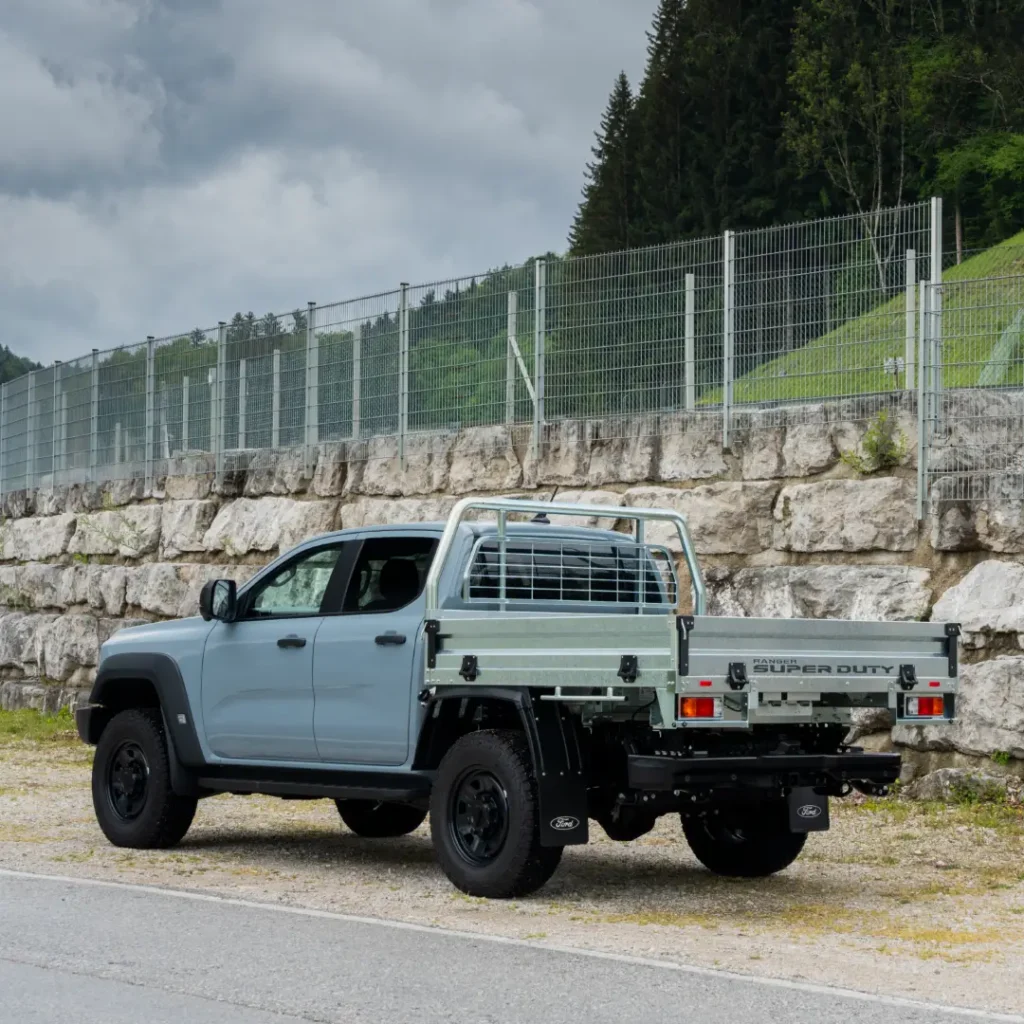
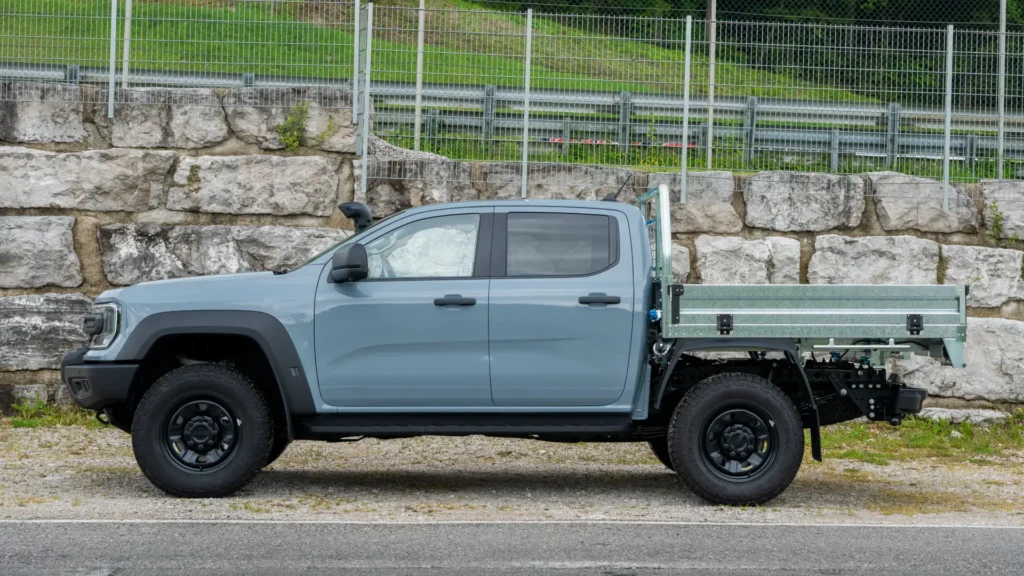
“Look at mining, emergency services in remote areas, defence or heavy forestry, and you soon realise how much punishment their vehicles go through and how important the right vehicle is to safely and effectively do the job,” said Shearer.
The 3.0-litre V6 turbodiesel — the same engine that tops the standard Ranger range — has been retuned to better handle extended off-roading under heavy loads. Cooling capacity is up by 25%, and the fuel tank grows to 130 litres as standard to support longer operations in remote areas or to power equipment and tools for longer. Ground clearance sits at almost 300mm, and wading depth increases to 850mm.
Durability testing included repeated mud bath runs until 600kg of mud had packed into the spaces around the wheels, while some rough-road testing had to be carried out using robots because the vibration and impact levels were too severe for human drivers.
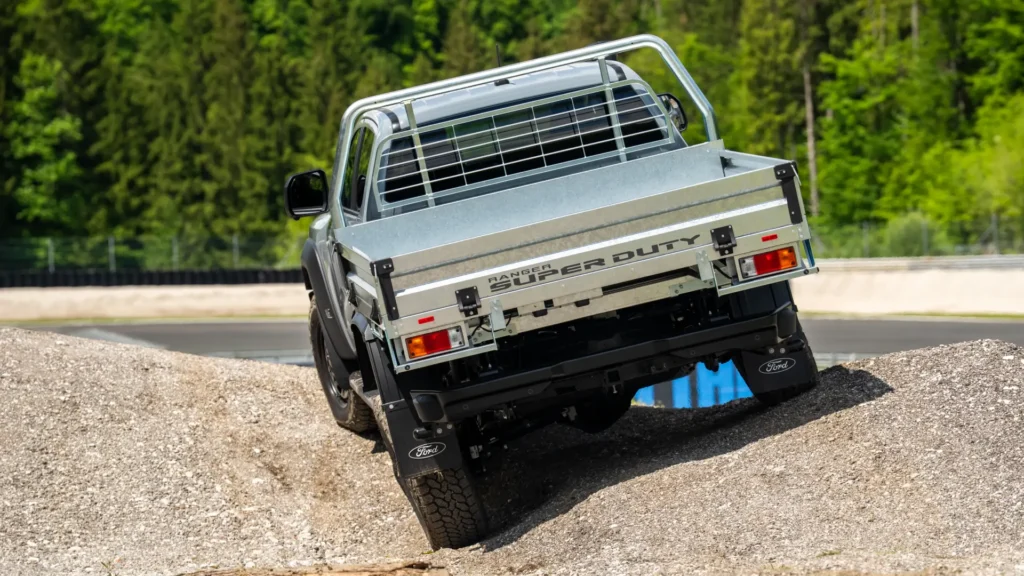
Drive system changes include electronically locking front and rear differentials, a two-speed transfer case, and an intelligent all-wheel-drive system that continuously redistributes torque as conditions change. The breathers for the transmission and differentials have been moved high up to keep them away from water and sand. Shearer said the aim was for the Super Duty to go anywhere a standard Ranger can, while carrying more than 1,000kg of extra cargo.
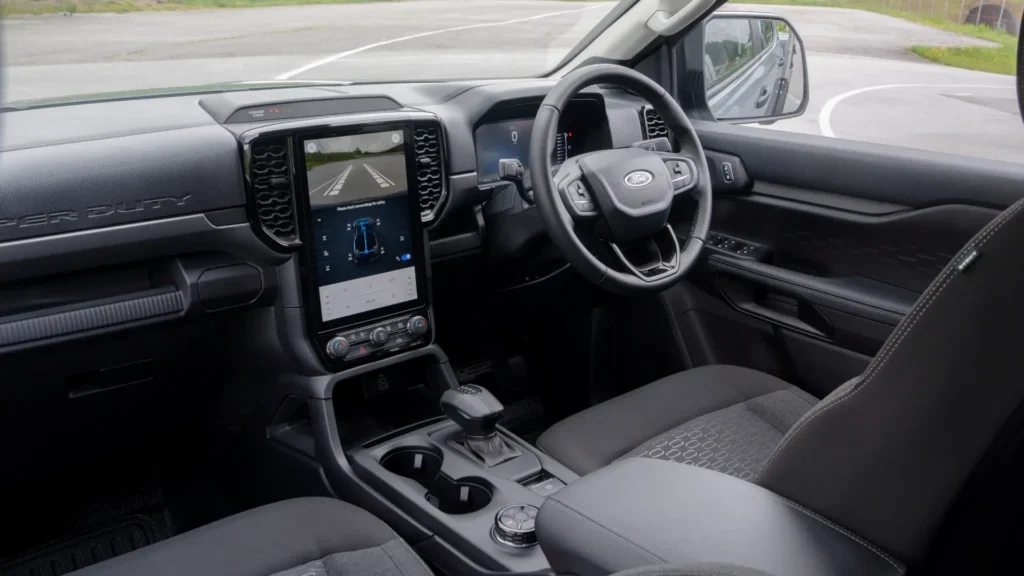
The Super Duty is the first Ranger to feature Onboard Scales and Smart Hitch. The in-cab infotainment screen shows live payload data and helps balance trailer tongue weight for stability, which is genuinely useful on-site, where getting a laden trailer level can be guesswork. Pro Trailer Backup Assist also features, using a dashboard-mounted knob to steer a trailer in reverse.
Despite all that, the cab is unchanged in any way that matters to the driver. There are heated seats, a 12.0-inch infotainment touchscreen, and the full driver assistance suite. Shearer is clear that the comfort-capability balance was non-negotiable: “Customers want to carry tonnes of cargo off-road but without giving up Ranger’s comfort and tech. It’s not like driving a digger.”
Built for converters, fleets and extreme jobs
The Ranger Super Duty has been designed with specialist conversions in mind. Shearer said Ford “essentially viewed converters as our customers” during development, recognising that many Super Duty users will need role-specific conversions, such as fire service equipment, off-road emergency response bodies, cherry pickers or specialist utility installations.
To support this, the rear sensors and cameras for the driver assistance systems are packaged into a single bar to reduce obstruction and simplify electrical work. Inside, the cab includes six pre-wired auxiliary switches and a built-in device holder, allowing operators to add extra equipment without drilling into the dashboard or modifying the vehicle’s electrics.
One-off conversions for cherry pickers, off-road fire engines and specialist emergency vehicles are expected to be common, and the build has been designed with that in mind.
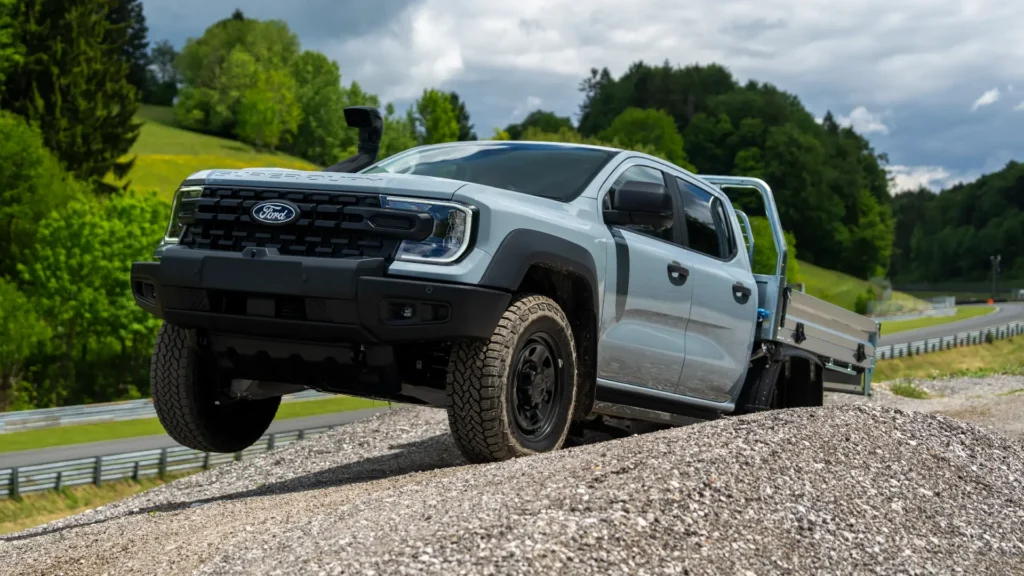
The vehicle’s specification also makes it an obvious candidate for roles such as the MoD’s forthcoming Defender Wolf replacement programme. Jim Baumbick, president of Ford in Europe, said: “European governments and converters serving the defence industry are increasingly looking for off-the-shelf vehicles that deliver the extreme capabilities required by the military.”
Ford Ranger Super Duty: UK pricing and availability
For most pickup buyers, the regular Ranger will remain the sensible choice. For operators who need to haul, tow and work far beyond the limits of a standard pickup, the Ranger Super Duty could be something very different: a factory-built heavy-duty Ranger for jobs that ordinary one-tonners were never really designed to do.
Given its expected 4.5-tonne gross vehicle weight, a C1 driving licence will be required to drive the Super Duty, which puts it firmly in fleet and specialist operator territory, where operator licences and tachograph compliance become more important. But for UK operators in forestry, utilities, or emergency services who’ve spent years and money adapting standard pickups to cope with extreme conditions, a properly engineered factory solution with full manufacturer support is a significant offer.
This is not a retail proposition, and sales are expected to go through Ford Fleet on a bespoke order basis. That approach would mirror the Explorer Van, another specialist Ford Pro model offered through Ford’s fleet sales team rather than as a conventional retail product.
Ford hasn’t yet issued UK pricing, and no retail price list is available, so those looking to specify one should expect a conversation rather than a brochure.
