
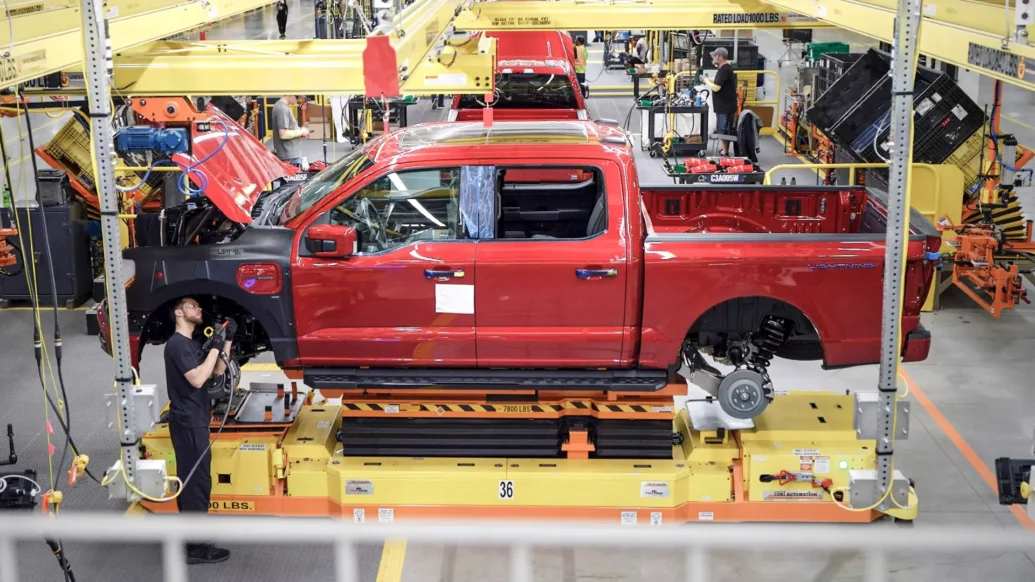
What began as a temporary shutdown at Ford’s Rouge EV factory near Detroit has quietly become a long-term strategic move. Production of the all-electric F-150 Lightning pickup is now paused indefinitely, with Ford choosing to concentrate its resources on more profitable petrol, hybrid, and Super Duty pickups.
The pause was initially triggered by a fire at an aluminium plant in Oswego, New York, earlier this month, which disrupted the supply of key materials used in the Lightning’s construction. However, Ford’s latest financial report suggests the decision has now evolved beyond logistics.
With aluminium still in short supply and EV margins under pressure, Ford is using the opportunity to rebalance production in favour of its highest-earning trucks.
“Even if we have more availability of aluminium, the real lever for us is going to be our own upside,” said CEO Jim Farley.
The company confirmed that Lightning assembly at the Rouge Electric Vehicle Center will remain on hold while output of internal combustion and hybrid F-150s is ramped up. Those models use less aluminium, are cheaper to build, and currently enjoy stronger market demand.
To support the shift, Ford will move around 1,200 workers from the F-150 Lightning line to neighbouring facilities in Dearborn, joining a newly created third shift at the Dearborn Truck Plant to lift annual F-150 production by around 45,000 units from 2026 to almost 900,000 vehicles.
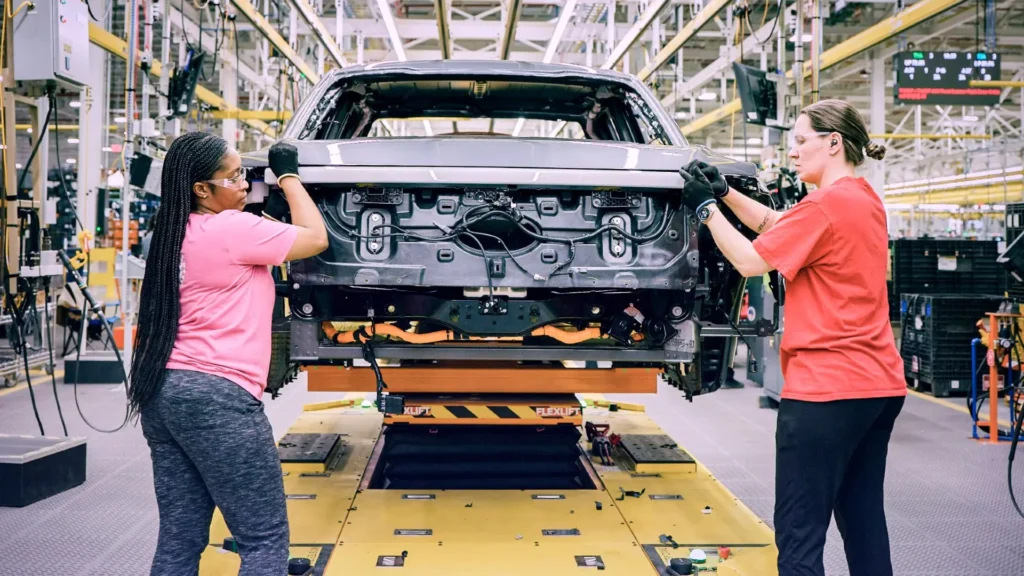
Further staffing increases are planned at related stamping and manufacturing sites, alongside a $60 million (£45m) investment in production upgrades and training.
Ford says the root cause of the Lightning shutdown is now economic, not logistical. The company’s Model e division, which handles EVs, has lost $3.6 billion (£2.7 bn) so far this year, with around $3 billion (£2.25 bn) of that from first-generation models such as the F-150 Lightning and Mustang Mach-E electric SUV.
“Given current industry trends, it’s clear scaling fixed costs is a challenge for most of the industry,” said chief financial officer Sherry House. “You can see this in the multitude of recent program cancellations and charges globally.”
Farley says that Ford is “prioritising hybrids across our lineup, including the development of extended range hybrid options,” reflecting a pragmatic response to slower-than-expected EV demand. He now expects fully electric vehicles to account for only around 5% of the US market in the near term — a steep drop from earlier forecasts.
Ford has already cut planned battery capacity by 35% and cancelled a three-row electric SUV to free up manufacturing space for commercial and hybrid models.
The company now expects the fire-related disruption to cost between $1.5 and $2 billion (£1.13–£1.5bn) this year, but believes the shift toward conventional trucks could recover roughly half that by the end of 2026.
The F-150 Lightning’s indefinite production pause underlines the challenges facing electric pickups. High material costs, fierce competition from established diesel and petrol-powered models, and limited customer demand are testing the profitability of battery-powered trucks.
