
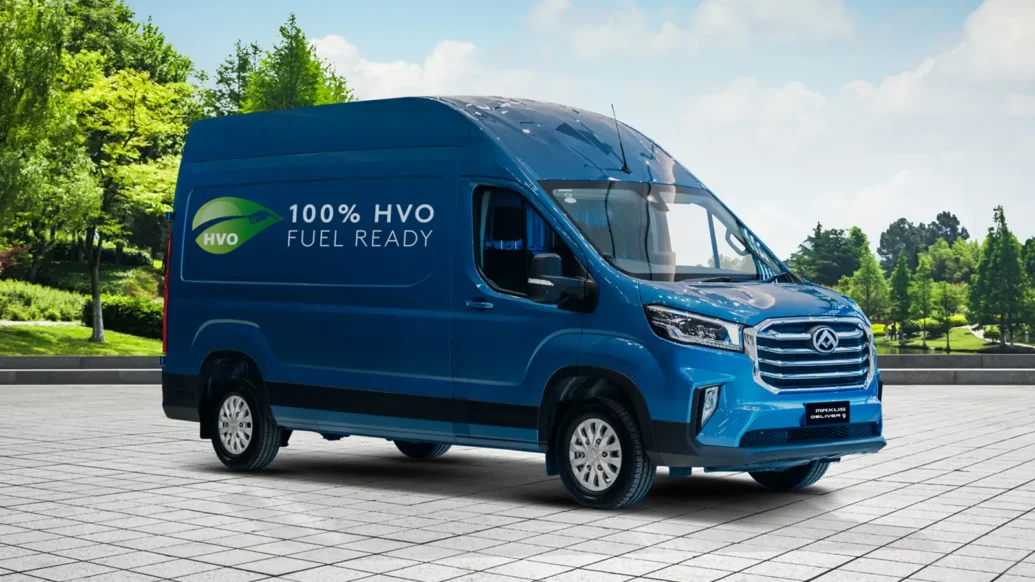
Maxus has announced that its entire Deliver range of diesel vehicles is now fully compatible with hydrotreated vegetable oil (HVO) fuel. This renewable alternative can be used in existing diesel engines without modification, offering businesses an immediate way to reduce their carbon emissions by up to 90%.
For companies not yet ready to transition to electric vehicles, the move provides a practical solution to reducing environmental impact. Maxus already offers a comprehensive electric vehicle (EV) range, but HVO compatibility gives businesses an interim option to lower emissions while planning for a future EV switch.
“At Maxus, our primary goal is to offer low-emission vehicles to drivers and businesses without compromising on performance,” explained Mark Barrett, managing director of group franchise at Harris Group. “We already have a comprehensive range of commercial and passenger EVs available for those ready to make the switch to electric.
“However, we recognise that adopting electric driving is not feasible for all businesses at this time. That’s why we are thrilled to announce that Maxus diesel vehicles are now fully HVO compliant, providing businesses with a sustainable interim solution. This allows fleets to immediately benefit from significant carbon reductions while planning their longer-term transition to electric driving.”
Derived from renewable sources like vegetable oils and waste fats, HVO fuel can be used on its own or blended with conventional diesel. When used in its purest form, HVO can reduce CO2 emissions by up to 90% compared to conventional diesel, providing an immediate way to reduce a company’s environmental footprint.
However, while it offers significant carbon savings, HVO is not widely available at service stations in the UK, meaning businesses may need to purchase it in bulk and store it on-site for refuelling.

- Renault Niagara pickup revealed, but it’s only for Latin America - 10 September 2026
- Mitsubishi L200 Commercial swaps rear seats for van tax treatment - 10 September 2026
- Volkswagen launches blacked-out Amarok Dark Label pickup - 9 September 2026